Ordinary cutter
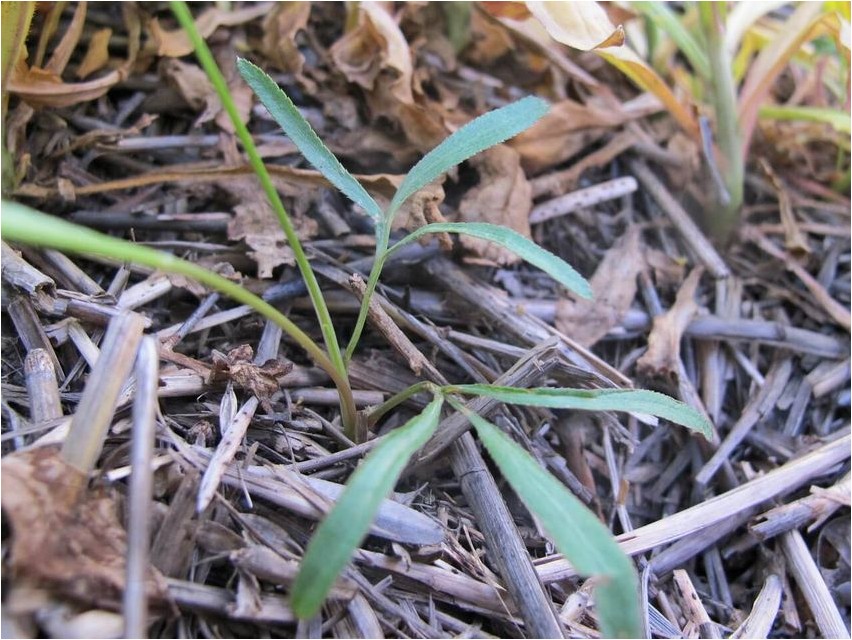
The common cutter is one of the plants of the family called Umbellaceae; in Latin the name of this plant will be as follows: Falcaria vulgaris Bernh.
As for the name of the common cutter family itself, in Latin it will be: Apiaceae Lindl. (Umbelliferae Juss.).
Description of an ordinary cutter
The common cutter is known by the following popular names: sickle cutter, omega field cutter and roller. Common cutter is a biennial herbaceous plant with a spherical shape. The stem of this plant is highly branched, and its height can reach sixty centimeters. The leaves of the common cutter are tough; they can be either double-triple or simply triple. The leaf lobules of this plant will be linear-lanceolate, and the edges are sharply toothed. The flowers of the common cutter are quite small in size, they are painted white and are endowed with a five-petalled corolla and a five-toothed calyx. The flowers of this plant are in numerous umbels, which in turn are collected in a corymbose panicle. The fruit of the common cutter is an oblong-linear two-seeded seed endowed with wide ribs.
This plant blooms from June to July. Under natural conditions, the common cutter is found in the Caucasus, Ukraine, Belarus, Moldova, the European part of Russia, Central Asia and the southwestern regions of Siberia. As for the general distribution, here this plant is found in Asia Minor, Iran, Scandinavia, North Africa, the Balkan Peninsula, Central and Southern Europe, North and South America. For growth, the common cutter prefers hills, meadows, dry slopes, places near fields and roads.
Description of the medicinal properties of the common cutter
The common cutter is endowed with very valuable healing properties, and it is recommended to use the herb of this plant for medicinal purposes. The term grass includes flowers, stems and leaves.
The presence of valuable healing properties should be explained by the content of proteins, alkaloids, carotene, vitamin C in the composition of this plant, while essential oil will be present in the grass and fruits. In small doses, it is recommended to use an aqueous infusion prepared from this plant for low acidity of gastric juice and for stomach pain. In addition, this water infusion is also used as a diuretic. To speed up the healing of wounds, it is recommended to apply crushed leaves of the common cutter to the sore spots.

The green parts of the common cutter are quite widely used as spices: they are used for pickles and marinades. It is noteworthy that in Moldova the seeds of this plant are used in food as a substitute for caraway seeds.
However, it should be noted that the common cutter is a poisonous plant and for this reason, extreme care should be taken when handling the plant in any way.
For gastritis, it is recommended to use the following very effective healing remedy based on this plant: to prepare such a healing remedy, you will need to take about two teaspoons of dry herb per half liter of boiling water. The resulting healing mixture should be infused for about one to two hours, after which this mixture is carefully filtered. Take this medicine on the basis of an ordinary cutter three to four times a day, one to two tablespoons, approximately half an hour before the start of a meal.





