Hungarian catnip
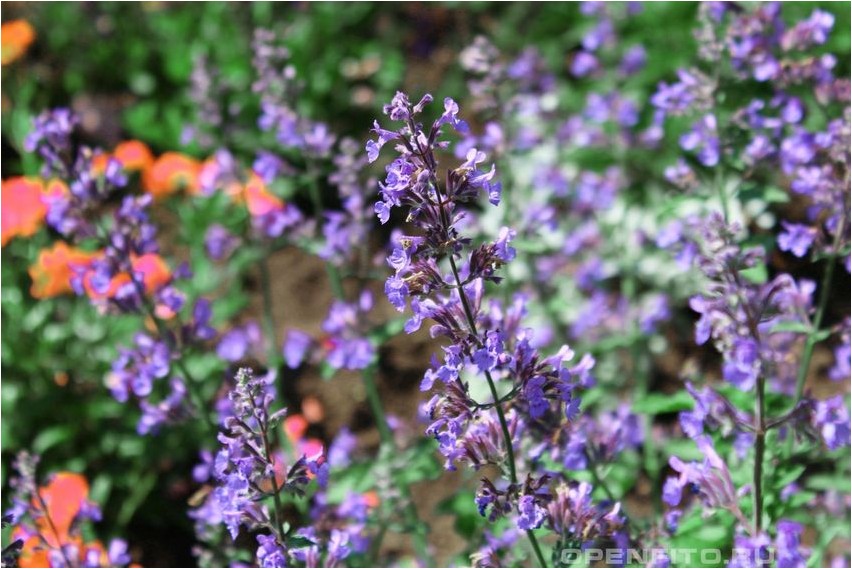
Hungarian catnip is one of the plants of the family called Lamiaceae; in Latin the name of this plant will be as follows: Nepeta pannonica L.
As for the name of the Hungarian catnip family itself, in Latin it will be: Lamiaceae Lindl.
Description of Hungarian catnip
Hungarian catnip is a perennial herbaceous plant whose height will vary between fifty and one hundred and twenty centimeters. The stems of this plant are numerous and strong, grooved and tetrahedral. In the lower part such stems will be either bare or almost bare, and in the upper part they are pubescent. The upper leaves of the Hungarian catnip will be sessile, and the lower ones will be short-petiolate, all leaves on both sides will be short pubescent, and their length can reach ten centimeters. The inflorescences of this plant are quite numerous and loose; they will consist of approximately two to five flowers, which are located on rather short peduncles. The length of the calyx will be about four to five millimeters, it will be hairy and can be colored in both green and purple tones. The outside of the corolla of this plant is hairy and its color can range from pale purple or pinkish to white. The fruits of the Hungarian catnip are triangular nuts endowed with hairs and outgrowths.
The flowering of this plant occurs in the month of June, while the ripening of the fruits will occur in the period from July to September. Under natural conditions, Hungarian catnip is found in Central Asia, the European part of Russia, Crimea, in the Dnieper region and the Carpathians in Ukraine, as well as in Western Siberia and the Yenisei region of Eastern Siberia. For growth, the plant prefers steppes, places among bushes, forest edges, open slopes, meadows, light forests up to the upper mountain zone.
Description of the medicinal properties of Hungarian catnip
Hungarian catnip is endowed with very valuable healing properties, and it is recommended to use the herb of this plant for medicinal purposes. The term herb includes the flowers, stems and leaves of the Hungarian catnip.
The presence of such valuable healing properties should be explained by the content of steroids, alkaloids, ursolic acid, essential oil, tannins, flavonoids, vitamin C and iridoids in this plant. The inflorescences will contain essential oil, and the flowers, in turn, contain vitamin C. As for the seeds, they contain the following useful substances: wax, sterol, higher aliphatic carbohydrates, triacylglycerols, and fatty oil. This fatty oil contains triacylglycerol fatty acids: linoleic, palmitic, stearic, oleic and linolenic.

An infusion of the Hungarian catnip herb is recommended for use for syphilis and asthenia. It is noteworthy that the essential oil of this plant is very suitable for use in perfumery.
For chronic fatigue, it is recommended to use the following remedy based on Hungarian catnip: to prepare such a remedy based on this plant, you will need to take two tablespoons of dry crushed herb per three hundred milliliters of boiling water. The resulting mixture should be infused for about thirty to forty minutes, and then this mixture should be filtered very carefully. Take the resulting remedy based on Hungarian catnip three times a day, one-third of a glass, for chronic fatigue syndrome. To achieve the fastest positive result, you should follow all the rules for preparing and taking such a healing product.





