Pilea thickifolia
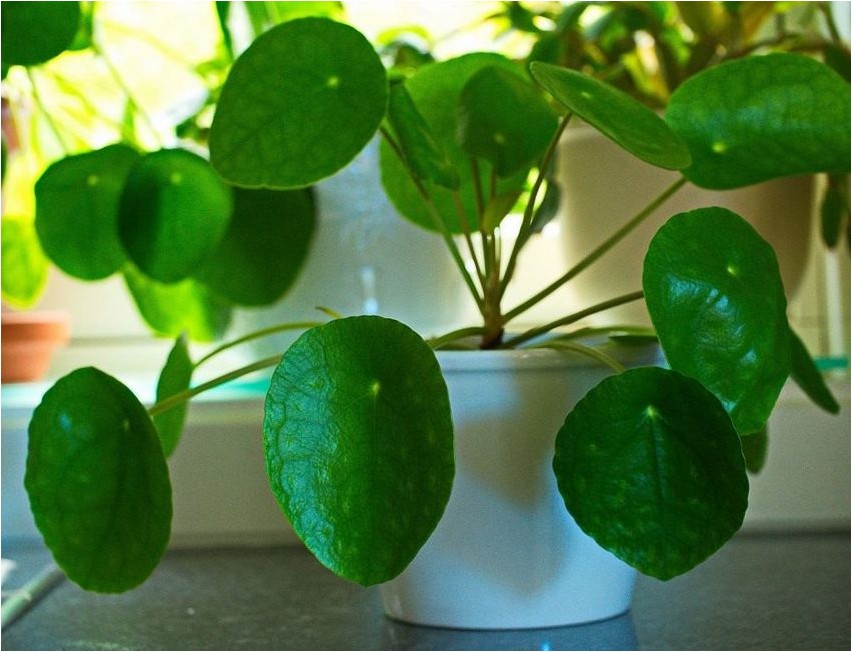
Pilea thickifolia is also known as Pilea softa, Pilea repens and Pilea “moon valley”. In Latin, the name of this plant is as follows: Pilea crassifolia. Pilea thickifolia is part of the plant family called nettles.
Description of Pilea thickifolia
For favorable cultivation of this plant, it is recommended to provide it with a sunny light regime or partial shade. Throughout the summer, it is important to maintain very abundant watering. As for the degree of air humidity, it should be high. The life form of Pilea thickifolia is a herbaceous plant.
It is recommended to grow this plant either in florariums or in indoor greenhouses. Pilea thickifolia should be used as an hanging plant, and also as a replanting plant in tubs that will contain large-sized plants. This plant can also be found quite often in greenhouses and winter gardens.
As for the maximum size of the crop, the height of Pilea thickifolia can reach about twenty to thirty centimeters. This plant is a rather spreading bush.
Description of the features of care and cultivation of Pilea thickifolia
For the favorable development of this plant, it is recommended to replant regularly. Such measures should be taken about once every year or two years. As for pots, preference should be given to pots of standard proportions or wider pots. In this case, you will need to select the following composition of the soil mixture: for this it is important to mix one part each of turf soil and sand, and also add three parts of leaf soil. It is noteworthy that the acidity of such soil can be either neutral or slightly acidic.
This plant is distinguished by rather intensive growth, for this reason the lower part of the stem may become exposed very often. This deficiency will be especially noticeable during the winter months. When the plant receives insufficient nutrition or the root ball becomes dry, a border colored in brown tones may appear on the leaves of Pilea thickifolia.

When the soil becomes waterlogged, the leaves of this plant may rot. In some cases, Pilea thickifolia can be affected by spider mites.
Throughout the dormant period, maintain an optimal temperature between 15 and 20 degrees Celsius. During this time, Pilea crassifolia will require moderate watering, and humidity levels should be maintained at a standard level. When growing indoors, this dormant period is forced: it begins in October and lasts until February. This dormant period occurs because the plant receives insufficient light, and humidity remains relatively low.
Pilea crassifolia can be propagated by rooting cuttings. Rooting is recommended in water or a mixture of peat and sand. To ensure favorable development, this plant should be well protected from direct sunlight. Brief pruning in the spring will help maintain a compact bush. It is important to remember that overwatering the soil can have a significant negative impact on the growth of this plant. Pilea crassifolia’s leaves are also decorative. The leaves are oval-pointed, matte, and light green in color.