Series
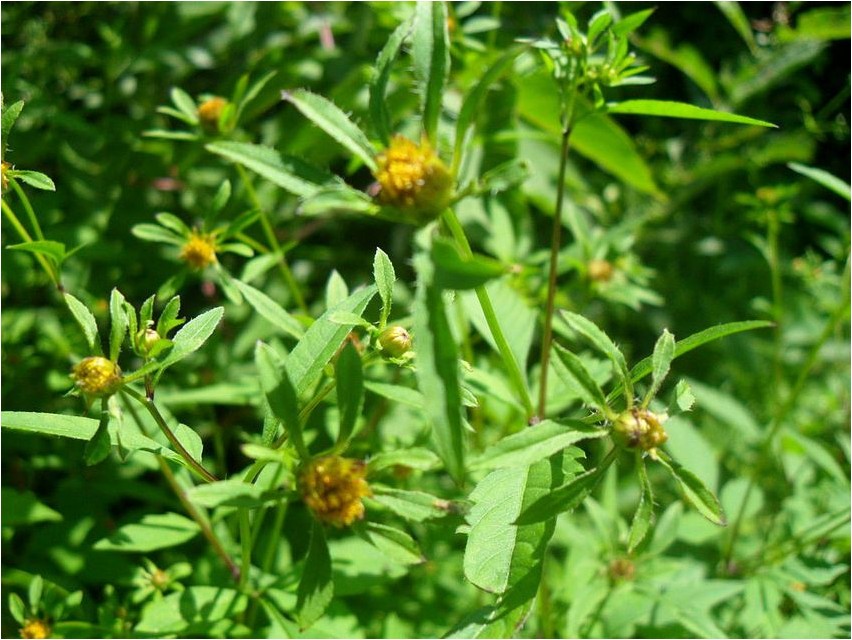
The string (lat. Bidens) is a genus of flowering herbaceous plants, included by botanists in the Aster family (lat. Asteraceae). In terms of their external characteristics, plants of the Chereda genus are similar to plants of the Coreopsis genus (lat.
Coreopsis) of the same family. In the literature, representatives of the genus Coreopsis are often called “Train”. For example, Fluffy Coreopsis (lat. Coreopsis pubescens) has the name “Star Sequence”. When consideration of plants of two genera comes to their fruits, then there is no longer any need to talk about similarities. If the fruits of Coreopsis look like small shiny and smooth insects, then the fruits of most species of Sereda are bristly and prickly.
What’s in your name
It is interesting that it was the different appearance of the fruits of Coreopsis and Chereda that divided these largely similar, sometimes difficult to distinguish, plants into two independent genera. The appearance of the fruits served as the basis for the Latin name of each of these genera.
If two Greek words associated smooth brown fruits with the appearance of shiny small insects, giving the name to the genus Coreopsis, then the Latin name of the genus Chereda – Bidens, reflected the ruffy fruits of most species of this genus, ending with two prickly tufts (“bis” – “two”; “dens” – “tooth”). You can admire these two-toothed “forks” of the Chereda fruit in the following photograph:
In addition to the official botanical name, the Cereda genus has many other names, among which you can find the following: “Spanish needles”; “Shoemaker’s Clothespins”; “Sunflower series”; “Prickly marigolds” and others.

Description
The large number of plant species classified by botanists as the Chereda genus brings chaos to the taxonomy even among specialists, let alone ordinary plant lovers who are fans of Chereda.
According to various estimates, the genus Bidens includes from 150 to 250 plant species. With such a wide range in the number of species, making a reliable, unambiguous description of the representatives of the genus is unrealistic. Therefore, descriptions of specific species that are beyond doubt among botanists will look much more clear.
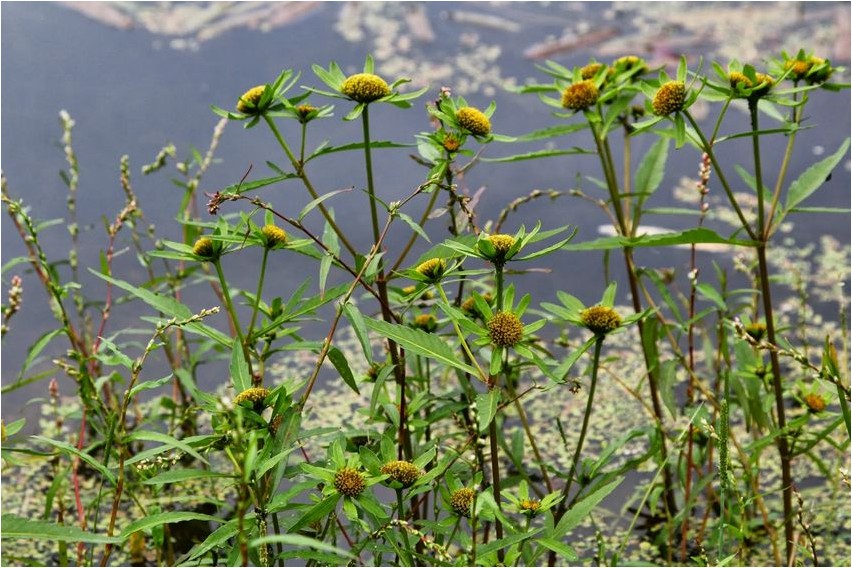
After all, straight or branched stems of annual herbaceous plants of the Chereda genus can be covered with leaves of various shapes: pinnately dissected, whole, or divided into several lobes. Typical for the Aster family, inflorescences – baskets can be formed by marginal petal flowers and central tubular ones, or they may not have marginal asexual flowers, showing the world only bisexual tubular flowers of their central circle. The fruit is a bristly achene.
Varieties
* Double-pinnate series (lat. Bidens bipinnata)
* Tripartite sequence (lat. Bidens tripartita)
* Henderson string (lat. Bidens hendersonensis)
* Drooping string (lat. Bidens cernua)
* Sequence of fused lobes (lat. Bidens connata)
* Leafy string (lat. Bidens frondosa)
* Poplar seedling (lat. Bidens populifolia).
Distribution
Plants of the Chereda genus can be found on every continent except Antarctica. They grow in tropical and warm temperate regions of the planet.
Among the numerous species there are some that are endangered.
The Chereda genus is so closely related to the Coreopsis genus that it can sometimes be difficult to distinguish plants of one genus from plants of another genus.
Usage
A small amount of flower nectar from some Chereda species supports bees in the fall, when many plants have already bloomed.
Certain types of Cereda are used in traditional medicine in the treatment of skin diseases, dysentery and sore joints.
The leaves and flowers of Chered are used to obtain dyes for wool and silk fabrics.