passion fruit
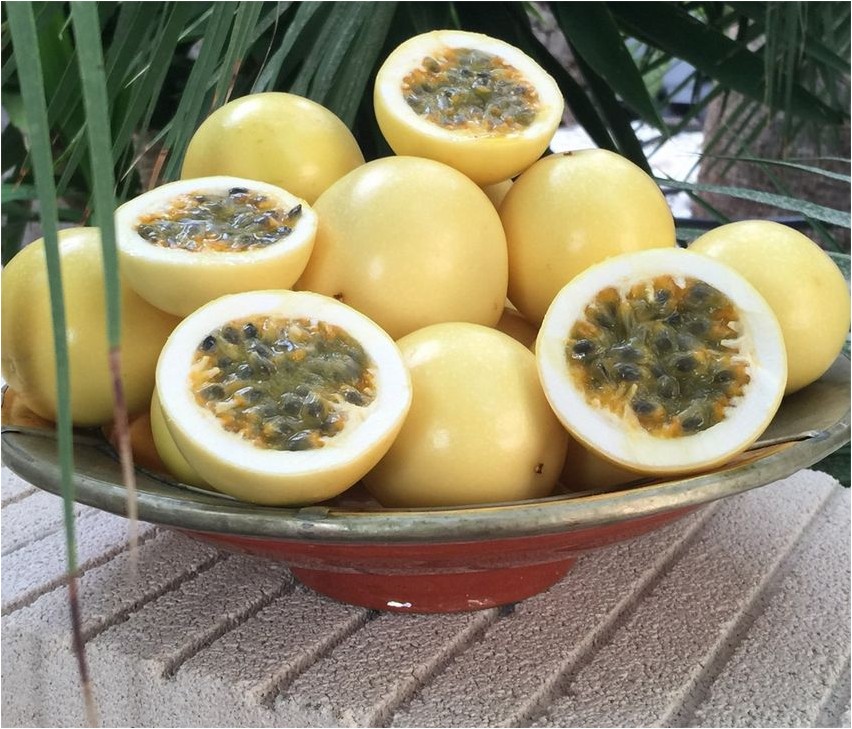
Passion fruit (lat. Passiflora edulis) is a tropical evergreen vine belonging to the Passionflower family.
Description
Passion fruit is an evergreen vine that can reach ten meters in length. The deeply three-lobed and alternate leaves of this plant grow up to twenty centimeters in length and are characterized by a dark green color. And the edges of the leaf blades are usually finely toothed.
The diameter of single passion fruit flowers can reach three centimeters. Moreover, each flower is equipped with five stamens, five petals and five sepals.
Passion fruits are oblong or spherical in shape, and their color usually varies from dark purple to yellow. As a rule, the fruits ripen after seventy to eighty days from pollination.
Where does it grow
Passion fruit is native to South America (Paraguay, Argentina and Brazil). In addition, it is quite widely cultivated in the Galapagos Islands, Hawaii, Sri Lanka, as well as in Israel, Macaronesia and New Zealand.
Usage
The edible fruits of passion fruit are widely consumed. And their juice, sweet and sour in taste, has high tonic properties. It is often added to yoghurts or mixed with orange juice. Passion fruit juice has also found its use in cosmetology and pharmaceuticals. It helps improve sleep and has a calming effect on a person, and also has the ability to suppress the growth of cancer cells.

Eating passion fruit is quite simple — cut the fruit into two parts and eat the fragrant pulp. By the way, the seeds of the fruit can also be eaten, and they are often used to decorate various confectionery products, especially cakes. True, these seeds have a hypnotic effect, so you should not abuse them.
Passion fruit is endowed with the ability to have a mild laxative effect and significantly contributes to improving bowel function. It is an excellent antipyretic and stimulates the removal of uric acid from the body. This fruit is very useful for all those suffering from liver and urinary tract diseases. In addition, it provides invaluable assistance with low blood pressure.
These tropical fruits also contain alpha hydroxy acids. This allows passion fruit to help improve skin tone, firmness and hydration. Most often it can be found in cosmetics (especially gels) for aging skin characterized by poor blood circulation, as well as for pimply skin and oily skin that is unable to completely cleanse itself.
Passion fruit also helps in reducing weight and cholesterol in the blood, as well as in diseases of the cardiovascular system. This fruit also has anti-inflammatory and antimicrobial effects, regulates the functioning of the nervous system, protects the body from all kinds of viral infections and is used to prevent diseases of the digestive system.
In addition, passion fruit is included in some sedative medications.
Contraindications
Some people may experience individual intolerance to these fruits, as well as allergic reactions to this beneficial fruit.
It is not advisable for pregnant women and nursing mothers to consume passion fruit in large quantities. And these fruits are strictly contraindicated for small children — their digestive system copes with wonderful fruits very poorly.
Growing
You can grow passion fruit at home, however, this requires a fairly large space and careful care for this crop. And in no case should we forget that passion fruit does not tolerate cold at all.