ivy
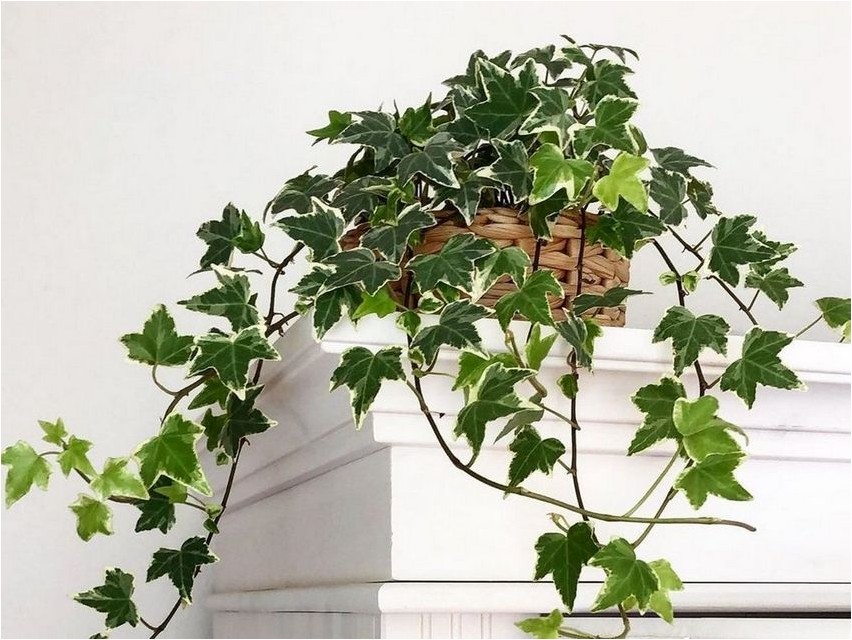
Ivy (lat. Hedera) is a genus of evergreen vines and creeping shrubs of the Araliaceae family. The genus includes 15 species. They are found naturally in Australia and countries with warm and temperate climates.
Typical places are shady forests, ravines, rocks. In ancient times, ivy was considered a symbol of love and fun.
Characteristics of culture
Ivy is an evergreen vine or creeping shrub with lignified stems up to 15-20 cm long. The stems at the base are covered with thin brownish bark, which becomes darker in color over time. Ivy climbs up the support using suction cups located at the base of the leaves. The leaves are dark green, densely leathery, glossy, angular-lobed, without stipules.
The flowers are small, have no bracts, and are collected in apical corymbose, capitate, umbellate or racemose inflorescences. The calyx is five-toothed or entire. The corolla is five-petalled, valved. The fruit is an inedible berry, can be black or yellow in color, and contains 3-5 seeds.
Growing conditions
The location is sunny with shade from direct sunlight. In dense shade, plants with variegated colors lose their decorative effect. When growing crops indoors in winter, additional lighting is necessary. Soils are preferably moist, containing lime and humus. Compacted, swampy and highly acidic soils are not desirable. The optimal temperature for growth and development is 18-25C. Variegated forms of ivy are more heat-loving.

Reproduction
Ivy is easily propagated by layering and apical cuttings. Cuttings are cut from the tops of healthy and strong shoots. The length of the cutting varies from 10 to 15 cm. The four lower leaves of the cuttings are removed, after which they are placed in a glass of water up to a third of the length. You can plant the cuttings in a substrate consisting of garden soil and coarse sand.
If the growing conditions are met, the cuttings will take root in 30-45 days. Then they are planted in a permanent place. Indoor ivy can be propagated by grafting; in this case, ivy shoots are grafted onto an adult fatsia (a representative of the same family). As a result of grafting, very beautiful, original, weeping trees of short stature are obtained.
Care
Ivy is moisture-loving and needs frequent and abundant watering. Fertilizing with water-soluble nitrogen fertilizers is mandatory; they will speed up plant growth. The use of complex mineral and organic fertilizers is also not prohibited. One feeding per season is sufficient, which is carried out in early spring.
Ivy is often attacked by pests and diseases. Spider mites are considered the main enemy of this plant. Pests are removed first mechanically, by treating the leaves and stems of the plants with a cloth soaked in soapy water, and then by treating them with special products, such as “Actellic” or “Karbofos.” Subsequently, the plants are regularly sprayed with the aforementioned products. Pruning is essential for ivy and is carried out as needed.
Applications
Garden forms of ivy are used in landscape design. The plant is used to create small architectural forms, such as geometric shapes and animal figures. Ivy looks most harmonious when combined with morning glory. Both plants are excellent for creating stunning vertical gardening compositions.
Ivy can climb any wall (brick, stone, or plaster). Ivy looks especially captivating in autumn, when the foliage turns yellow, orange, and red. Ivy is also grown as a houseplant and fits perfectly into any interior.





