Astrantia
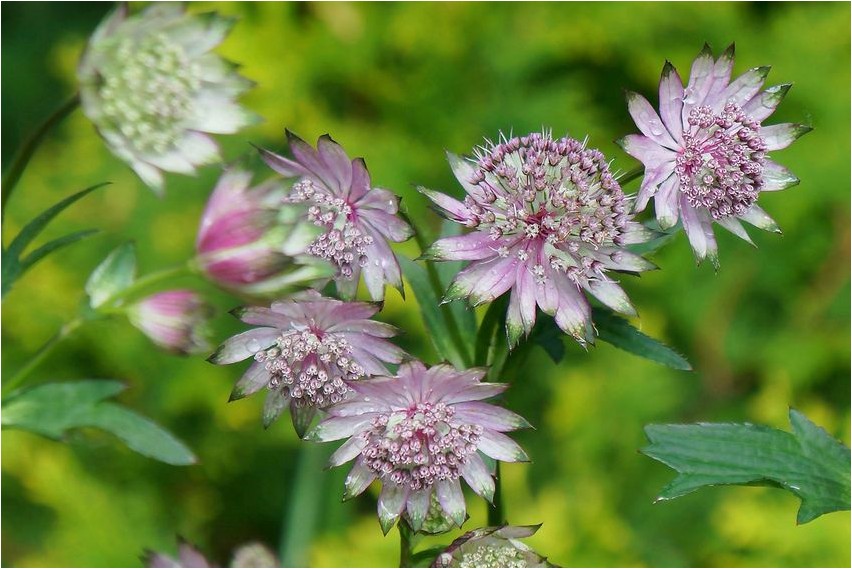
Astrantia is also known by the name “star”. This flower is considered one of the oldest garden plants. The advantageous characteristics of astrantia include its amazing resistance to frost, ease of care and durability.
In addition, this flower is extremely rarely susceptible to attacks by pests and various diseases.
Astrantia is a herbaceous perennial plant that belongs to the celery or umbrella family. The flower owes its name to its origin from the Latin language, which means “star”. This name is easily explained by the very appearance of astrantia. The plant is mainly found in meadows and mountains of Europe, Asia and the Caucasus.
Description of astrantia
Astrantia has white or pinkish rounded inflorescences that reach six centimeters in diameter. These inflorescences are surrounded by a kind of corolla of leaves, the stems of the plant are quite persistent, and the leaves are lobed. It can be noted that astrantia is considered an excellent flower for making a variety of bouquets.
In Europe, this flower is very widely known and popular, which is explained not only by its original and bright appearance, but also by its ease of care.

The stem of the plant is endowed with a straight shape, and its height can reach eighty centimeters in length. It is worth noting that there are practically no branches on the stem. The bushes have a spreading form. Large leaves are collected in a rosette, and astrantia blooms very profusely. The flowering period will last from June to August. In general, flowering can occur a second time, in the case when the flower is grown at home and all faded shoots are removed on time.
Growing Astrantia
It is believed that the most favorable conditions for the favorable development of astrantia are either full sun or light shade. Moreover, in absolute shade this flower will develop very poorly. It is worth noting that dense plantings of this flower can provide active assistance in the fight against weeds, which is why astrantia is often planted in the most problematic areas.
Reproduction occurs through seeds; experts recommend sowing in the autumn. It is also important to remember that seedlings will bloom for the first time only after three years. As for old plantings of this flower, self-seeding can occur there, so you should cut off the inflorescences as soon as they fade. Such measures will avoid the appearance of unwanted colors in the future.
Propagation by dividing rhizomes is also acceptable; this method can be applied only to some varieties of astrantia. This operation should be carried out in early spring, at a time when the plant’s buds have not yet begun to grow.
Useful properties of astrantia
It is believed that astrantia is endowed with healing properties, because this flower contains many useful substances. Actually, in official medicine all the medicinal properties of this plant are not used. However, astrantia has found its use in folk medicine, even though this flower is extremely rare in nature.
Astrantia is recommended for use in cases of poisoning of varying degrees, because it can have a laxative effect on the body. However, in more difficult cases, the help of this flower may not be enough. Also, astrantia is sometimes used as an antipyretic, when the temperature is not very high.





