English sundew
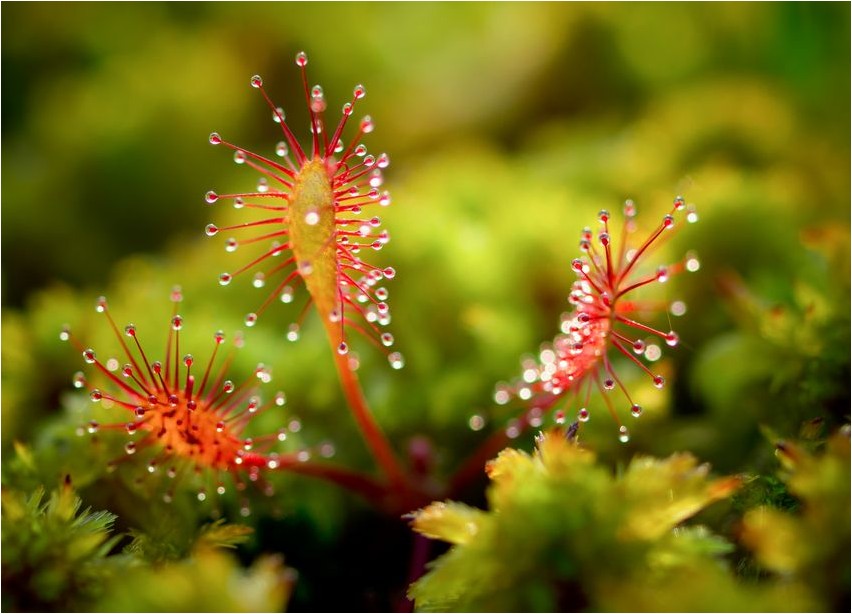
English sundew is one of the plants of the family called sundews; in Latin the name of this plant will be as follows: Drosera anglica Huds.
As for the name of the English sundew family itself, in Latin it will be: Droseraceae Salisb.
Description of English sundew
English sundew is a perennial herbaceous plant whose height will vary between seven and twenty-five centimeters. Such a plant is endowed with obliquely directed long-petioled and lanceolate leaves, the height of which will be about five to ten centimeters and the width will reach four millimeters. The fruit of the English sundew is a capsule, the seeds of which will be colored in light brown tones.
The flowering of this plant begins in the middle of the summer season. English sundew prefers moist sandy outcrops and sphagnum bogs to grow. Under natural conditions, this plant is found in Central Asia, almost all regions of Russia, the Caucasus, Belarus and Ukraine, with the exception of only the southern regions. It is noteworthy that English sundew is a poisonous plant, for this reason it is recommended to exercise extreme caution when handling this plant. In addition, such a plant needs protection.
Description of the medicinal properties of English sundew
English sundew is endowed with very valuable healing properties, and for medicinal purposes it is recommended to use the entire above-ground part of this plant along with a rosette of basal leaves. However, it is important to remember the fact that blackened and dark brown grass is strictly prohibited from being used as a medicine.
The presence of such valuable healing properties is recommended to be explained by the content of ascorbic and organic acids, naphthoquinones plumbagin and droseron, aatocyanin enzyme and a proteolytic enzyme in the composition of this plant, the effect of which is similar to pepsin.

This plant has the ability to provide very effective diuretic, bactericidal, antispasmodic, expectorant, sedative, antipyretic and anti-inflammatory effects.
An infusion or tincture prepared from the English sundew herb is indicated for use in small doses for neuroses, bronchial asthma, chronic bronchitis, headaches, diarrhea, dysentery, laryngitis and hemoptysis.
As for traditional medicine, here this plant is very widespread. Traditional medicine recommends the use of English sundew juice, which is endowed with the ability to dissolve organic substances and for this reason is very successfully used to remove warts.
In the form of tea, this plant in combination with Ivan da Marya herb, tricolor violet herb, marshmallow root, great plantain and other medicinal plants is recommended for use against whooping cough.
For whooping cough and cough, drink an alcohol tincture based on this plant: this medicine should be prepared in the same way as the alcohol tincture of sundew. This very effective healing remedy should be used three times a day, fifteen drops with water.
Actually, an infusion based on the herb English sundew will be prepared in the same dosage as an infusion based on sundew rotundifolia. Provided that such a healing remedy based on this plant is used correctly, the positive effect will be noticeable quite quickly, depending on the degree of the original disease.





