Vanilla
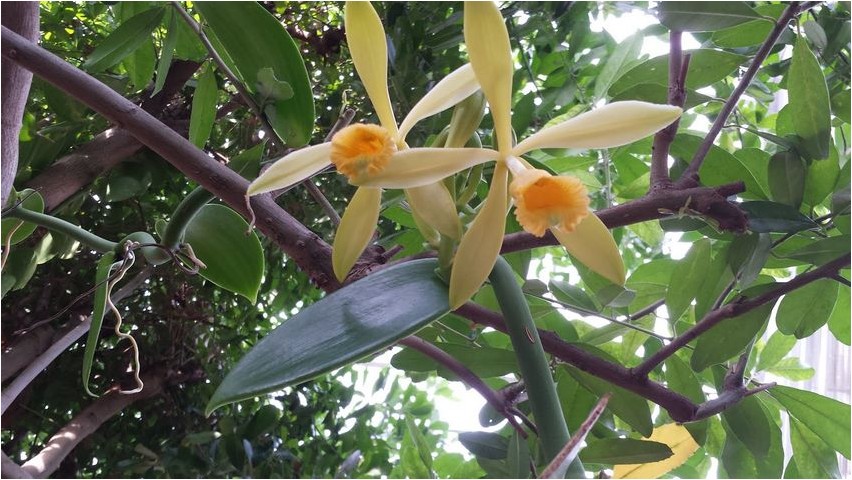
Vanilla (lat. Vanilla) is a genus of climbing plants belonging to the Orchid family (lat. Orchidaceae). Some species of vines of this genus give people an aromatic spice of the same name, which in value is second only to Saffron.
Despite the high cost associated with the labor-intensive process of growing Vanilla pods, the spice is very popular all over the world due to the unique taste of the plant”s seeds.
What”s in your name
The Latin genus name “Vanilla” is based on a diminutive of the Spanish word “vaina”, the meaning of which is translated as “sheath or pod”, which in the diminutive version translates as “small pod” or “pod”. The reason for this name was the fragrant fruit pods of the Mexican vine, grown since ancient times by the American Indians.
During the time of the last Aztec emperor, Montezuma II (1466 — 1520), vanilla pods served as money, replenishing the imperial treasury in the form of taxes collected from the subjects of the Empire.
Description
Plants of the Vanilla genus are vines with thin stems that cling to support that comes along the way with special tendrils, like a grapevine. The support can be a tree, a post or pole, or any other support called a “guardian”.
Left unattended, the vine will strive closer to heaven. To make Vanilla easy to maintain, every year farmers shed the top parts of the plant so that the entire vine is within reach of a standing person. Such treatment of the vine also stimulates more abundant flowering.

Under natural conditions, vines, for successful growth and their presence on the planet through seed germination, created two alliances with other earthly creatures. Flowers of plants of the Vanilla genus have a complex structure, characteristic of all orchid flowers. Although they are hermaphrodites, to avoid self-pollination, the male and female organs in the flower are separated by a membrane. For natural pollination they require an intermediary.
The first alliance of vines was made with pollinating bees, who live only in Mexico and know how to get to the pollen cunningly hidden by the flower. Since such bees are not found in other places on the planet, vines planted outside of Mexico refused to give people their fruits. People had to look for several centuries for the possibility of artificial pollination of liana flowers.
The second alliance was concluded with the fungal mycorrhiza, which helps the vine seeds to germinate. Therefore, in conditions different from those in Mexico, propagation of vines occurs only by cuttings.
History of artificial pollination
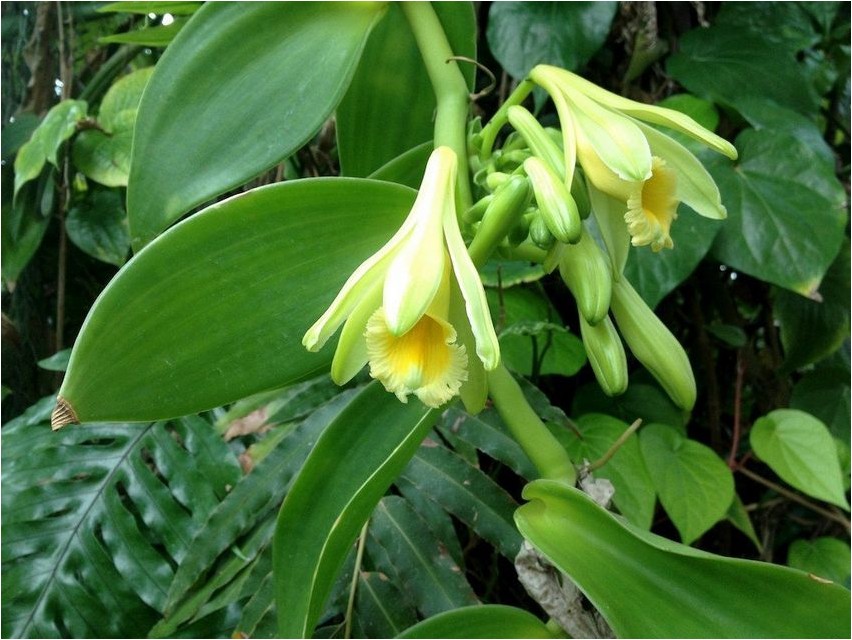
The flowers of all types of Orchids have a very complex structure, radically different from the flowers of plants familiar to us. So, vines of the Vanilla genus have a protective valve inside the flower, under which only black bees, the natives of Mexico, have learned to make their way to pollen and nectar.
In 1836, the Belgian botanist Charles Morran, drinking coffee on a patio in Mexico, observed the actions of bees that managed to pollinate vine flowers. He began experimenting with hand pollination, but the method he came up with turned out to be too labor-intensive.
A simpler method was invented by a 12-year-old boy named Edmond Albius, who was a slave and helped his master care for garden plants. Using a beveled bamboo stem, he lifted the membrane separating the anther and with his finger transferred the pollinia from the anther to the stigma. This has to be done with each flower where there are no black bees. This is why the spice is so expensive.
Varieties
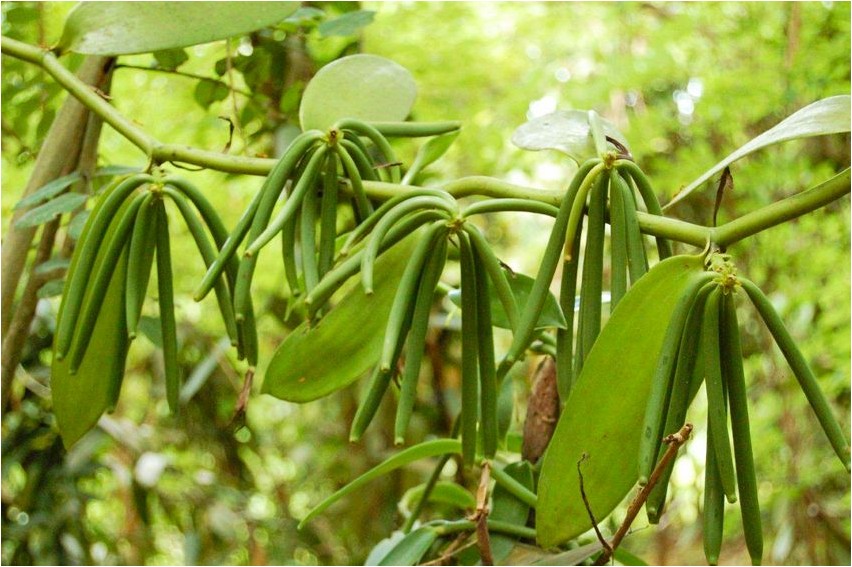
The Vanilla genus includes more than 100 species of orchid plants. Of these, only the following three species are grown in culture:
* Vanilla planifolia (lat. Vanilla planifolia) — or Vanilla fragrant is the main species grown for its spice. Originally from Mexico, the liana has taken root well on the island of Madagascar and Indonesia, which today are the largest producers of the vanilla spice.
* Magnificent vanilla (lat. Vanilla pompona) — this and the following types have a lower vanilla content than Vanilla flatleaf.
* Tahitian vanilla (lat. Vanilla tahitiensis).