Lesser Duckweed
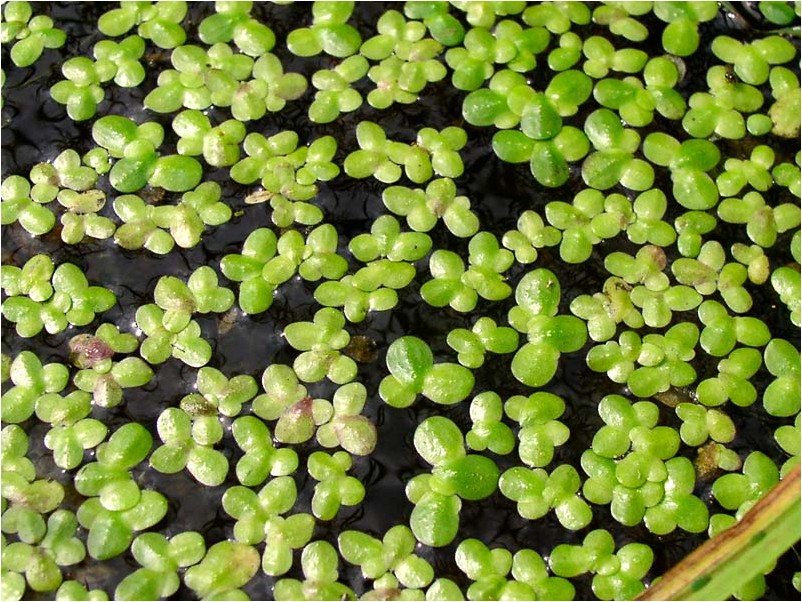
Lemna minor is a member of the duckweed family. Its Latin name is Lemna minor L.
As for the family name itself, it is Lemnaceae.
Description of Lesser Duckweed
Lemna minor is a small perennial plant that floats on the surface of the water. This plant has a very simplified structure; it is not divided into leaves and stems. It consists of a small green leaf-like body, called a frond. This plant is dark green in color and has a diameter of about half a centimeter to one centimeter. A single root extends from this diameter into the water. Lesser duckweed reproduces through budding and overwintering buds, which fall to the bottom of bodies of water. Lesser duckweed blooms from May to October. It’s worth noting that this plant rarely blooms. In the wild, this plant is found in Central Asia, Ukraine, Belarus, and all regions of Russia. Lesser duckweed grows abundantly in stagnant bodies of water, often completely covering the surface.
Description of the medicinal properties of Lesser duckweed
Lesser duckweed possesses valuable medicinal properties, which are attributed to its content of bromine, flavonoids, anthocyanins, calcium, vanadium, iron, copper salts, traces of ascorbic acid, traces of radium, protein, and silicon. Lesser duckweed possesses highly effective diuretic, desensitizing, antipyretic, hemostatic, antispasmodic, astringent, antimicrobial, tonic, anthelmintic, and anti-influenza properties.
This plant is widely used in Chinese and Russian folk medicine. In decoction form, it is recommended for vitiligo, urticaria, allergic diseases, and angioedema, and applied topically for snake bites, tumors, carbuncles, erysipelas, and conjunctivitis.
In homeopathy, decoctions and infusions made from lesser duckweed are indicated for bronchitis, polyps, bronchial asthma, rhinitis, pharyngitis, and laryngitis. For gout, aches and pains and rheumatism, this plant is used in the form of pain-relieving poultices.

Poultices made from duckweed are used as an emollient, including for hemorrhoids and coughs. An infusion made from this plant is used as an anti-flu, choleretic, hemostatic, tonic, antiscorbutic, antimicrobial, and astringent, and is also used for dyspepsia.
Notably, extracts of this plant have been shown to possess highly effective antimalarial activity.
Duckweed tincture in drops is used in German folk medicine for rheumatism, inflammation of the mucous membrane of the upper respiratory tract, jaundice, pharyngitis, laryngitis, and chronic, persistent rhinitis. Externally, duckweed infusion is used to moisten and wash ulcers, boils, and wounds. In dermatology, preparations based on this plant are used for various allergic skin conditions, including angioedema, eczema, neurodermatitis, and urticaria. Internally and externally, this remedy is used for graying hair, baldness, vitiligo, psoriasis, and various other skin conditions.
MARSH MINOR DUCKWEED || Beneficial Properties and Uses
MARSH MINOR DUCKWEED