Shandra
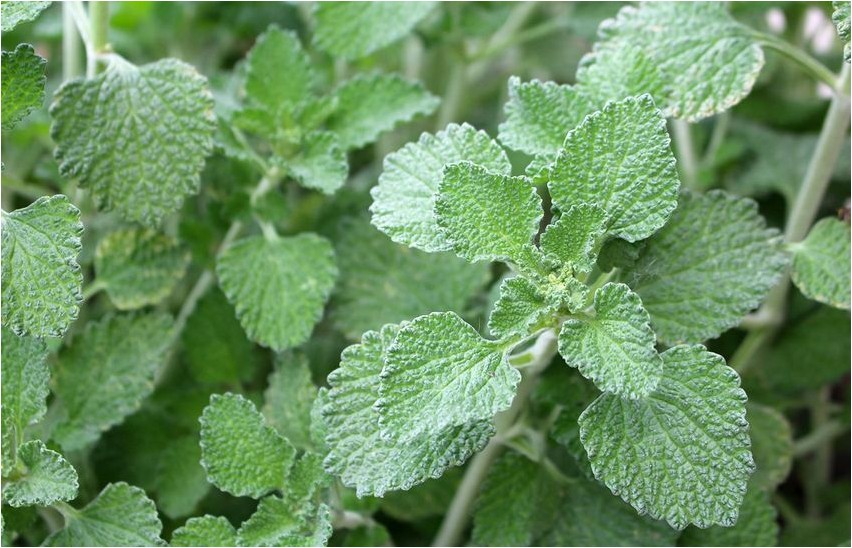
Horehound (lat. Marrubium) is a genus of annual and perennial herbs of the Lamiaceae family. The natural range is North Africa, Europe and temperate regions of Asia.
Typical growing areas are dry southern slopes, fallow lands, springs and roadsides.
Characteristics of culture
Horehound is an annual or perennial plant up to 70 cm high with a white woody root. The stem is erect, with medium branching. The leaves are petiolate, crenate, slightly drooping, ovate, wrinkled. They are dark green on the outside, whitish-felt on the inside. The flowers are small, collected in dense false whorled inflorescences, equipped with linear-spherical bracts, and have no pedicels. The calyx is 5-10-toothed, tubular. The corolla is two-lipped. The fruit is an obovate nut. Horehound blooms in July – August.
Growing conditions
In nature, horehound grows on dry and calcareous soils, but cultivated species are more demanding. Soils are preferred light, slightly acidic, moderately moist. Heavy and waterlogged soils are not suitable for horehound. When placing crops, crop rotation is not taken into account. Horehound is grown in the same place for 3-6 years; in the future, replanting is necessary, otherwise the plants will become smaller. The location is sunny or semi-shaded.
Subtleties of cultivation
The area for the crop is prepared in advance: the soil is dug up, compost or humus (4-5 kg per 1 sq. m.), potassium sulfate (30-40 g per 1 sq. m.) and superphosphate (15-20 g per 1 sq. m.) are added. Horehound is sowed in April – May. Planting depth is 1. 5-2 cm. The distance between plants in a row should be about 20-25 cm, between rows – 40-50 cm.
Caring for horehound comes down to rare watering during a long drought, feeding with ammonium nitrate in the phase of formation of 4-5 pairs of true leaves. Thinning as necessary. The crop does not need treatment against pest invasion, since it has a pronounced citrus-mint aroma that repels uninvited guests.

Application
Horehound is widely used in cooking and folk medicine. The stems and leaves of plants are used to prepare various drinks, flowers and buds are used as a spice to enrich the flavor and aromatic characteristics of vegetable, meat and fish dishes, as well as to prepare sauces and vinegars, and to flavor alcohol. The oil produced from the aerial part of horehound is used to make varnishes, paints, drying oils and preparations against fleas and bedbugs.
Horehound contains a large amount of tannin, essential oils, coumarins, vitamins, resinous and bitter substances, so it is simply irreplaceable in the treatment of diseases of the respiratory tract, liver and bladder. Herbal infusions are recommended for anemia, asthma, problems with the gastrointestinal tract and fevers of various types. Chandra has sedative, choleretic, anti-inflammatory, astringent and antiarrhythmic properties.





