Lavender officinalis
Lavendel (Lavendel)
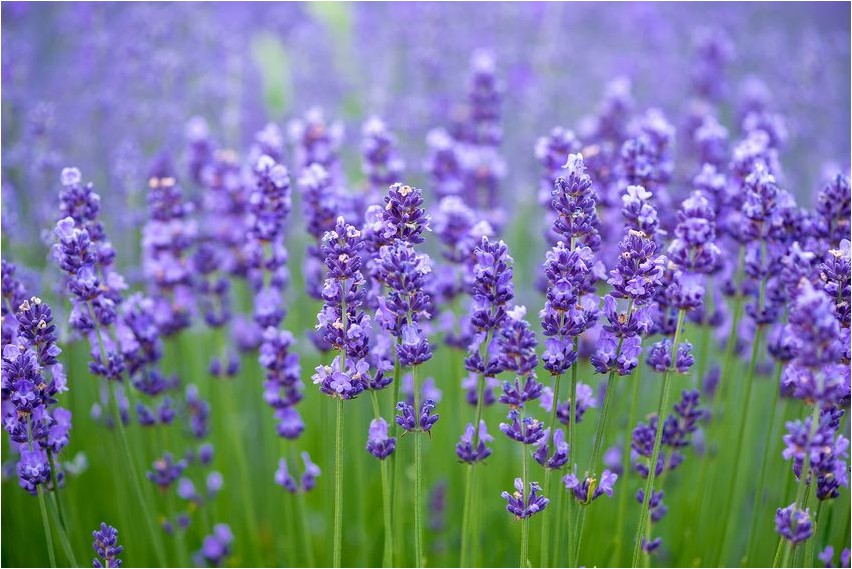
Lavender is one of the plants of the family called Lamiaceae; in Latin the name of this plant will be as follows: Lavandula officinalis Chaix. et Kitt.
As for the name of the lavender officinalis family itself, in Latin it will be: Lamiaceae Lindl.
Description of lavender officinalis
Lavender is a perennial evergreen subshrub that will reach a height of about sixty to ninety centimeters. The lower branches of this plant will not only be lignified, but also highly branched, and the presence of numerous young herbaceous shoots is noted on such branches. The root of Lavender officinalis will be branched, woody and perennial. The flowering shoots of this plant are tetrahedral, they will be densely leafy below, and they will end in an erect inflorescence. The leaves of Lavender officinalis are opposite and sessile; in shape they can be either linear-lanceolate or linear. The length of such leaves of this plant will be about two and a half to six centimeters, and the width will be equal to half a centimeter to one centimeter. The leaves are entire and pubescent, and the edges will be curled downwards. Young leaves of lavender officinalis are colored gray, while older leaves will have a green color. The flowers of this plant are bisexual; they will sit in the axils of the bracts in groups of three to five. Such flowers are endowed with opposite whorls, which will be collected at the very ends of the branches into inflorescences, dressed in a spike-like shape. There will also be a corolla, painted in dark blue, light blue and bluish-violet tones. The fruit of this plant consists of four small oblong single-seeded nuts, colored brown.
Lavender officinalis blooms from June to August. It is noteworthy that this plant will be cultivated in the Crimea, Krasnodar Territory, Moldova, the Caucasus and Central Asia.
Description of the medicinal properties of lavender officinalis
This plant possesses valuable medicinal properties, and its inflorescences are recommended for medicinal use. Lavender inflorescences are best harvested approximately one to one and a half weeks after the plant begins to bloom. Essential oil is then extracted from these inflorescences. This essential oil contains the following components: coumarins, borneol, geraniol, furfural, linalool, cedrin, bisobolene, acetic acid, and ursolic acid.
It should be noted that lavender has a very pungent, distinctive, pleasant aroma, and both fresh and dried flowers have a pungent, spicy, bitter taste.

Lavender oil has antiseptic properties and is used for cuts, burns, various skin conditions, benign ulcers, and to improve the aroma of other medicinal products. Lavender flowers are recommended as a mild sedative and antispasmodic for neurasthenia, palpitations, and migraines. Furthermore, the flowers of this plant can also be used as an effective choleretic and for the treatment of gastrointestinal colic.
For internal use, take three tablespoons of lavender flowers and pour two cups of boiling water over them. After ten minutes, strain the infusion and drink it throughout the day.





