Cornflower head
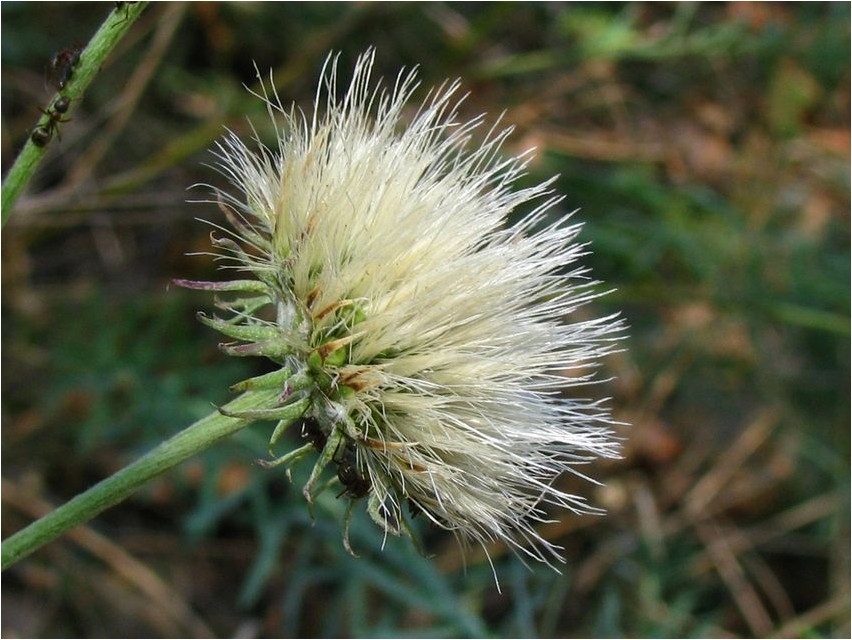
Cornflower is one of the plants of the family called Asteraceae or Asteraceae; in Latin the name of this plant will be as follows: Jurinea cyanoides (L.) Reichenb.
As for the name of the cornflower family itself, in Latin it will be like this: Asteraceae Dumort. (Compositae Giseke).
Description of cornflower head
The cornflower cap is also known by the following popular names: bilk, podbel, red cap and male groznik. Cornflower grass is a perennial herbaceous plant, the height of which will fluctuate between twenty and seventy-five centimeters. The stem of this plant can be either simple or slightly branched; it will be cobwebby-tomentose and small-leaved. The leaves of the cornflower are lanceolate, from below they will be slightly cobwebby, such leaves are painted in dark green tones, from below they will be densely white-tomentose and they are endowed with curled edges. Also, such leaves of cornflower will be more or less deeply pinnately divided; they are endowed with either linear-lanceolate or oblong-lanceolate lobes, but rarely they can be whole. The lower leaves of this plant are collected in a rosette, the upper leaves will be stalked and linear, the baskets of cornflower flowers are on rather long stalks and will be slightly closer together, and also endowed with a whitish-woolly involucre. All flowers of this plant will be bisexual. There are only five stamens, and the anthers will have ciliated-fringed appendages at the very base. The ovary of the cornflower capitola is inferior, single-seeded and unilocular. The fruit of this plant is a wedge-shaped tetrahedral naked achene, endowed with longitudinal ribs. The column of this plant will be endowed with blades that are short and blunt.
Flowering of the cornflower occurs in summer and autumn. Under natural conditions, this plant is found in Western Siberia, Belarus, Moldova, the Caucasus, Ukraine and the European part of Russia. For growth, this plant prefers sand, steppes, pine forests, calcareous and chalk slopes.
Description of the medicinal properties of cornflower capsicum
Cornflower cinquefoil has valuable medicinal properties, and its leaves are recommended for medicinal purposes. These valuable medicinal properties are attributed to its content of alkaloids, coumarins, anthocyanins, rubber, flavonoids, tannins, and sesquiterpenoids. It’s worth noting that the leaves of this plant are recommended for use as a therapeutic and prophylactic agent for scarlet fever. Interestingly, cornflower cinquefoil has the ability to increase milk yield in cows.
For the prevention and treatment of scarlet fever, the following remedy based on this plant is recommended: to prepare this remedy, add three tablespoons of dried, crushed cornflower cinquefoil to one liter of boiling water. The resulting medicinal mixture should be steeped for approximately two hours, after which it is recommended to strain it very thoroughly. This remedy, based on cornflower rhododendron, is taken three times daily, from one tablespoon to one-half cup; the dosage will be adjusted according to the patient’s age. To ensure maximum effectiveness when taking this remedy, it is recommended not only to strictly follow all the instructions for taking this remedy, but also to adhere to all the recommended dosages.





