Cotton Plant
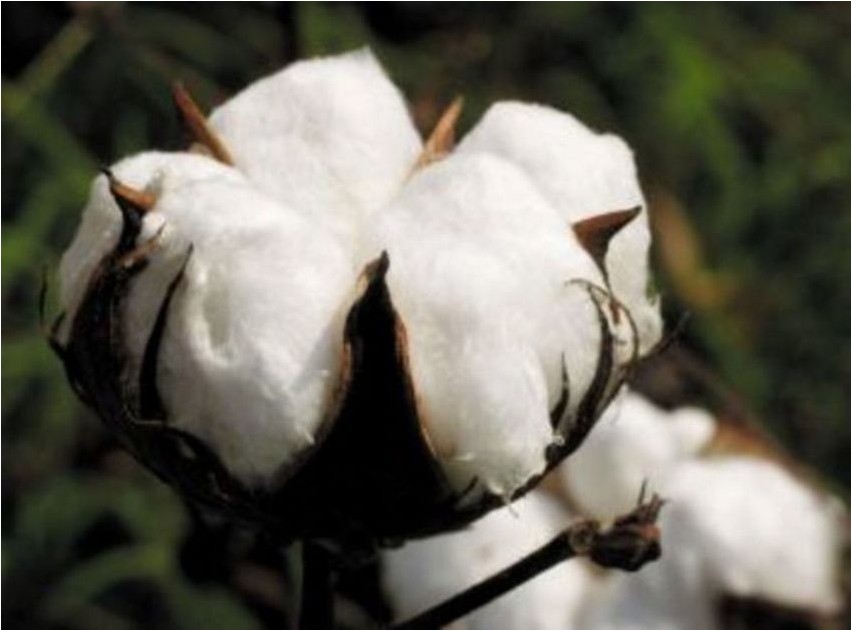
Cotton plant (Latin: Gossypium) is a genus of amazing plants, classified in the Malvaceae family. The fruits of this plant provide humans with plant fibers, from which humans have learned to craft comfortable and pleasant clothing.
Plants of this genus require specific soil and favorable conditions, and each type of cotton has its own specific living conditions, differing from those of other species. People strive to please these plants by cultivating cotton plants in tropical and subtropical regions of different continents.
What’s in a name
When botanists gave the Latin name “Gossypium” to a genus of plants with over fifty species, they left no clear explanation of the roots of this word. Therefore, today’s literature offers conflicting information. Some cite ancient Greek, others Arabic, in their attempts to discover the roots of the word that gave its name to these most valuable representatives of the plant kingdom. In fact, the Latin name is used by a relatively small circle of people, and for most people, these plants are associated with the name “Cotton,” which in Russian sounds like “Khlopchatnik” or simply “Khlopok” (Cotton).
Description
The lifespan of a single plant can range from one to several years. Its perennial life is supported by a taproot extending into the soil to a depth of thirty centimeters to three meters.
Thin, strong, branching stems provide reliable support for three to five lobed, long-petioled leaves.
The bushes are adorned with numerous single flowers. The fused petals of the corolla, numbering from three to five, can come in a wide variety of colors. The corolla is securely protected by a double calyx formed by serrated green sepals, which in turn have a three-lobed protective wrapper. The fruit of the plant develops under this protection. The cotton plant fruit is an oval or round capsule containing numerous seeds with a thick seed coat, further protected by two types of soft hairs. These soft hairs are what drive the cotton plant’s cultivation.

The Multifaceted Plants of the Genus
Given the multifaceted nature of the cotton plant genus, botanists find it difficult to provide a clear classification, as some species are hybrids of other species. Such is the frivolous wonder of nature. However, four species are recognized, cultivated for the soft seed pod filling:
* Gossypium herbaceum
* Tree cotton (lat. Gossypium arboreum)
* Barbados cotton (lat. Gossypium barbadense)
* Shaggy cotton plant (lat. Gossypium hirsutum).
All these species originally grew on different continents, and therefore differ in a number of characteristics from each other. The corollas of flowers have different colors, and most importantly, the length of the fibers differs significantly among different species, affecting the quality of the fabrics produced from them.
Even the timing of cotton growing in different countries is a very individual matter. For example, in America, the seed season begins from mid-March to the end of April. In Egypt, the crop is grown from the first half of February to April 15, while Indian cotton (Swart) is grown from May to early August. Peruvian and Brazilian cotton are grown from late December to late April.
Humanity’s Essential Natural Fiber
Cotton is the leader among all natural fibers used by modern people. The soft hairs in which the seeds are buried can be short or long. It is clear that long hairs make better threads than short ones, but both are industrial raw materials, from which first threads are made, and then various fabrics.
Other uses
Cotton provides people with not only natural fiber, but also cottonseed oil, as well as nutritious protein feed for animals. Thus, cotton makes a huge contribution to the world economy and is of great importance for the development of agriculture and light industry in countries with a subtropical climate on continents such as Asia, Africa and South America.
COTTON on the windowsill / From seeds to bolls / Vegetable garden in containers
cotton plant





