Black crowberry
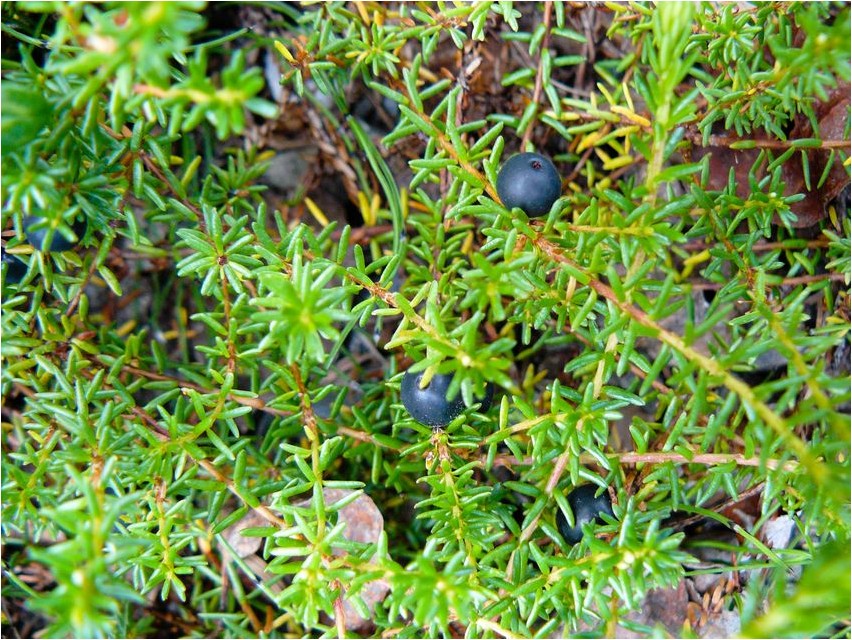
Black crowberry is one of the plants of the family called crowberry; in Latin the name of this plant will be as follows: Empetrum nigrum S. F. Gray.
As for the name of the family itself, in Latin it will be: Empetraceae.
Description of crowberry black
Black crowberry is also known under the names of heather with black berries, berry heather, crowberry, crowberry, verisa, crowberry, expensive herb yernik berry, golubintse, shiksha, scikho, siksha and black nakamnik. This plant is a small, low and evergreen creeping shrub, the stems of which will be branched and dark brown, spreading, their length can range from twenty centimeters to one meter. The leaves will be quite small, linear-oblong, and their edges are curled down, and the leaves themselves are loosely arranged. Black crowberry flowers are unisexual, they can be either pink or dark red, these flowers will have three petals. The fruit is a spherical, bluish-black, sour berry, with a diameter of about five millimeters. This plant has become widespread throughout the Urals, Western and Eastern Siberia, Altai, the European part of Russia, Belarus, as well as in the western regions of Ukraine. For growth, this plant prefers coniferous forests, rocks, swamps and tundra.
Description of the medicinal properties of black crowberry
This plant contains anthraquinones, polysaccharides, oxycoumarins, essential oil, tannins, sesquiterpene lactones, pectins, sugar, resins, paraffins, carotene, vitamin C, benzoic and acetic acids, the microelement manganese, as well as the following flavonoids: avicularin, quercetin, rutin, isoquercetin, hyperoiside and kaempferol. As for the fruits of this plant, essential oil, arabinose, glucose, sugar, saponins, fructose, coumarin, fatty oil, wax, tannins and triterpenoids were found here.
For medicinal purposes, the fruits and ground parts of this plant are most often used, and sometimes the roots of black crowberry are also used. It is noteworthy that the fruits should be harvested in their ripe state, starting around September, and the branches of this plant should be harvested during the flowering of black crowberry.
Preparations containing black crowberry have the ability to increase tissue resistance to damaging effects and accelerate the restoration of tissue function. These preparations also have anti-inflammatory and antidiabetic effects.

In folk medicine, this plant is known for its calming effect on the nervous system, as well as choleretic, anticonvulsant, phytoncidal, and hypotensive properties. This remedy is used for hypertension, insomnia, nervous disorders, and headaches. Furthermore, this remedy is widely used for the treatment of epilepsy and other convulsive conditions. It is also used as a tonic and antiscorbutic, and for headaches, it helps with fatigue. In Tibetan medicine, black crowberry is used to treat inflammatory kidney diseases and anthrax. For neuroses, insomnia, and hypertension, the following remedy is recommended: take fifteen grams of dried, crushed black crowberry twigs and leaves per glass of water. Boil this mixture for six to seven minutes, then let it steep for about an hour or two, then strain thoroughly. Take this remedy one-quarter of a glass before meals three times daily.
Black crowberry. Brief overview, description of characteristics, where to buy empetrum nigrum seedlings