Cymbidium
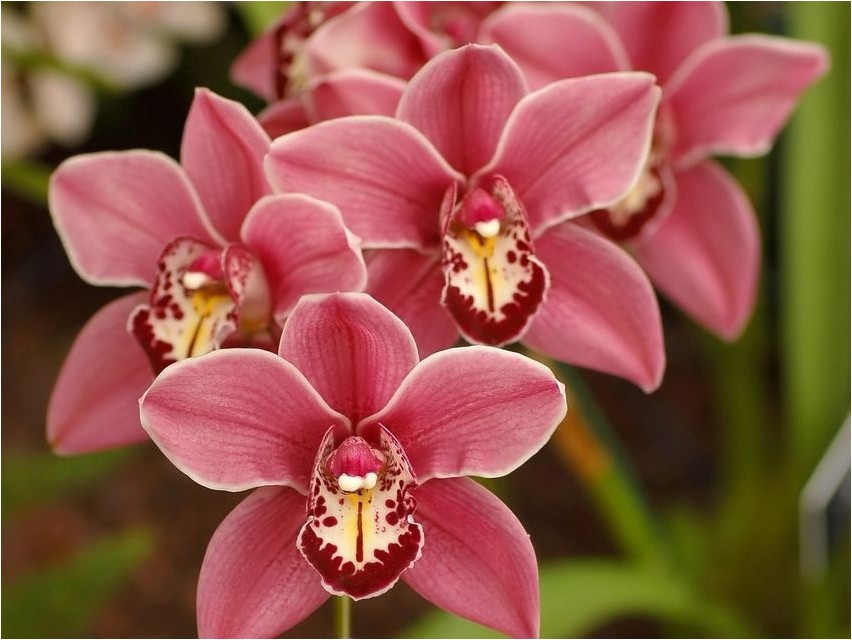
Cymbidium (Latin: Cymbidium) is a genus of epiphytic herbaceous perennial plants belonging to the orchid family (Latin: Orchidaceae).
The Cymbidium genus stands out among its many relatives in the orchid family for the exquisite fragrance of its inflorescences, which earned it the attention of the Chinese philosopher Confucius, who lived in the 6th-5th centuries BC and called these orchid species the “Kings of Fragrances.”
What’s in a name
The official botanical name of the genus “Cymbidium” is derived from the Latin word “cymba,” meaning “boat.” This name was inspired by the shape of the plants’ flowers. In English-language literature, the genus is sometimes called the “Boat Orchid.”
In horticultural literature, the genus name is abbreviated to three letters, “Cym.” Although orchids of this genus have long been known to humans, the first botanical description was made at the turn of the 19th century (in 1799) by Peter Olof Swartz (September 21, 1760 – September 19, 1818), a Swedish botanist.
Description
Since plants of the genus Cymbidium are sympodial orchids, meaning they do not grow upwards but prefer to spread outwards, the average height of the plants is 60 centimeters, and the length of the flower stalks reaches 90 centimeters.
The flower spike originates from the base of the last fresh pseudobulb. The number of flowers on a flower stalk can reach 15 or more. The diameter of the flowers, depending on the plant species and the comfort of the growing conditions, varies from 5 to 10 centimeters.

Flowering continues throughout the winter, displaying a fantastic variety of colors. While blue is impossible to find here, white, cream, yellow, yellowish-green and green, pink, red, brown, and even black, as well as several different shades simultaneously, are all possible and beautiful.
Long flowering periods delight plant owners for about ten weeks. The flowers traditionally have a waxy texture, and the oval sepals and petals are almost the same size.
Chinese Cymbidium species are particularly popular, their fragrance having been noted by the philosopher Confucius even before the Christian era. However, it’s not only the fragrance they emit that attracts gardeners, but also the relative cold hardiness of some species, which can survive at temperatures as low as 7 degrees Celsius. If the cold snap is brief, even minus 2 degrees Celsius won’t be fatal.
Varieties
According to some sources, the genus consists of 52 evergreen orchid species. Cymbidium plants are found in the wild in tropical and subtropical regions of Asia and as far north as Australia. Species distinguished by their large flowers grow at high altitudes. Here are some species in the genus:
* Cymbidium hookerianum (Hooked Cymbidium)
* Cymbidium ensifolium (Sword-leaved Cymbidium)
* Cymbidium aloifolium (Aloe-leaved Cymbidium)
* Cymbidium lansifolium (Lanceolate Cymbidium)
* Cymbidium bicolor (Bicolor Cymbidium).
Uses
The fragrant and large inflorescences of Cymbidium plants have certainly attracted the attention of orchid enthusiasts, and therefore, both natural and hybrid species have found wide use in decorating human living spaces. In warm tropical climates, they thrive in gardens, while in areas with cold winters, they hide in greenhouses or indoors, feeling at home in flowerpots that resemble artfully painted vases.
While they became popular potted plants in Japan beginning in the 17th century, in modern Australia and Europe they are widely grown for cut flowers, as the waxy flowers of orchids can retain their freshness for a long time when separated from the mother plant.
Plants of this genus are even used as food, such as in Bhutan, the species “Cymbidium hookerianum” (hook-shaped cymbidium), which is used to prepare a national dish called “olatshe” or “olachoto.”
CYMBIDIUM Orchid – Complex or SIMPLE