Kumanika
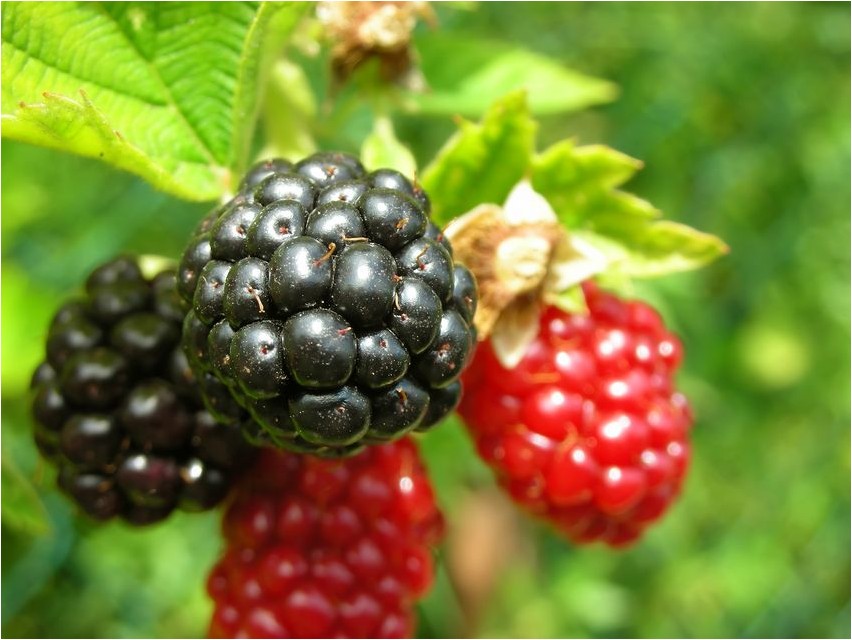
Cumanica (lat. Rubus nessensis) is a plant from the genus Rubus, which belongs to the Rosaceae family, and is one of the varieties of blackberries.
Description
Cumanica is a root-forming deciduous shrub whose height can reach one to two meters. The angular-ribbed upright shoots of the plants droop only at the tops and are endowed with almost straight, sparse thorns of black-purple color. You can also notice a slight bluish coating on the stems.
The complex leaves of brambles consist of three, five or seven thin leaves framed by unevenly sharp-toothed edges. They are usually bare above, and short-haired below along the veins, while the lower surfaces of the leaves are lighter in color.
Short fruiting branches are arranged horizontally and are equipped with trifoliate leaves and sparse spines.
Equipped with white petals and green sepals, the flowers reach a diameter of about two centimeters and are collected in five to twelve pieces in corymbose-paniculate inflorescences located at the tips of the fruiting shoots. Cumanica usually blooms in June or July. The diameter of its reddish-black shiny fruits reaches almost one centimeter. And the seeds of the fruit are triangular in shape and very small.
Habitat
You can meet brambles on the outskirts of swamps, along river banks, on forest edges and in forests in Atlantic and Central Europe or in Scandinavia. And on the territory of Russia, this plant grows in the forest-steppe and forest zones of the European part. Kumanika grows especially well in sandy hilly areas.

Usage
Despite the fact that the fruits of brambles are quite edible, they can be found very rarely in culture. During the flowering period, brambles provide honey bees with a huge amount of nectar. The honey from this plant is always transparent, light and has a surprisingly light aroma.
Kumanika is used to make excellent jam, as well as rich jams, juices and jellies. This berry is also actively used in winemaking.
Use in folk medicine
Cumanica berries have a pleasant sweet and sour taste and are an excellent tonic and general strengthening agent. And their juice is used for fevers and colds; moreover, it perfectly quenches thirst and is wonderfully refreshing. Nutritionists recommend consuming brassica to saturate the body with vitamins and maintain health. And drinking tea from the leaves of this plant for quite a long time helps improve metabolism in diabetes mellitus.
Procurement of raw materials
Kumanika is good because literally all its parts are excellent medicinal raw materials. Ripe fruits, roots and young leaves are especially useful. Raw materials are prepared throughout the summer. The grass is dried only in the shade — in attics or under awnings. You can also dry it in a special dryer, setting the temperature to about fifty degrees. Dried leaves should retain their natural color.
As for the roots, they are dug up and immediately washed thoroughly in running water, after which they are cleaned of thinner and damaged petioles. Then the roots are cut into small pieces lengthwise and crosswise, placed in a thin layer in a dryer and dried there, setting the temperature to forty to fifty degrees. All prepared raw materials must be stored in well-ventilated areas, having previously placed them in cloth bags or cardboard boxes.
Fresh bramble berries can be easily stored for twenty days, while frozen fruits will last much longer.