Zelkva
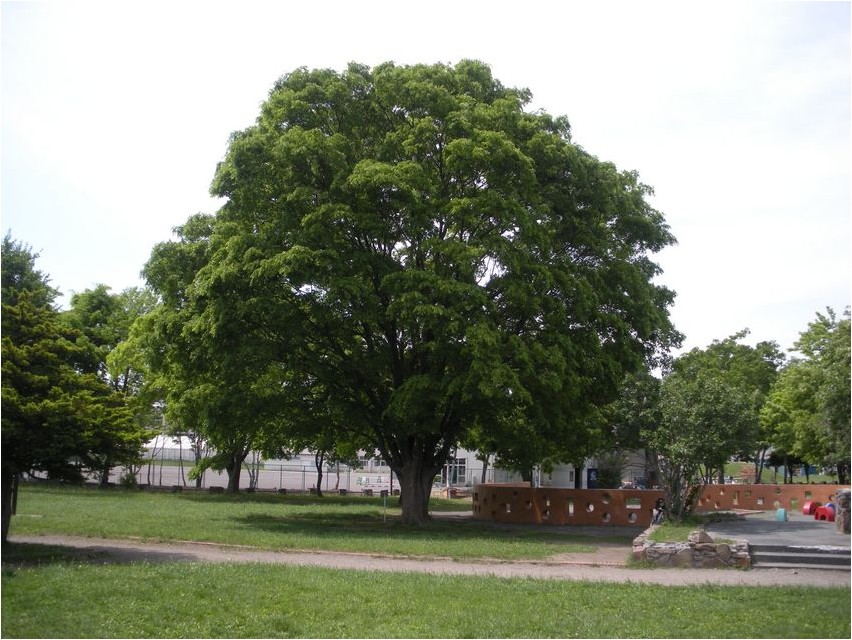
Zelkova (lat. Zelkova) is a genus of deciduous trees of the Elm family. Under natural conditions, zelkova can be found in Western Asia, Southern and Central China, Japan, Transcaucasia and the island of Crete. Grows in forests and lowlands.
Characteristics of culture
Zelkova is a deciduous tree up to 30 m high with a beautiful dense crown and a trunk covered with scaly bark. In nature, trees reach a height of 40 m, and their age varies from 500 to 850 years. The leaves are simple, elliptical or ovate, pubescent or glabrous, short-petiolate, serrated along the edge, equipped with rapidly falling stipules, arranged alternately.
Buds with imbricated scales, pointed, ovoid. The flowers are small, male and bisexual, collected in axillary inflorescences, pollinated by the wind. The perianth is simple, cup-shaped, deeply incised. Flowers are formed simultaneously with leaves from the same buds and bloom, as a rule, in late spring — early summer. The fruit is a single-seeded nut, dry, ovoid, without wings. The fruits ripen in August — early September.
Growing conditions
Zelkova grows well in intensely lit areas. Light shading is possible. Dense shadow is undesirable. Soils are preferably loamy or clayey, drained, deeply cultivated, with a slightly acidic or neutral pH reaction. Young trees do not tolerate cold piercing winds and therefore need protection. Mature plants are wind-resistant. Maximum winter temperatures are up t o-5C; at lower temperatures the branches freeze.
Reproduction
Zelkova is propagated by shifts and cuttings. As you know, when storing seeds in the open air, the seeds quickly lose their viability; this condition must be taken into account when choosing the timing of sowing. It is advisable to collect seeds at the moment when they acquire a brownish color. After which they are immediately sown in the prepared soil. Crops must be moistened regularly. Shoots appear the next year. In the phase of 2-3 true leaves, the seedlings are transplanted into separate pots. Young plants are transplanted to a permanent place after 2 years.

When propagating by cuttings, planting material is cut in June. Before planting cuttings for rooting, they are treated with growth stimulants. The planting mixture is made up of peat and sand, taken in equal proportions. Reproduction of some species is carried out using layering. This procedure is carried out in July.
Care
Zelkova requires regular and moderate watering, and it”s important to monitor its moisture level. The soil around the tree trunk should not dry out. Balanced fertilizing is essential. Complex mineral fertilizers with a high nitrogen content are recommended.
Pest and disease control are also necessary. Zelkova is often attacked by geometer moths, spider mites, gall mites, silkworms, bark beetles, and others. All of these pests can cause untold damage to trees, sometimes even leading to their complete death. Powdered sulfur or acaricides are used to control pests.
Application
Zelkova is used in landscaping gardens, parks, and alleys. It looks good in both group and singly planted plants. In central Russia, it can be grown indoors. However, in the summer, it is grown in the garden and brought indoors for the winter. In Asian countries and the Caucasus, the branches of the plant are used as livestock feed. The wood of the hornbeam zelkova is used as a building material.