oat root
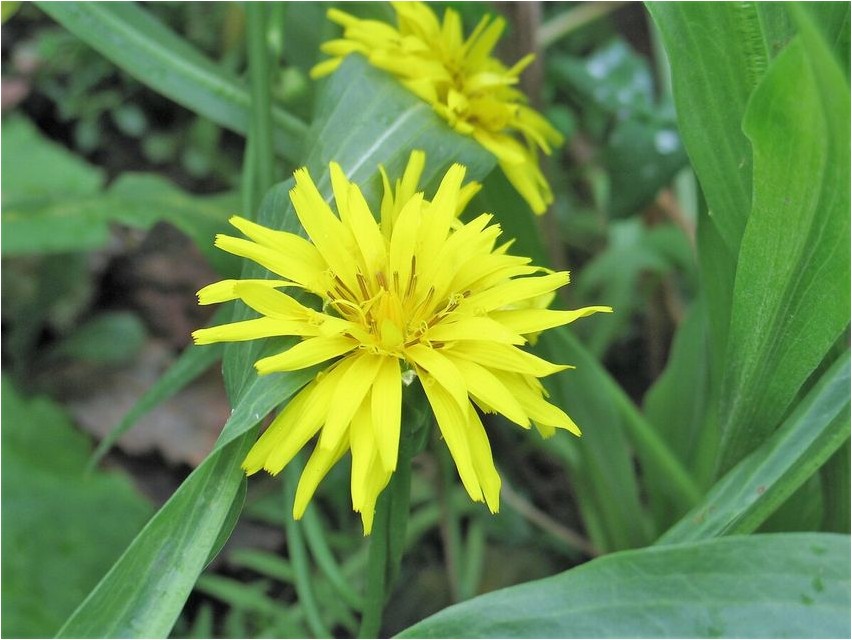
Oat root, or salsify (lat. Tragopogon porrifolius) is a vegetable crop; root plant of the Asteraceae or Asteraceae family.
The Mediterranean is considered to be the birthplace of the plant. There it is actively cultivated and used for culinary and medicinal purposes. Oat root is cultivated in small quantities in Western Europe, the Baltic countries and some regions of the USA. In Russia, the plant”s closest relatives are grown: meadow salsify and eastern salsify.
Characteristics of culture
Oat root is a biennial plant that in the first year of life forms a smooth conical root 20-25 cm long with a sweetish taste and a rosette of gray-green lanceolate leaves. The lower part of the root crop is equipped with numerous branches, which is probably why the plant acquired its name.
In the second year, the plants form erect flowering stems up to 150 cm high with purple-violet or blue flowers, collected in baskets, characteristic of all representatives of the Asteraceae, or Compositae family.
The seeds are rod-shaped and have fluffy tufts, thanks to which they are carried by the wind over long distances. The seeds remain viable for 2-3 years, after which it is not recommended to use them. Salsify blooms in June-July, the fruits ripen in August-September.

Growing conditions
Oat root is a plant that does not have any special requirements for soil conditions or location. The crop can grow without problems even on poor and dry soils, but high-quality harvests of juicy and large fruits can only be obtained on fertile, loose, well-aerated and moist soils. Salsify does not accept strongly acidic and heavy clay soils.
Sowing
Salsify is sown in early spring or autumn. The sooner you sow, the better the seedlings will appear. Sow the seeds in a row with an interval of 15-30 cm. Before sowing, the seeds are treated with an epin solution for 15-18 hours and mixed with peat or humus in a ratio of 1:10. Planting depth 2 cm.
For sowing, it is recommended to use fresh seeds collected this or the previous year. When 2-3 true leaves appear on the seedlings, the crops are thinned out, leaving a distance of 10-15 cm between plants. Too thick plantings will affect the formation of root crops; they will be small and dry.
The soil for oat root is prepared in the fall: the soil is dug up and potassium chloride (30 g per sq. m) and superphosphate (25-30 g per sq. m) are added. In spring, the ridges are loosened and fed with ammonium nitrate (30 g) or urea (15 g).
Care
Caring for oat root does not cause any particular difficulties. The soil in the near-stem zone is systematically loosened to a depth of 3-5 cm, increasing to 14 cm as the root crop grows. The first three weeks after sowing, and subsequently during prolonged drought, abundant watering is carried out.
The need for moisture increases in the phase of root formation. The crop responds well to fertilizing; fertilizing with wood ash and a solution of mullein (1:5) or chicken manure (1:10) gives excellent results. Plants that produce flower stalks prematurely are removed.
The crop is not prone to pests and diseases. It is rarely attacked by lettuce aphids, leafmining flies, meadow moths, as well as gray and white rot and downy mildew. To combat them, approved insecticides and herbal mixtures are used.
Harvest
Harvesting the oat root is carried out very carefully; the roots must not be damaged, since milky juice flows out of them. Root crops do not store well, so they are harvested as needed; the last harvest is carried out a few days before the onset of stable frosts. Near each row, grooves are dug to the depth of the root crop, then they are pulled out by the tops, which are subsequently removed. Root crops are placed in boxes filled with damp sand and stored in the basement and cellar.