Umbrella palm or Corypha
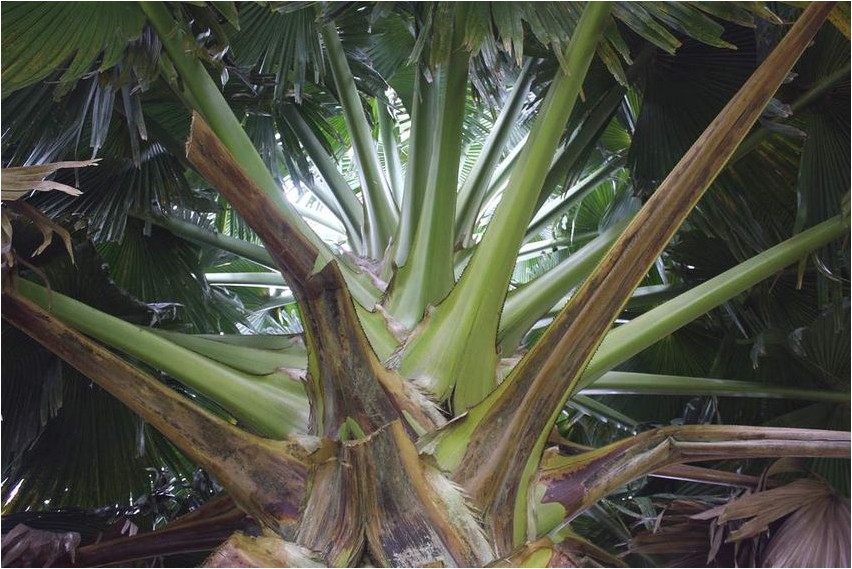
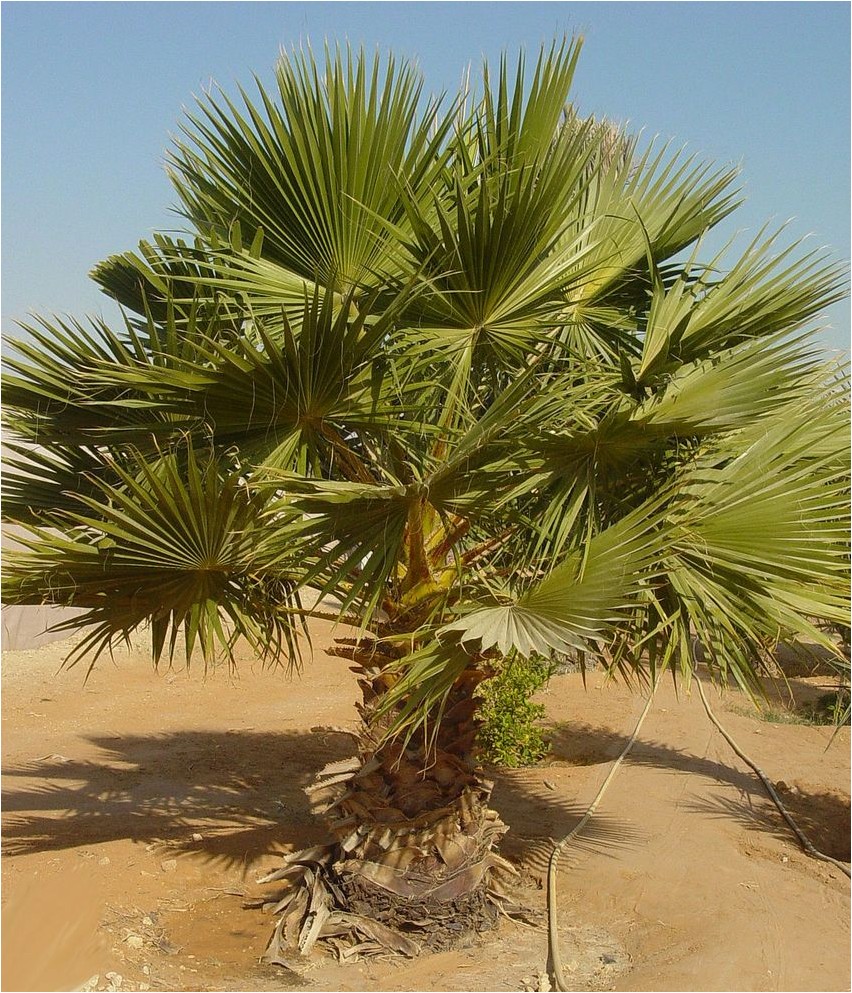
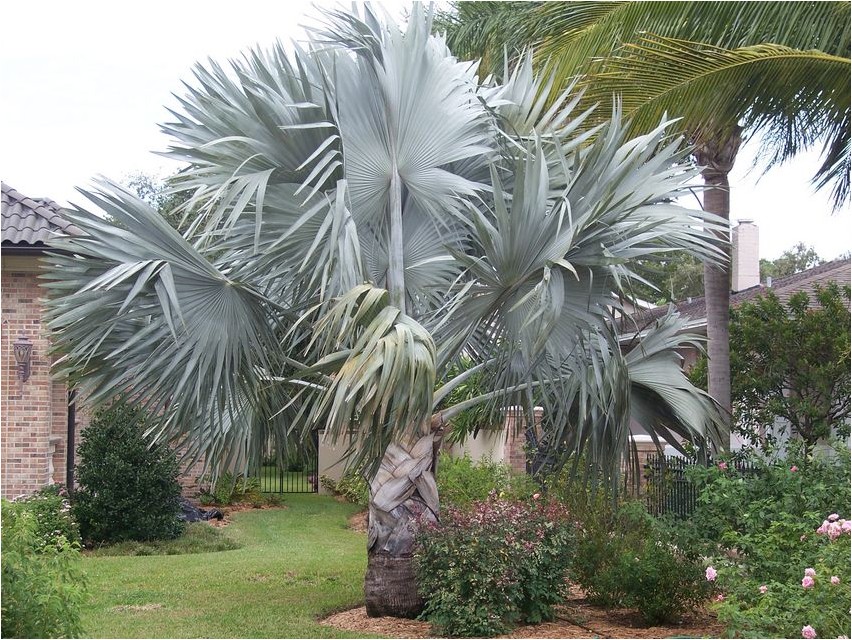
The umbrella palm, or Corypha (lat. Corypha) is a genus of flowering plants of the Arecaceae (lat. Arecaceae), or Palm (lat. Palmaceae) family. Most species of this genus are monocarpic plants, that is, having presented the world with their ripened fruits, the palm tree itself dies. Corypha is famous for the length of its inflorescences, which can reach seven and a half meters. No other plant on our planet can keep up with such a length of inflorescences. So, Corypha is the leader among all plants on Earth, producing millions of small flowers to fill such a long inflorescence.
Description
All species of the genus Corypha are slender palm trees with a straight trunk ranging from twenty to forty meters in height and a trunk diameter from one to two and a half meters. The surface of the trunk may be grooved or wrinkled. It takes many years for the plant to form a powerful trunk, since the palm tree grows very slowly.
Thick petioles, protected by prickly needles, range from two to five meters in length and serve as support for large fan-shaped leaves consisting of numerous leaflets. The leaves are located in the upper part of the trunk, forming a picturesque crown.
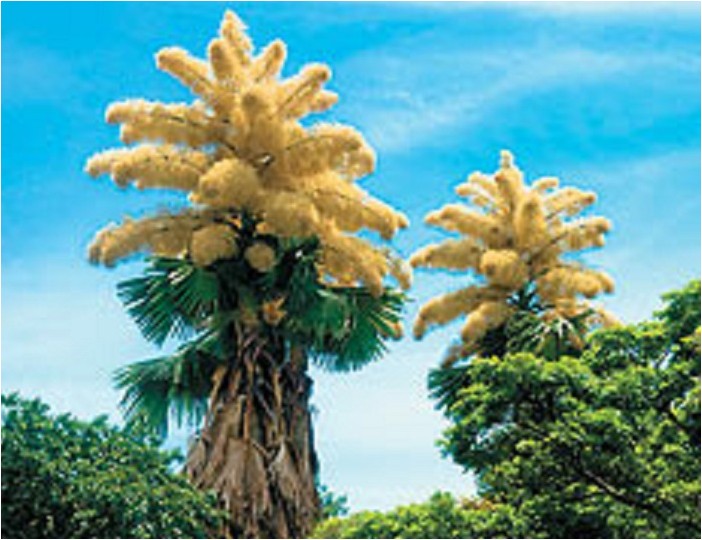
At the very top of the stem, rising above the lush crown of fan-shaped leaves, huge cob-paniculate inflorescences are born, formed by millions of small hermaphroditic (bisexual) flowers with a white or green color. The inflorescences emit a strong odor. In terms of the size of its inflorescences, the Umbrella Palm is the leader among all flowering plant species on our planet.
The fruit of the palm tree is a spherical berry containing only one seed. This pays off with a large number of berries, which have replaced the numerous flowers of large inflorescences.
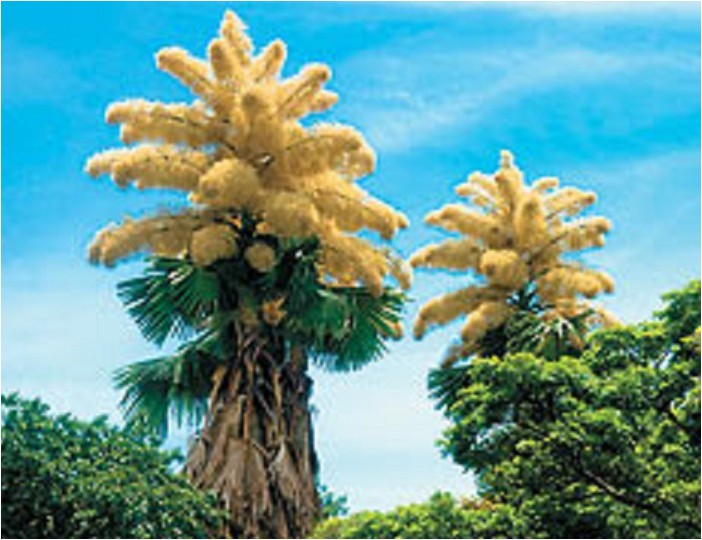

The slow growth of the palm tree may be explained by the fact that Corifa belongs to the so-called monocarpic plants, the life of which ceases at the moment when their fruits are fully ripened and ready for procreation. It is believed that if you remove the inflorescences before they begin to degenerate into fruits, you can extend the life of the palm tree, if necessary.
Varieties
There are five species of plants in the genus Corypha:
* Corypha umbraculifera (lat. Corypha umbraculifera) is a palm tree with the largest inflorescences on the planet. It bears fruit once every 60 years, after which it dies. The fruits take a full year to fully ripen. Palm leaves are used for manuscripts, for making umbrellas, and as straw. Palm wine is prepared from the juice of the leaves.
* Corypha lecomtei is an endangered species. It grows only in Vietnam, Thailand, and Cambodia. Its leaves, up to four meters long, have been used for manuscripts since ancient times. The petioles (8 meters) are twice the height of the palm itself. Between 15 and 30 years old, the palm flowers once, bears fruit, and dies.
* Corypha microclada is an endangered species. It grows only in the Philippines.
* Corypha taliera is an endangered species that Asian botanist enthusiasts are trying to save by growing seedlings from the seeds of dead plants.
* Corypha utan is better known as the “Gebang Palm” or “Palm Cabbage.” It is a fan palm with a twenty-meter trunk and fronds four to six meters across. Like its relatives, this palm blooms only once, toward the end of its life. However, it blooms profusely, displaying five-meter-long inflorescences formed by millions of tiny flowers. This species is the most impressive of all the palm species native to Australia.
Use of Leaves
The leaves of all palm species are used to weave various items, including hats. Three types of fiber are made from the leaves: buntal, buri, and raffia. In the Philippines, a Buntal hat festival, made from buri fibers, is even held every May.