Athyrium acrostichoides
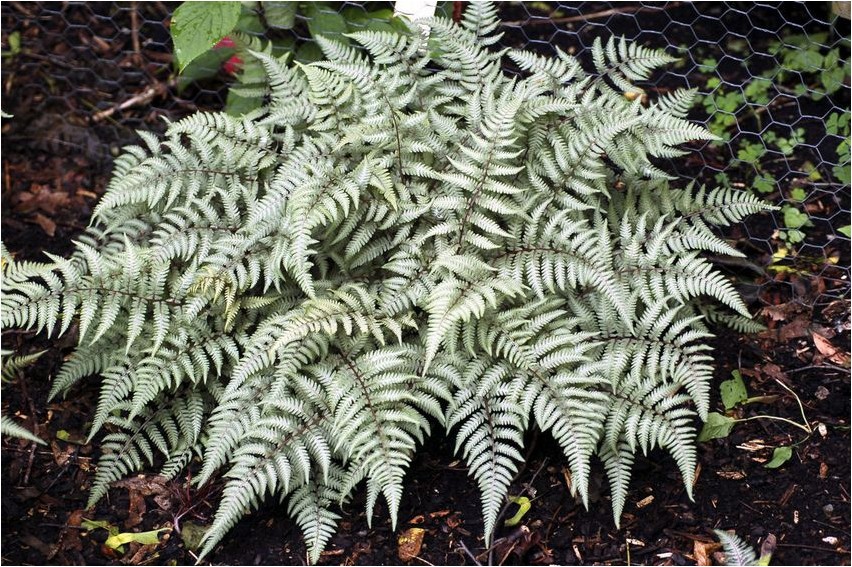
Athyrium acrostichoides is a member of the Polypodiaceae family. Its Latin name is Athyrium acrostichoides (Sweet) Diels.
The Latin name for the Athyrium acrostichoides family is Polypodiaceae R. Br.
Description of Athyrium acrostichoides
Athyrium acrostichoides is a perennial plant with a thick, oblique rhizome, approximately twenty-five to fifty-five centimeters long. The petioles of this plant are approximately twenty-five centimeters long. The petioles, like the rachis, are covered with rather narrow, membranous, short, and curly hairs, with sparse membranous hairs on the lower part. The blade of Athyrium acrostichoides is membranous, oblong-lanceolate, glabrous, and bipinnate. It should be noted that the first-order segments are closely spaced, sessile, and linear-lanceolate, approximately ten to twelve centimeters long and three centimeters wide. Second-order segments are nearly entire and linear, with a rounded apex. The veins are pinnate, the sori are straight and oblong, the scapula of the Roman fern is entire and swollen, and the spores are kidney-shaped.
Roma fern blooms from July to August. In the wild, this plant is found in the Ussuri region of the Far East. Its general distribution includes Korea, Japan, northeastern China, Canada, and North America. It prefers mossy soil in coniferous and mixed forests.
It should be noted that written kochedednik is a very rare variety of fern. The height of the openwork curtain of this plant can reach approximately twenty to thirty centimeters. It is noteworthy that this plant is very elegant; it will be endowed with dense, oblong and feathery leaves, colored in green tones. Written kochedyzhnik is great for borders, rocky hills and rockeries. Also, such a plant will look great among stones. It should be remembered that written nomadic plant grows quite well in the shade and in the sun. Such a plant will be very unpretentious in care, but the written nomadic plant will grow extremely slowly. It is noteworthy that this plant is capable of overwintering without shelter.
Description of the medicinal properties of written nomad
The written kochedednik is endowed with very valuable healing properties, and for medicinal purposes it is recommended to use the rhizome with the base of the stem petioles. The rhizomes of this plant should be harvested either in the spring or in the second half of the autumn. For this purpose, you should dig up the plant, remove any remaining soil, then rinse well in water. It is also recommended to cut off the rather small roots and stems of the common nomadic plant, leaving about a few centimeters of the base down to the first leaf. After this, such raw materials of this plant should be dried.

A decoction prepared from the rhizomes of the kochedednik is recommended to drink for various epidemic colds, diarrhea and epidemic encephalitis. However, it should be remembered that the use of a product based on this plant is completely contraindicated for pregnant women: such a contraindication should not be forgotten in any case.





