Lardizabala
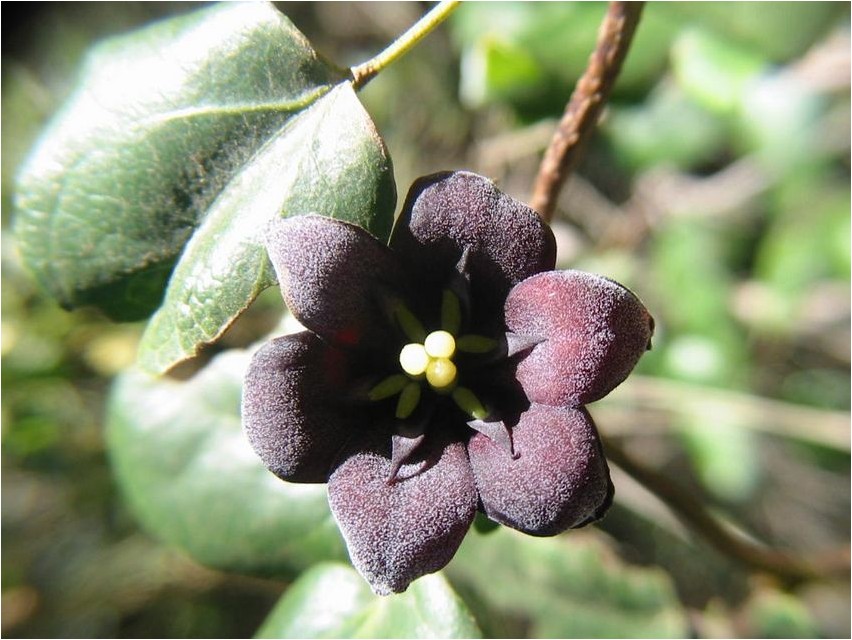
Lardizabala (lat. Lardizabala) is a monotypic crop from the Lardizabalaceae family.
Description
Lardizabala is an evergreen perennial grown for its beautiful edible fruits. This is a vine whose length can reach up to three and a half meters. The leaves of this plant are leathery, incredibly glossy and bright green.
The stems of young shoots are grassy and very soft, but after some time they become woody and harden.
Lardizabala flowers are characterized by a dark purple, almost black color. By the way, they can be not only monoecious, but also dioecious. The size of female flowers ranges from ten to sixteen millimeters, and male flowers from seven to eight. And the fruits of this plant are sausage-shaped dark purple berries with fleshy and extremely sweet pulp, growing in length from five to eight centimeters. Inside each fruit you can find seeds with irregular shapes. As a rule, their size is about one centimeter.
Where does it grow
Lardizabala is a luxurious vine native to Chile and Peru. Currently, the distribution area of this crop covers the subtropical and tropical zones. It has also found recognition in the countries of South America and Asia. And outside of all the above countries, this fruit still remains virtually unknown.
Application
Edible lardizabala berries have long been eaten not only raw, but also boiled. Some housewives also dry it. In addition, compotes or jam are made from it, as well as all kinds of sauces are prepared and fresh fruits are added to a wide variety of fruit salads.

For a long time, these healthy berries have enjoyed unprecedented popularity among South American peoples. Due to the fact that they are very rich in minerals and vital vitamins, they are recommended to be used as a general tonic for the prevention of a great variety of different ailments. In addition, lardizabala fruits are rich in beneficial organic acids that have a beneficial effect on intestinal motility. These acids also help regulate and normalize stomach acidity.
Nowadays, this culture has become very popular in medicine in some Asian countries. However, due to its relatively low prevalence, the full chemical composition of the beautiful lardizabala has not yet been sufficiently studied.
Contraindications
There are currently no special contraindications to the use of lardizabala. However, it is necessary to introduce this product into the diet with a certain degree of caution — sometimes extremely unpleasant allergic reactions are possible to this exotic fruit.
Growing
Lardizabala grows best in loamy and sandy soils, well drained and sufficiently moist. By the way, she is absolutely intolerant of waterlogging. This tropical beauty can also withstand a short drop in temperature down to minus ten degrees.
Lardizabala is quite light-loving, but too much exposure to direct rays of the sun often leads to the shedding of individual leaves of this plant. Lardizabala will grow quite well in partial shade.
This culture propagates both vegetatively (by young layering or cuttings) and by seeds. Most often, lardizabala is planted as a greenhouse plant, because in open ground this vine will grow only in subtropical and tropical conditions. True, sometimes plantings of this plant can be found in Crimea and in the very south of Russia. There, lardizabalu is kept in a greenhouse for two to three years before being planted outside.
Lardizabala
https://www. youtube. com/watch? v=Plax9N-MAmI





