Peppermint
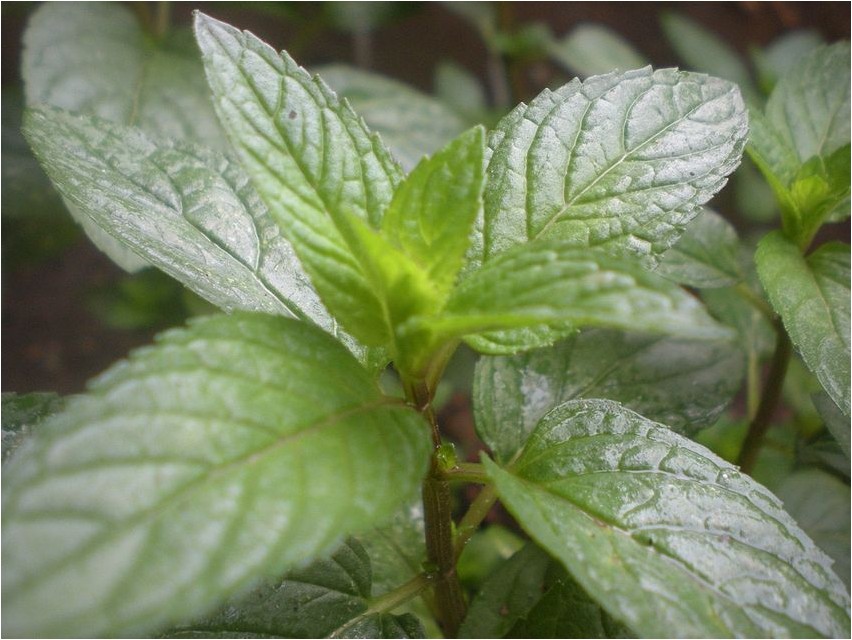
Peppermint is one of the plants of the family called Lamiaceae; in Latin the name of this plant will be as follows: Mentha piperita L.
As for the name of the peppermint family itself, in Latin it will be: Lamiaceae Lindl.
Description of peppermint
Peppermint is a herbaceous perennial bushy plant that has a very fragrant aroma. The rhizome of this plant is horizontal, it is painted in whitish tones, and in the spring several stems will grow from such a rhizome. The stems of peppermint are erect and tall, bare, branched and tetrahedral, and such stems are covered with rather short hairs, colored in dark purple tones. The leaves of this plant are opposite, smooth and ovate-lanceolate, at the edges they will be sharply serrated, on top such leaves are painted in dark green tones, and below they will be lighter. Peppermint flowers are small, they will be in multi-flowered whorls, which in turn are collected in spike-shaped inflorescences. Such flowers of this plant are colored in light purple tones. The fruit of this plant will be dry, it consists of only four reddish nuts.
Peppermint blooms from July to August. It is noteworthy that this plant is known only in cultivation. Peppermint will be cultivated in Belarus, Central Asia, Ukraine, in the foothills of the Caucasus and in the Voronezh region.
Description of the medicinal properties of peppermint
Peppermint is endowed with very valuable healing properties, and it is recommended to use the leaves of this plant for medicinal purposes. The presence of such valuable healing properties should be explained by the content of the following biologically active substances in the leaves of this plant: the enzyme myrosin, tropsolin glycoside, potassium sulfate, phytosterol, sugar, starch, ascorbic acid, sorbuzin pigment, mucus, pectin and sulfur-containing essential oil. The essential oil will be contained in the flowers of peppermint, there is also a little of it in the leaves, and an extremely small amount is observed in the stems. This oil is colorless, it has a yellowish tint, as well as a pleasant taste and smell. It should be noted that this peppermint oil will dissolve in alcohol. The oil will be the raw material for the extraction of menthol, due to which peppermint is used quite widely in perfumery and alcoholic beverage production.
Menthol will be very widely used for medicinal purposes. In combination with petroleum jelly and milk sugar, this menthol is a remedy for the common cold. For diarrhea, vomiting and rheumatism, menthol should be taken orally.

Peppermint and preparations based on it have sedative, antispasmodic, anti-inflammatory and choleretic effects, and also have properties to improve digestion. This plant is used for various liver diseases, hypertension, migraines, flatulence, insomnia, for cramps in the stomach and intestines, to improve appetite and improve cardiac activity.
Peppermint oil, about three to five drops in water or sugar, is recommended to be taken orally to reduce heartburn, as well as disinfection and faster release of gases. It is recommended to drink an infusion based on the leaves of this plant in small sips for nausea, foul-smelling belching, cramps in the stomach and intestines, and also for heartburn. To prepare such an infusion, take two tablespoons of the leaves of this plant in half a liter of boiling water and then leave this mixture to infuse in a thermos.





