Bell Rapunzel
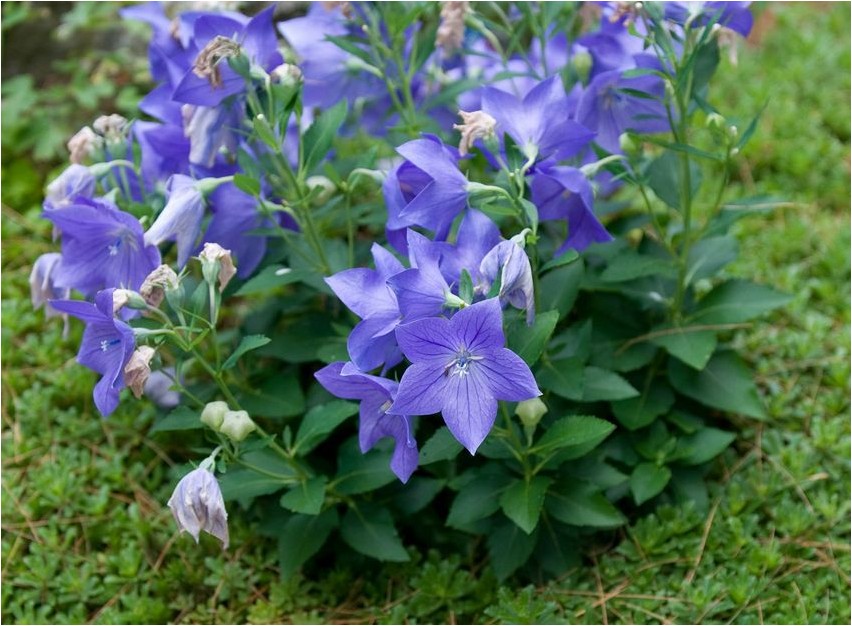
Rapunzel bell (Latin: Campanula rapunculus) — or Bellflower, is a herbaceous biennial plant of the genus Campanula (Latin: Campanula) of the Campanula family of the same name (Latin: Campanulaceae).
Its leaves have been used since ancient times in Europe for salads, like the leaves of Spinach, rich in vitamins. The root of the plant was also eaten, like radishes.
What”s in your name
If the Latin and Russian names of the genus reflect the shape of the flower, similar to the shape of a bell, then in the specific epithet “rapunculus” the culprit is the shape of the plant’s root, reminiscent of a turnip, more precisely, a small turnip. After all, the Latin word “rapunculus” is a diminutive of the Latin word “rapa”, meaning “turnip”, that is, we get the word “small turnip”. In Russian translation it sounds like, Bell “onion”.
The biennial Campanula rapunculus should not be confused with the perennial Campanula rapunculoides, or Campanula rapunculoides. The tap root of the latter is not only unsuitable for food, but also turns the plant into a malicious weed in vegetable gardens and orchards, which is very difficult to fight due to the fantastic vitality of the root system.
The official name of a plant of this species has many synonyms, since the plant was described by different botanists at different times, and each gave its name to the same plant species. This creates some confusion when identifying the plant by botanists, but does not have such a strong impact on ordinary lovers of spectacular Bluebells.
Description
The spindle-shaped thick root of the plant resembles a small turnip and is suitable for food.

The height of the two-year-old Bluebell varies from 40 to 80 centimeters, reaching one meter in particularly favorable conditions. The erect stem is branched in its upper part and lightly covered with hairs.
The leaves are divided into petioles, forming basal rosettes, and sessile stem leaves. The basal leaves are ovoid in shape and have a slightly serrated decorative edge. The leaves, sitting on a tall, bluntly ribbed stem, are glabrous, narrowly lanceolate in shape.
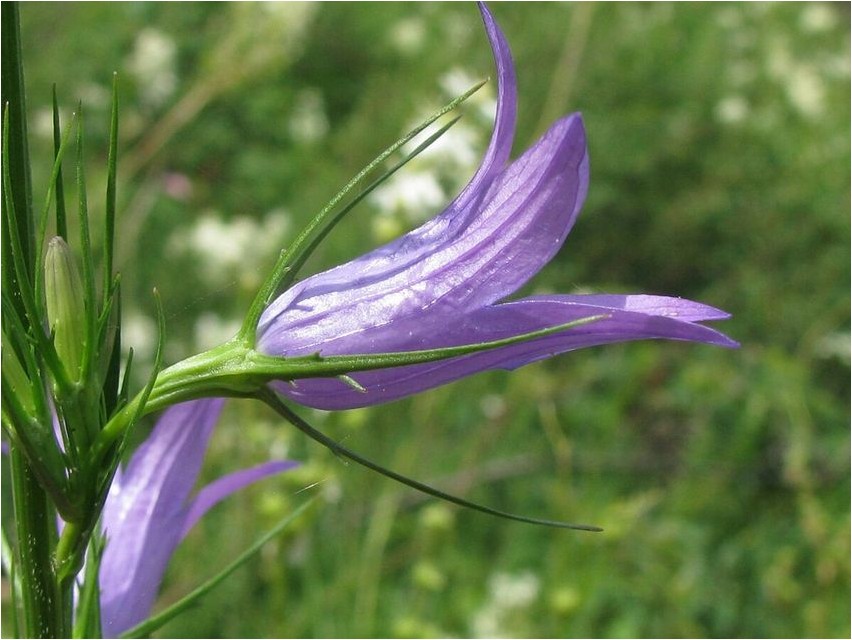
Hermaphroditic (bisexual) flowers form racemose or paniculate inflorescences. The length of the whitish-bluish or purple bell-shaped corollas reaches two centimeters. The flowers are arranged along the peduncle in the form of a rather narrow one-sided brush. Flowering lasts a very long period, from May to October.
The fruit is a dehiscent multi-seeded capsule shaped like an inverted cone.
Rapunzel”s bell in the wild
This species is quite widespread in the wild. It can be found in dry meadows and along roadsides in most European countries, with the exception of Scandinavian countries, as well as in North Africa and Western Asia.
The plant prefers calcareous soils and tolerates drought better than dampness.
Usage
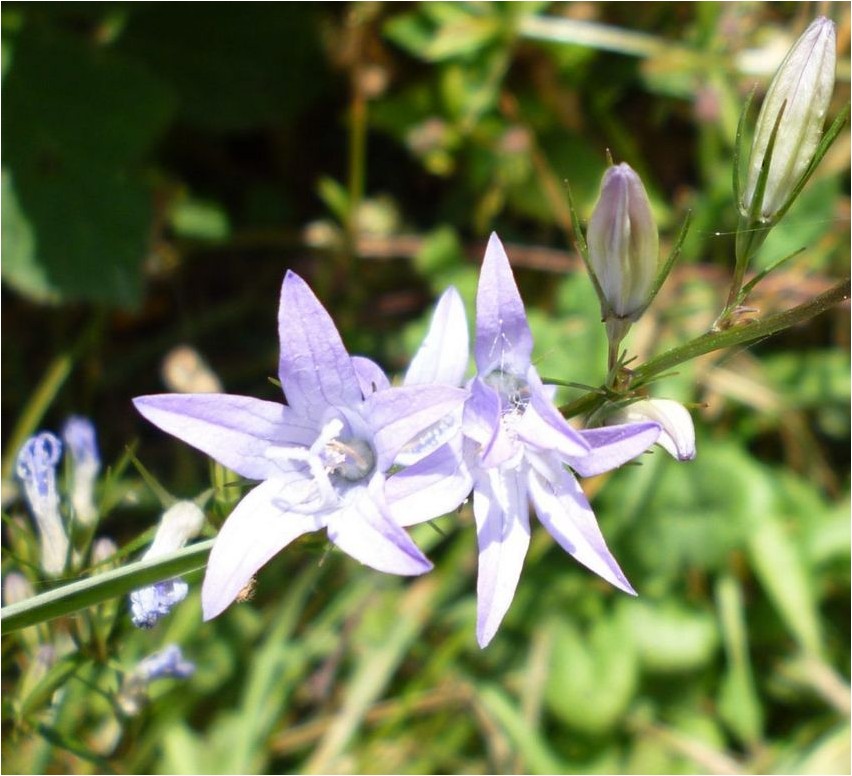
There was a time when Campanula was a fairly popular European plant, widely grown for its vitamin-spinach-like leaves, as well as its radish-like thick, edible root.
If there are small hummingbirds in your area, then you should decorate your garden with blue bells of this type, since the sweet nectar of the flowers of this plant is a favorite delicacy for miniature birds.
This is interesting
The Brothers Grimm have a fairy tale called “Rapunzel”, the motives of which are clearly inspired by a plant of this species. Although there are several more plants that were popularly called “Rapunzel”.