Microbiota
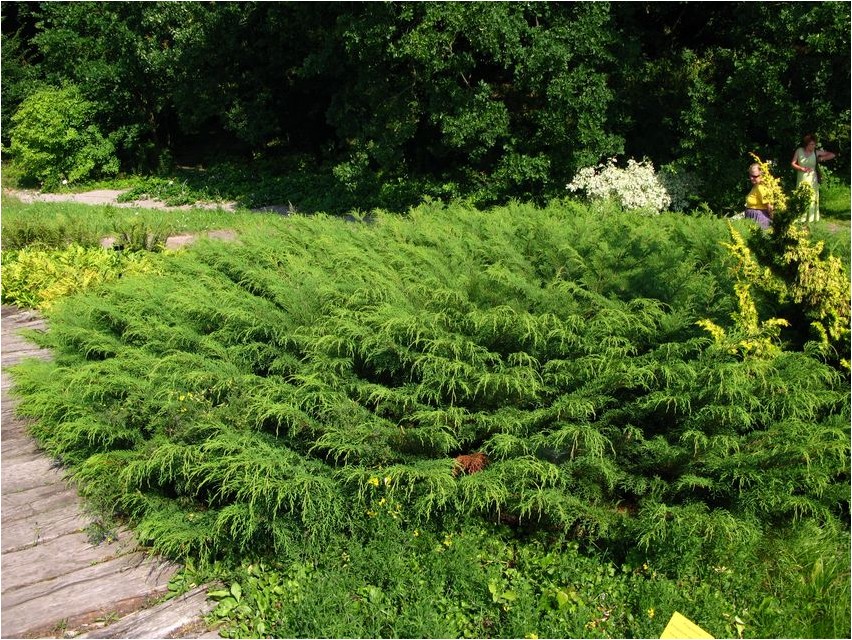
Microbiota (Latin: Microbiota) is a coniferous shrub from the extensive Cupressaceae family.
Description
Microbiota is an evergreen shrub with ascending or prostrate branches. Under favorable conditions, its height can exceed a meter, and its diameter is often several meters—in most cases, microbiota forms a virtually continuous and very dense carpet.
Microbiota”s flattened branches are covered with tough brown bark, and its thin rootlets are always very densely branched. The plant”s scale-like needles reach two millimeters in length and are oval in shape. However, on shaded inner shoots, the needles can sometimes be needle-shaped. In winter, needles under snow almost always turn brown.
Microbiota is a monoecious plant. Megastrobili (female cones) reach three millimeters in width and six millimeters in length and are equipped with two (rarely four) dryish scales that open. This is the main difference between microbiota and juniper. Each scale typically contains only one wingless, oval, brownish seed. Pollination typically occurs in late spring, and seed ripening begins either in late summer or early fall.
Microbiota grows very slowly—in mature specimens, annual shoot growth rarely reaches even five to seven centimeters. However, this plant is rightfully considered long-lived—even century-old specimens have been observed in the wild.
Where it grows
In Russia, microbiota is most often found in both the Khabarovsk and Primorsky Krais. It typically grows at altitudes ranging from thirty to one thousand six hundred meters above sea level. Microbiota especially prefers rocky and well-drained soils (primarily in bare mountainous areas).

In forests, microbiota thrives alongside Ajan spruce, yellow maple, Korean pine, Siberian dwarf pine, Amur rowan, white-barked fir, and pointed rhododendron.
Microbiota is currently listed (as a species in decline) in the Red Data Book of Russia (with status 2).
Uses
Microbiota boasts exceptional ornamental qualities, so it is equally successful in rock gardens, as a groundcover, for edging lawns, or decorating borders or slopes. However, this plant was introduced into cultivation relatively recently.
Cultivation and Care
The microbiota is quite light-loving, however, it takes root very well in shady areas. It is completely undemanding in terms of soil composition, but this plant develops best on good top litter. As for watering, during dry periods it is recommended to water the microbiota at least twice a week. It is also important to take into account that this green beauty does not tolerate stagnant moisture. This plant also boasts impressive winter hardiness.
It is recommended to systematically loosen young plantings of microbiota — first to a depth of seven to fifteen centimeters, and then to a depth of up to fifteen centimeters. During the loosening process, weeds must also be removed.
Reproduction of the microbiota can occur either by green cuttings or by seeds. Seed ripening usually occurs at the end of August or at the beginning of September. However, it is extremely difficult (even practically impossible) to obtain seeds; in addition, specific conditions are required for their germination. However, cuttings with an illiterate approach also do not always give the desired results.