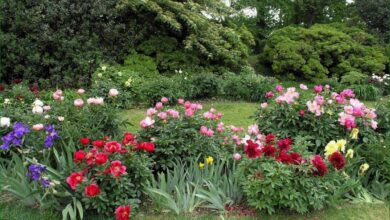
candy tree
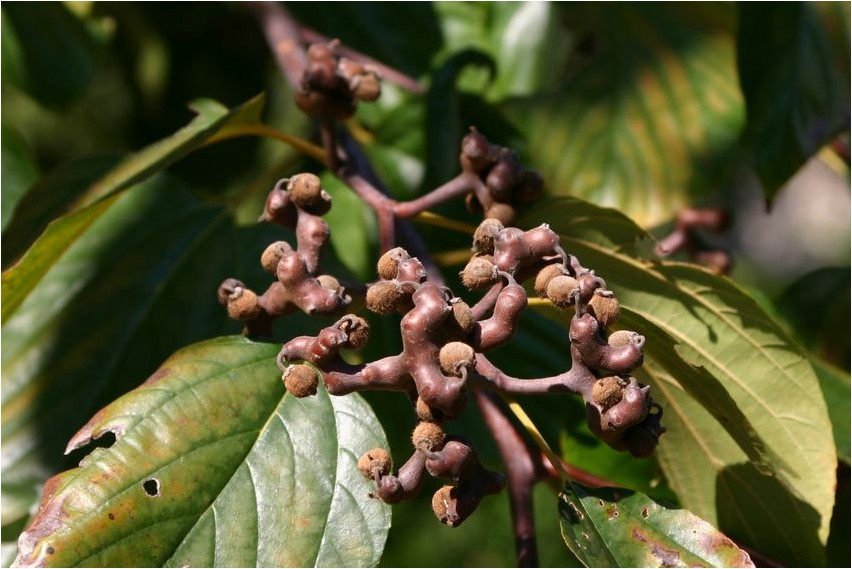
Candy tree (lat. Hovenia dulcis) is a fruit plant belonging to the buckthorn family. The second name is sweet govaniya.
Description
The candy tree is a deciduous tree, the height of which can reach twenty meters, although the height of the bulk of the trees still does not exceed ten meters. Their crowns are incredibly spreading, which makes this crop a valuable option for landscaping. The large glossy leaves of this plant are always dark green, and its cream flowers, which bloom with the onset of July, form fancy umbrellas or clusters.
Dry stone fruits of this crop, the size of which does not exceed a pea, are formed at the very tips of rather fleshy stalks. At the same time, the fruits themselves are of absolutely no value, which cannot be said about the stalks — their taste is very similar to raisins with a slight sourness. In this regard, the plant has another name — sometimes it is called the Japanese raisin tree.
If conditions are favorable, then from each candy tree during the season it will be possible to collect up to thirty kilograms of delicious fruit stalks.
This culture is characterized by vegetative propagation (using cuttings), and it is important to know that young trees are always very tender and are not able to withstand severe frosts.
Where does it grow
The candy tree is a plant native to Korea, the foothills of the Himalayas, Eastern China and Japan. There it grows mainly on loamy soils and wet sands at an altitude of up to two thousand meters above sea level. In addition, in the wild, the candy tree can be found in forests located in the subtropical zone, as well as in the middle of bushes and on mountain slopes.

Application
Most often, the stalks of the candy tree are dried and used in confectionery production or for cooking compotes. They also make wonderful jam, get excellent syrup and make amazing candied fruits and jams. And they also make an excellent seasoning for a wide variety of dishes! As for the local population, they are very partial to the wine made from the stalks, because it is endowed with a lot of useful properties!
The stalks of these unusual trees are very rich in glucose, fructose, as well as protein (protein) and sucrose. And they contain almost the same amount of potassium as raisins — this allows them to be used to get rid of edema by removing excess fluid from the body. This property is especially relevant for various metabolic disorders and many kidney ailments.
Eating this natural delicacy is an excellent way to quickly restore strength after difficult physical exertion and hard work.
These stalks also contain active antioxidant substances that actively prevent possible oxidative processes and in every possible way promote the removal of radionuclides, as well as salts of heavy metals and toxins. In addition, the stalks are literally replete with all kinds of vitamins and organic acids (especially ascorbic and malic). These properties make them an incredibly effective remedy for treating a wide variety of ailments of the gastrointestinal tract, joints, pancreas and liver.
And the leaves of this culture have found their use in folk medicine, as they are rich in substances that help strengthen capillaries, restore damaged cells, resolve blood clots and cure anemia. As for young leaves and twigs with seeds, an extract used as a honey substitute is obtained from them.
Contraindications
No contraindications to the use of candy tree stalks have been established at the moment, however, in any case, the possibility of allergic manifestations cannot be ruled out.