Mallow roundleaf
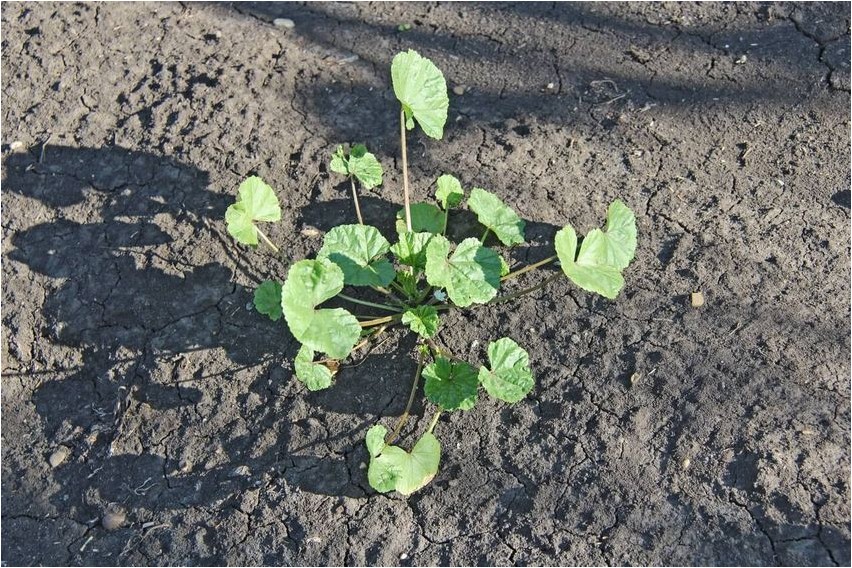
The round-leaved mallow is one of the plants of the family called malvaceae; in Latin the name of this plant will be as follows: Malva rotundifolia L. (M. pusilla Smith., M. borealis Wallm.).
As for the very name of the round-leaved mallow family, in Latin it will be: Malvaceae Juss.
Description of round-leaved mallow
The round-leaved mallow is an annual or biennial herbaceous plant, the height of which will vary between fifteen and fifty centimeters. The stems of this plant can be either erect or straight, they are branched, and will be either bare or pubescent. The leaves of the round-leaved mallow will be long-petioled; they are endowed with a kidney-shaped, palmate-lobed, serrated or crenate plate, which in turn is almost bare. The length of such a plate will be about two to six centimeters, and the width will be equal to three and a half to eight and a half centimeters. The flowers of the round-leaved mallow are located in the axils of the leaves on pedicels of about two to ten pieces, and such pedicels will be two or three times longer than the flowers. The subcups of this plant will consist of three narrow linear leaves, for the most part the calyx will be bare and it covers the fruit. The corolla of the round-leaved mallow is painted in whitish tones and will barely protrude from the calyx itself.
This plant blooms in summer and autumn. Under natural conditions, round-leaved mallow is found in Central Asia, Ukraine, Western Siberia, Belarus, Primorye in the Far East, as well as in all regions of the European part of Russia, with the exception of the Arctic. The round-leaved mallow will grow as a weed in vacant lots, near roads, in gardens, villages and vegetable gardens.
Description of the medicinal properties of round-leaved mallow
The round-leaved mallow is endowed with very valuable healing properties, and it is recommended to use the seeds and herbs of this plant for medicinal purposes. The term grass includes stems, flowers and leaves.
The presence of such valuable medicinal properties is attributed to the tannins found in the leaves of this plant, while the fruits contain ascorbic acid. Furthermore, the leaves of this plant contain carotene. No alkaloids are found in any part of the mallow plant, but it does contain a fairly large amount of mucilage. The herb of the mallow plant contains the carbohydrate octacosane, the flowers contain the anthocyanin malvidin, and the seeds contain a fatty oil.

The flowers and calyxes of the mallow plant are indicated for use as an enveloping and emollient. A decoction made from the entire plant is used as a gargle and for chest tightness, pulmonary tuberculosis, and coughs.
A decoction prepared from the seeds of the mallow plant should be used as an emollient for catarrh of the upper respiratory tract, coughs, bronchitis, and bladder ulcers. The seeds of this plant are used for various skin conditions as a poultice. An infusion of the leaves of the round-leaved mallow is used as a cooling, expectorant, emollient, and anti-irritant remedy. This remedy is also used for hemorrhoids. A decoction made from the herb of the round-leaved mallow is recommended for menstrual irregularities, tumors, gonorrhea, and inflammation.
Wood mallow or Alva sylvestris – beneficial properties, folk recipes / Zakhar Herbalist





