Holly
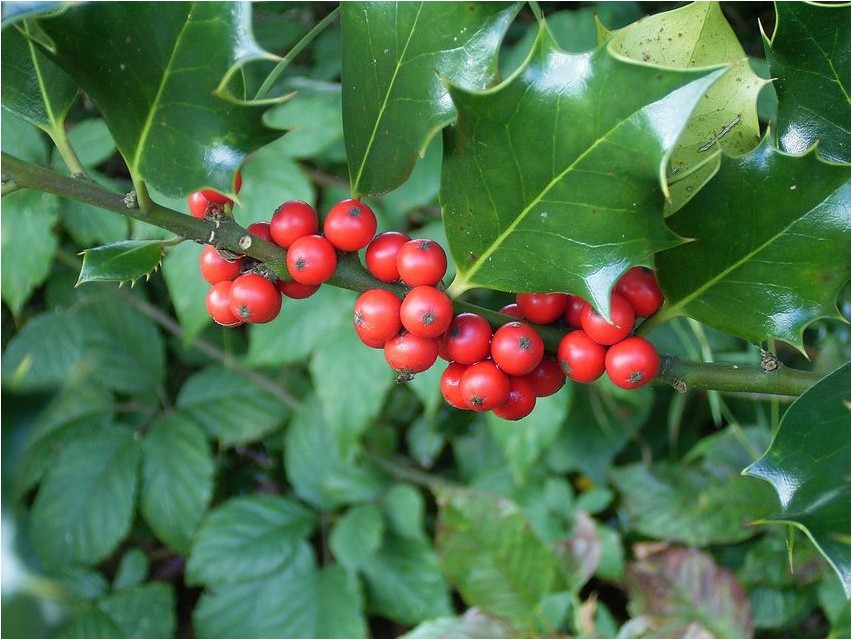
Holly (lat. Ilex) is a shade-tolerant woody plant from the Holly family. Its second name is holly.
Description
Holly is a luxurious deciduous or evergreen shrub. Sometimes this plant can be a small tree. Holly”s dense, leathery leaves boast a rich, dark green color. In most cases they are jagged, although sometimes they can be entire.
Holly flowers are dioecious, so in order to get the long-awaited colorful fruits, it is necessary to plant both female and male plants at the same time. As for holly berries, they can be colored orange, black, white, yellow or red. Ripening with the onset of autumn, these unusual berries do not leave the branches of this beautiful plant even under the snow.
In total, the holly genus has about four hundred species — and this is only among those that are already known to the scientific community; in reality, there may be much more.
Where does it grow
Holly is especially widespread in Europe, Africa, China, America and Japan. In general, it can be found almost all over the world, especially in tropical or temperate areas.
Usage
The highly decorative holly is highly valued in culture for its incredibly beautiful shiny leaves and bright fruits that can boast of special sophistication. Hollies look especially great in groups and are ideal for creating stunning hedges. And molded hollies will be a real boon for regular (that is, French) style gardens.

In a number of European countries, holly is also very popular as a Christmas plant — all kinds of Christmas decorations, garlands and wreaths are often made from it. The roots of this unusual tradition go back to the ancient Celtic culture.
And in folk medicine, holly leaves are used as a diuretic and antifever. Compresses from the bark of this plant perfectly help relieve even very severe pain, and holly berries are endowed with a pronounced laxative effect. These berries are not eaten as food, as they are poisonous.
Growing and care
It is quite acceptable to plant holly in the sun, but it is best to place this beauty in partial shade, in areas reliably protected from the wind. And it will grow best in fertile, well-drained, fairly moist and moderately acidic soils, ideally garden soils. As for heavy soils, holly grows extremely poorly on them, gradually losing its winter hardiness.
Holly needs moderate moisture, but it can only survive the winter with good shelter. And in the spring, shelter will also come in handy, since young shrubs can suffer quite severely from early spring burns that are disastrous for them. Holly also does not tolerate high temperatures and drought very well, so ideally it is important to try to provide it with the coveted coolness. They don’t like adult plants and transplants, but holly tolerates haircuts perfectly!
Sometimes variegated varieties of holly can grow branches with ordinary green leaves — such branches should be removed periodically.
Holly propagates mainly by vegetative means — layering and cuttings. It’s better to plant them with the onset of spring.
Holly is very resistant to various diseases, but occasionally it can still be affected by late blight, which does not bring anything good.