Leaf lettuce
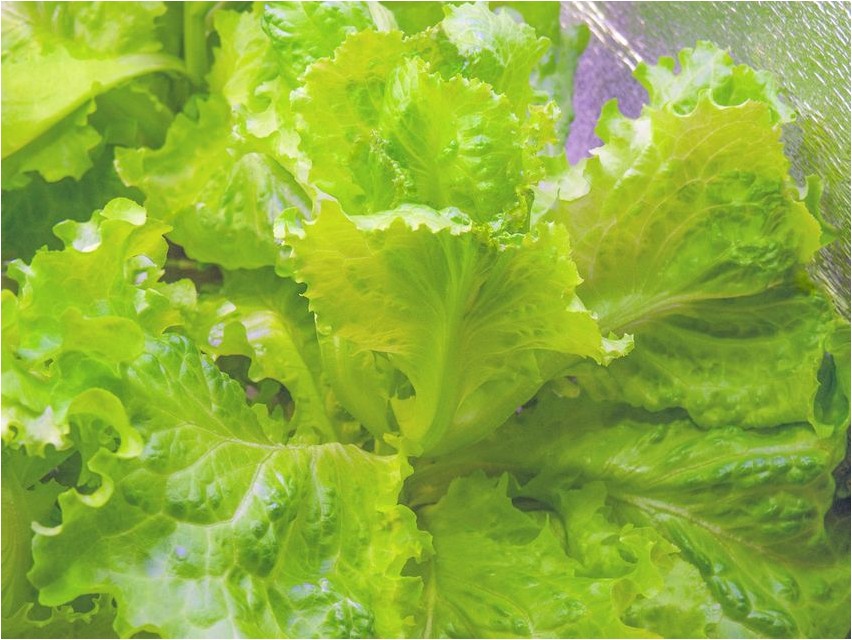
Leaf lettuce (lat. Lactiuca sativa) is an annual herbaceous plant, a moisture- and light-loving green crop, used primarily as a vitamin green.
History
Leaf lettuce was known even to the ancient Romans, who tore it into large pieces, added salt and doused it with olive oil. And in the Middle Ages, salad was served as a side dish for meat.
In Europe, it began to be cultivated in the 16th century, and in Russia, leaf lettuce began to be grown approximately in the 17th century.
Description
Leaf lettuce differs from its cabbage counterpart in that its leaves do not form heads. Its stems are highly branched, full and reach a height of sixty to one hundred and twenty centimeters. The leaves of the plant are equipped with basal rosettes and are most often colored yellowish-greenish. True, occasionally you can meet their reddish varieties. In addition, the leaves can be curly or corrugated, as well as wrinkled or smooth. The bases of the leaflets are usually heart-shaped and arrow-shaped, and on the lower sides along the veins on the leaves you can see tiny bristles.
Pitcher-shaped miniature inflorescences-baskets are collected in cylindrical heads and arranged on stems in the form of numerous panicles. Small bisexual reed flowers are painted in yellowish shades, and the fruits are achenes with flakes.
Distribution
Unfortunately, no one knows the homeland of lettuce. It is possible that it originated from compass lettuce, which grows wild in Western Asia, Southern and Western Europe, North Africa, Central Asia, as well as in Siberia (all the way to Altai) and Transcaucasia.

As a cultivated plant, lettuce is currently cultivated in all countries of the world. And it was first introduced into culture long before the beginning of our era in the Mediterranean.
Benefit
Leaf lettuce is considered a very nutritious and light product that can give a head start to a considerable number of dishes. Its greens, rich in carotenoids and carotene, can easily help preserve vision, as well as improve the condition of the mucous membranes and skin. In addition, lettuce can protect against Alzheimer”s disease, ensure the full formation of tooth enamel and bones, calm the nervous system and significantly improve the quality of sleep. And in terms of vitamin C content, this nutritious product is almost as good as lemon.
Lettuce is also rich in folic acid, which is vital for pregnant women.
Application
Lettuce is a real storehouse of vitamins. Not only its leaves, but also its thickened stems are eaten.
Growing
Lettuce is ideally recommended to be planted after crops that have previously been treated with various organic fertilizers. And this plant can be returned to its original place only after two or three years. Lettuce grows well next to radishes, radishes and all types of cabbage — moreover, it repels flea beetles that harm these crops. Lettuce will grow no worse than lettuce next to tomatoes, peas, strawberries, spinach, cucumbers and beans. And for the salad itself, the proximity to onions will serve well — the latter will repel aphids. As for carrots and tall beet thickets, lettuce should not be planted next to them, since high and dense plantings harm its full development, although it, of course, needs some shading.
Since leaf lettuce is an early ripening and very cold-resistant annual, its seeds can be planted before winter. As a rule, this is done towards the end of October or early November. Gardeners sow early-ripening varieties in April or May, and late-ripening or mid-ripening varieties — from April until mid-June. For ease of planting, tiny lettuce seeds are often mixed with sand, and they need to be embedded in the soil to a depth of about one centimeter.
How to sow lettuce leaves
https://www. youtube. com/watch? v=Di71xJwxSrM