Phacelia
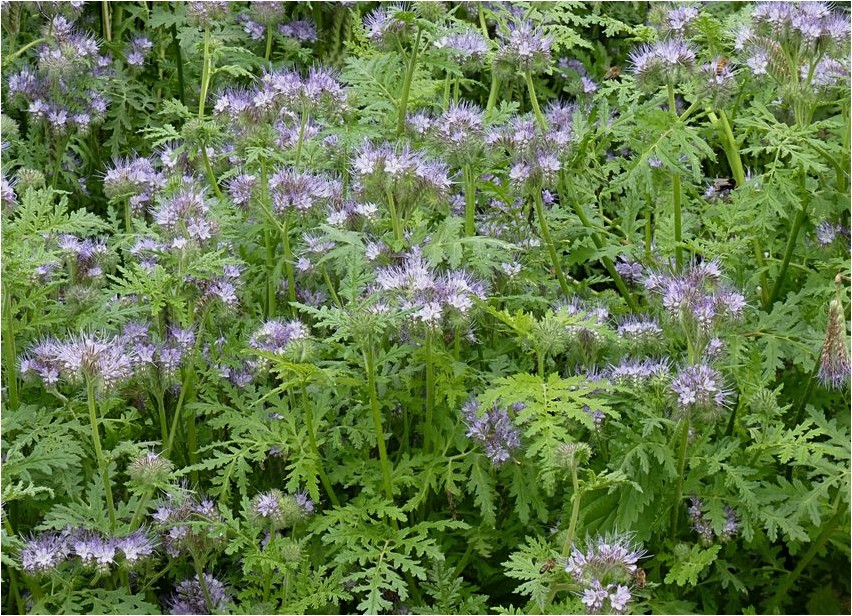
Phacelia (Latin: Phacelia) is a large genus of herbaceous plants belonging to the family Aquilegiaceae. The genus comprises over 180 species, native to South and North America.
Currently, the plant is widely cultivated throughout the world, but especially in Russia. Some species are considered weeds. They grow everywhere, but are most often found in meadows, roadsides, and forest edges.
Crop Characteristics
Phacelia is represented by perennial and annual herbaceous plants, often reaching a height of 100 cm. Dwarf species, reaching 20-25 cm in height, also occur. As it grows, phacelia forms a lush bush crowned with bright, green, pubescent, lobed, or pinnately dissected foliage, arranged alternately or oppositely (depending on the species). The stems of the plants are erect, highly branched, and covered with short, bristly hairs over their entire surface.
The flowers of members of this genus are small, regular, and consist of five petals. They have elongated stamens and are gathered into spike-shaped inflorescences. Phacelia coloration varies by species, with pink, blue, purple, yellow, and lilac flowers found. Phacelia blooms in early summer, usually in the second ten days of June, and continues until frost. Some phacelia species are used in breeding. Many new and noteworthy cultivars have been developed to date.
Known Species
One of the most common species is Phacelia congesta. It is characterized by small bushes no more than 40-50 cm tall, crowned with light, green, pubescent foliage and small blue flowers. Flowers often do not exceed 5-6 mm in diameter. This species is used in gardens and homesteads.
Also worth mentioning is the bell-shaped phacelia (Phacelia campanularia). This low-growing species does not exceed 25 cm in height. It is characterized by erect, reddish stems bearing alternate, lobed, green foliage with a bluish tint. A distinctive feature that makes this plant highly ornamental is the brown margins along the foliage. The flowers are also very attractive. They are small, up to 3 cm in diameter, blue, and borne in lush clusters.

Phacelia tanacetifolia has been used as green manure for many years. It is sown in the fields after harvest and then plowed. It has been proven that the species in question has an excellent effect on the soil; to be more precise, it enriches the soil with important organic components required by cultivated plants. In appearance, phacelia tansy is not very attractive. It is characterized by tall growth (up to 1 m) and small gray-blue flowers. However, this does not prevent summer residents from including it in flower arrangements.
Use in folk medicine
It is important to note that the foliage and stems are not used in folk medicine, moreover, they are not recommended for consumption. Only phacelia honey is valued. It effectively combats gastrointestinal problems, perfectly relieves depression, normalizes sleep and eliminates nervousness. Phacelia honey is also recommended to boost immunity in the midst of colds and flu.
Traditional healers recommend honey for diseases of the cardiovascular system. And due to its unique composition, phacelia honey is extremely useful in reducing performance and severe fatigue. It is important to remember that phacelia honey has contraindications. It should never be used by people suffering from diabetes or allergies.





