Magic fruit
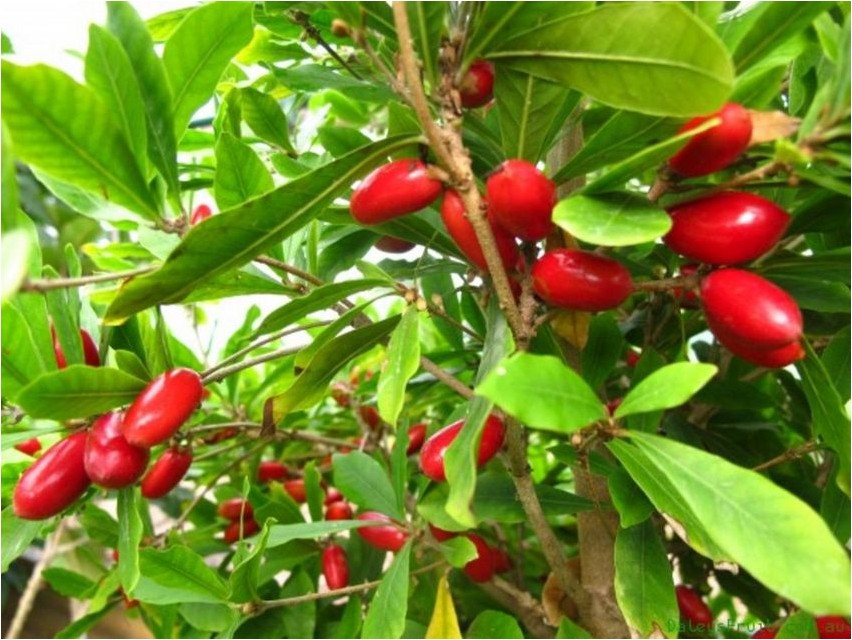
Magic fruit (lat. Syncepalum dulcificum) is a miniature tree or evergreen shrub belonging to the Sapotaceae family. This crop is also called sweetish puteria or wonderful berries.
History
West Africa is considered the birthplace of the magical fruit. This plant was first discovered in 1725 during a Spanish expedition.
Description
The height of the magic fruit varies from three to six meters. The dark green oblong leaves of this plant always grow in a spiral. And the miniature white flowers (their diameter does not exceed five to seven millimeters) bloom almost all year round, giving the bushes rest only for one or two winter months.
The fruits of the magic fruit are tiny red drupes, inside of which there is one white seed the size of a coffee bean. Externally, the fruits of this crop resemble barberry, and they appear already in the third or fourth week after they are set.
A distinctive feature of these fruits is their ability to influence taste buds, “switching off” for an hour or two the receptors responsible for the perception of sour taste. Research has shown that this is due to the content of a protein in fruits called miraculin (by the way, this word literally translates from English as “miracles”). It is noteworthy that after eating magic fruits, sugar seems bitter, lemon turns out to be sweeter than an orange, and a juicy and sweet orange seems more bitter than a radish. Such interesting transformations precisely determined the name of these unusual fruits. However, these “magical” properties fully manifest themselves only after the fruits are removed — fruits lying for several days begin to gradually lose their “magical” properties. By the way, to preserve them, the fruits can be frozen.
Where does it grow
Currently, the magic fruit is widely cultivated in Taiwan, Florida, Puerto Rico and Ghana.

Application
These extraordinary fruits are rich in ascorbic acid, making them indispensable in the treatment of various inflammatory ailments, as well as for gastrointestinal ulcers, colds, and flu. This magical fruit also significantly strengthens the immune system and is an excellent cancer preventative. It is also recommended for cataracts, allergies, and cardiovascular diseases. Incidentally, these fruits are completely safe for people with obesity or diabetes. The only contraindication to their consumption may be an individual intolerance.
Cultivation
Recently, this magical fruit has become popular in greenhouses as an ornamental plant. Moreover, it is increasingly common to find it in homes. However, when growing this magical fruit indoors, it is necessary to pay close attention to lighting conditions—this sun-loving plant requires supplemental lighting.
This magical fruit thrives in well-drained, acidic soils. It especially prefers loose soil. This heat-loving plant prefers highly humid air and requires regular misting. However, crown shaping and pruning are not required.
Magic fruit grows very slowly, a characteristic that makes it incredibly attractive for bonsai.
This plant is propagated primarily by seeds, and to speed up germination, it is recommended to slightly file each seed-nut. Magic fruit begins to bear fruit approximately three to four years after planting.