Mint
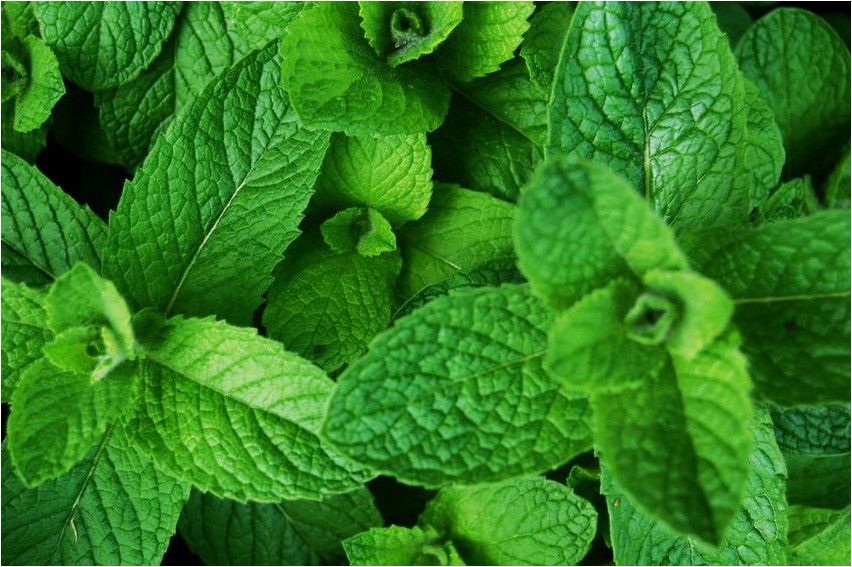
Mint (lat. Mentha) is a perennial plant of the Lamiaceae, or Lamiaceae family. Mint is native to the Mediterranean and Central Asia.
Characteristics of culture
Mint is a herbaceous plant with a whitish, woody root with thin fibrous appendages located horizontally. The stems are hollow or filled with parenchyma, highly branched, leafy, red-brown in color. The leaves are sessile, opposite, elongated-ovate, pointed at the ends, located on short petioles. The leaves are dark green on the outside, light green on the inside, covered with dotted yellow glands and small hairs.
The flowers are medium-sized, collected in false whorls, which form spike-shaped inflorescences at the tips of the shoots. The calyx is five-toothed, regular in shape, covered with glands, and can be pink or purple. Flowering begins at the end of June and lasts 50-60 days. The fruit is composite, consists of several nuts of red-brown or black-brown color. Seed germination is low, only 10-25%.
Growing conditions
Mint is a light-loving plant, prefers well-lit areas, although it also develops well in shaded areas. The soils for growing crops are desirable to be loose, fertile, with a rich mineral composition, and with deep groundwater. Low-lying areas without stagnant cold water are also not prohibited. The plant has a negative attitude towards clayey, heavy and structureless soils with a low organic content.

The optimal growing temperature is 18-22C. Prolonged drought significantly retards plant growth and often causes leaves to fall off. The best predecessors of mint are legumes, corn, potatoes, winter grains and most vegetable crops. Mint is a relatively winter-hardy plant; with stable snow cover it can withstand frosts down t o-20C.
Reproduction and planting
Mint is propagated by seeds, cuttings and division of rhizomes. Seeds are sown in seedling boxes or greenhouses in mid-March. Seedlings are transplanted into open ground at the end of April – beginning of May (depending on weather conditions and winter hardiness of the variety). The distance between plants should be about 30-35 cm, and between rows – 60-70 cm.
The area for growing mint is dug up to a depth of 25-27 cm, loosened with a rake, breaking up earth lumps, and humus, nitrogen, phosphorus and potassium fertilizers are applied. Many gardeners advise dipping the roots of seedlings into a liquid mass consisting of clay and manure before planting.
Propagation by rhizomes and cuttings is carried out either in early spring or autumn, but a couple of months before the onset of stable frosts. Planting material is lowered into previously prepared grooves 10-12 cm deep, covered, watered abundantly and mulched.
Care
Mint is a moisture-loving plant that requires regular watering, especially during the period of emergence and budding. Feeding is carried out twice per season: the first – in early spring, the second – during the formation of buds. The soil between the rows is systematically loosened and weeds are removed. For winter, plants are covered with a layer of dry straw, leaves or any other covering material. Thinning bushes are replanted every 3-4 years.
Application
Most often, gardeners and gardeners grow mint as a spicy aromatic plant. All types of culture are used in cooking; they are added to improve the taste characteristics of various dishes, both fresh and dried. Add mint leaves to alcoholic drinks and tea. Peppermint is widely used in folk medicine. Mint is also used in group plantings, mixborders, flower beds, as well as in pots and containers.