Gentian reed
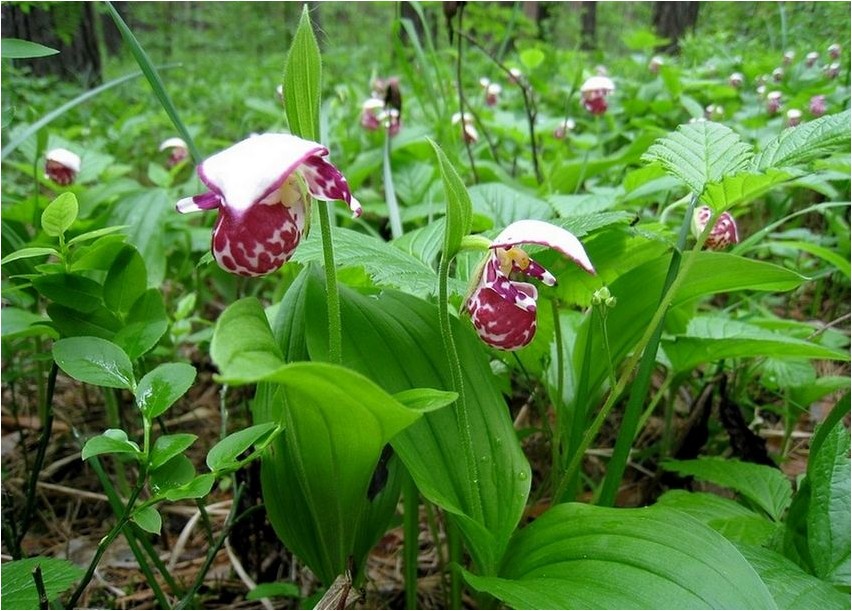
Gentian reed is one of the plants of the family called Gentianaceae; in Latin the name of this plant will be as follows: GentianeIIa lingulata (Agardh) Pritchard.
As for the name of the gentian family itself, in Latin it will be: Gentianaceae Juss.
Description of Gentian reed
Gentian reed is an annual or biennial herbaceous plant that is glabrous and green in color, and the height of this plant will fluctuate between fourteen and thirty centimeters. The stems are thin and straight, while either only in the upper part or from the very base the stems will be branched, and they are also endowed with four to five internodes. It should be noted that the rosette leaves of this plant usually remain at the time of flowering, they will be obovate and obtuse, their length will be about seven to ten millimeters. It is noteworthy that the stem leaves turn out to be much shorter than the internodes; they can be either ovate or broadly ovate, and at the very base they are slightly heart-shaped. The length of the leaves of Gentian reed will be about seven to fifteen millimeters, and the width will be five to ten millimeters. The lower leaves of this plant will be blunt at the top, while the upper leaves are sharp. The flowers will be five-membered and numerous, and the length of the calyx will be about eight to eleven millimeters, the corolla is tubular, and its color can be either whitish or dirty purple. The length of such a corolla is approximately ten to twelve millimeters, and the blades will be oblong-oval in shape, they are also blunt, and the length of the blades will be approximately four to five millimeters.
This plant blooms from May to June. Under natural conditions, this plant can be found in the south of Belarus, in the European Arctic, the European part of Russia, as well as in Western and Eastern Siberia in the Yenisei region, in the Dnieper region and the Carpathians in Ukraine, as well as in the Balkhash region of Central Asia. For growth, reed gentian prefers swamps, damp floodplain and upland meadows, forest lawns, limestone outcrops, forests, shrubs, roadsides and railway embankments.
Description of the medicinal properties of gentian reed
For medicinal purposes, it is recommended to use the herb of this plant; the concept of herb includes the flowers, leaves and stems of this plant. The presence of such valuable healing properties is explained by the content of quite a large amount of vitamin C in the leaves of this plant.
A decoction of the herb of this plant is recommended for use in various intestinal diseases, intestinal colic, stomach diseases, as well as placenta retention and female diseases. As for use in veterinary medicine, the properties of this plant are used for tendon tumors in horses.

For gastritis, which will be accompanied by increased secretion, it is recommended to use the following remedy, which has a fairly effective reaction: for its preparation it is recommended to use two tablespoons of dry crushed herb of this plant per three hundred milliliters of water. This mixture should be boiled over low heat for about three to four minutes, and then the resulting mixture is left to infuse for two hours, and then filtered thoroughly. Take this remedy approximately one third of a glass three times a day.
It is noteworthy that all the beneficial properties of this plant have not yet been fully studied, so new ways of using gentian reed may emerge.





