Cold wormwood
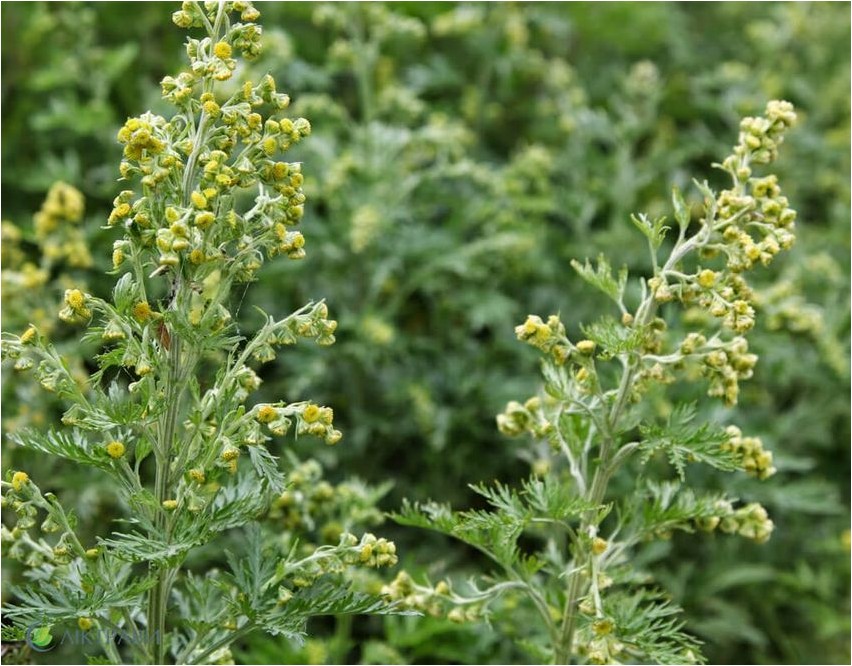
Cold wormwood is one of the plants of the family called Asteraceae or Asteraceae; in Latin the name of this plant will be as follows: Artemisia frigida Willd.
As for the name of the cold wormwood family itself, in Latin it will be like this: Asteraceae Dumort. (Compositae Giseke).
Description of cold wormwood
Cold wormwood is a perennial herbaceous plant, the height of which will fluctuate between seven and fifteen centimeters. The entire plant will be covered with fine, appressed hairs. The leaves of this plant can be either sessile or short-petioled, and they are also doubly pinnate, the width of such leaves is about seven to fifteen millimeters, and the length is one to two centimeters. The baskets of cold wormwood are in a racemose or paniculate inflorescence, they are spherical, and their width is three to four millimeters. The corolla of this plant is bare, conical and sometimes hairy, and such a corolla is colored yellow or purple-pink.
Cold wormwood blooms in August. Under natural conditions, this plant is found in Central Asia, Western Siberia, the Zavolzhsky and Volga-Kama regions of the European part of Russia. For growth, cold wormwood prefers the steppe zone on rocky and gravelly slopes of hills and low mountains, the edges of pine forests, sandy hillocks and terraces, steppe meadows and old fallow lands.
Description of the medicinal properties of cold wormwood
Cold wormwood is endowed with very valuable healing properties, and it is recommended to use the inflorescences, fruits, roots and herbs of this plant for medicinal purposes. The concept of grass includes stems, leaves and flowers. The presence of such valuable healing properties is recommended to be explained by the content of ascorbic acid, flavonoids, traces of undecanoic acid and essential oil in the composition of the herb of this plant, while traces of essential oil will be present in the roots of cold wormwood.
As for traditional medicine, here this plant is quite widespread. In the form of an infusion or decoction, the herb, roots, fruits and inflorescences of this plant should be used as a very effective diaphoretic for various diseases: cough, pneumonia, fever and pulmonary tuberculosis.

In addition, cold wormwood will be considered an antimalarial. An infusion prepared from the leaves, herbs and inflorescences of this plant is indicated for use during heart attacks as an antihypertensive and cardiotonic agent.
For rheumatism, it is recommended to use an infusion prepared from the fruits, inflorescences and herb cold wormwood as a painkiller. In addition, this healing agent is also used as a hemostatic agent. A tincture prepared from the herb of this plant should be drunk for gonorrhea and vitamin deficiencies, as well as to stimulate appetite. This remedy is used as an antidiarrheal and diuretic.
Tibetan medicine uses cold wormwood for inflammation of the joints, epilepsy, headaches, myalgia, aching bones, chronic alcoholism, diphtheria, gastralgia and other gastrointestinal diseases in the form of baths.
Powder based on this plant, as well as an infusion of cold wormwood herb, is used externally in the form of compresses for neuralgia, gout and rheumatism, and is also used for washes and lotions for eczema, burns, non-healing wounds and ulcers, allergies and tissue damage. It is worth noting that when used correctly, such healing remedies based on cold wormwood turn out to be very effective.





