Eucalyptus Dalrymple
Dalrymple”s Eucalyptus (Eucalyptus dalrympleana) is a broad-leaved, evergreen, fast-growing tree of the Eucalyptus genus, which represents the Myrtaceae family on the planet.
A winter-hardy and drought-resistant ornamental tree that grows quickly. Its bright green, broad leaves exude a pleasant aroma and are complemented by petalless, creamy white flowers in summer.
What”s in your name
The genus name “Eucalyptus” comes from two Greek words: “ec” and “kalypto”, the meaning of which is hidden in such Russian words as “good” and “to cover”. The genus owes its name to the cap or operculum, formed by fused sepals and flower petals and designed to protect the blooming flower from external threats.
In the specific epithet “dalrympleana” (“Dalrymple”), the English botanist Joseph Henry Maiden, who studied the flora of Australia, including plants of the genus Eucalyptus, immortalized the name of the first commissioner of forests in New South Wales (Australia), Richard Dalrymple-Hay. The Commissioner (lived 1861 — 1943) provided government control over forests and initiated Australia”s first forestry legislation. In the suburbs of Sydney, the Dalrymple-Hay nature reserve still exists.
In addition to the Latin scientific name, the plant has a common name “Mountain gum” (“Mountain resin (or gum)”).
Description
Eucalyptus with the unpronounceable species epithet “Dalrymple” is native to southeastern Australia, where it grows on the slopes of forested mountains and plateaus.

Its straight, creamy-white columnar trunk rapidly increases in height, reaching a maximum of 50 meters in particularly favorable conditions. But, more often, the height of the trees is much lower and varies from 8 to 25 meters.
The smooth bark darkens to orange-pink or light brown over time, eventually peeling off to reveal new pure white bark.
As the tree grows, the lower branches fall off, so the crown is located at the top of the tree.
The bluish-green or copper-colored young leaves are ovoid in shape with a blunt tip. Over the years, they elongate, turning into narrow or broadly lanceolate long leaves, sometimes curved, gracefully hanging from the branches in a bright green cascade. The leaves exude a pleasant aroma.
Spectacular white flowers are grouped in groups of three (rarely up to 7), forming umbrella inflorescences rich in nectar that attract pollinating bees. Flowering occurs in the last two months of summer.
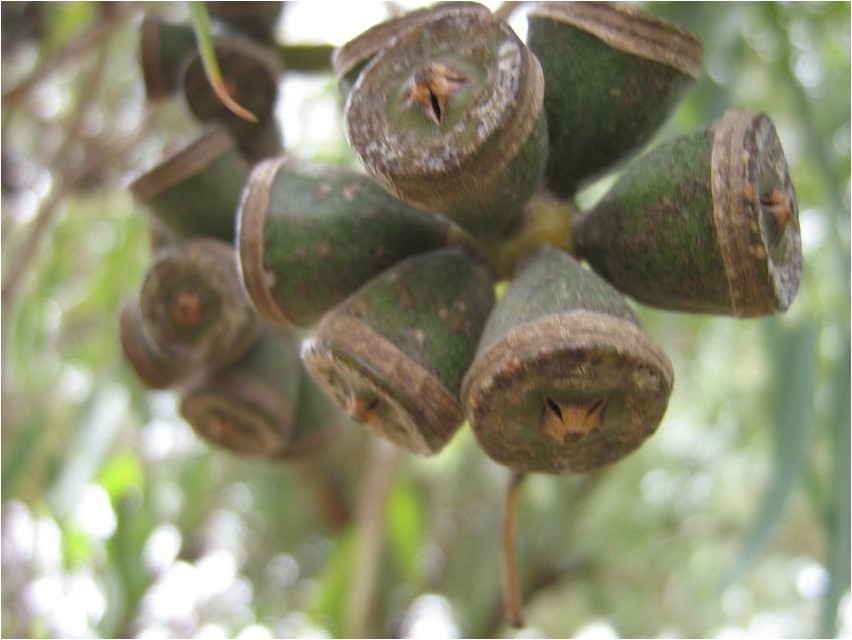
Pollinated flowers turn into bell-shaped fruit pods on short columns. When fully ripe, the pods open, like poppy pods opening, and the seeds are released.
Usage
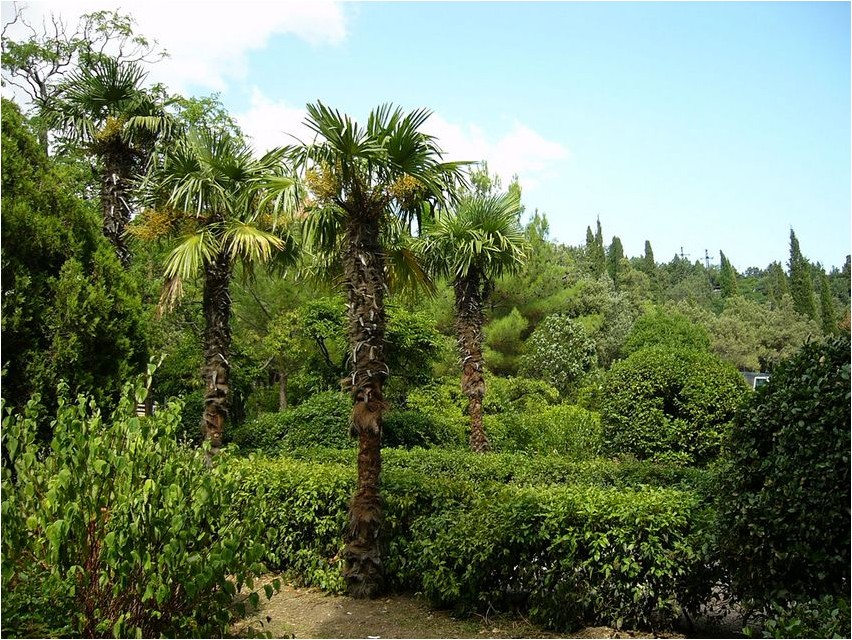
Eucalyptus Dalrymple is a very ornamental tree. But, unfortunately, such a tree requires a lot of space, open sun (tolerates light partial shade, but cannot tolerate full shade) and the absence of sudden cold snaps, although the plant is relatively frost-resistant. The tree is drought-resistant and unpretentious to the composition of the soil. It tolerates alkaline and clay soils, but performs best in dry, sandy, acidic soils.
The tree is used as a landscape decorative high screen, and forest shelterbelts are made from trees.
Eucalyptus Dalrymple practically has no problems with pests and diseases.
In the homeland, the wood of the tree is used for the production of paper and small crafts, for example, for making cuttings for agricultural implements.
Eucalyptus Dalrymple leaves, like most leaves of its relatives, contain essential healing oil.