Zhabritsa
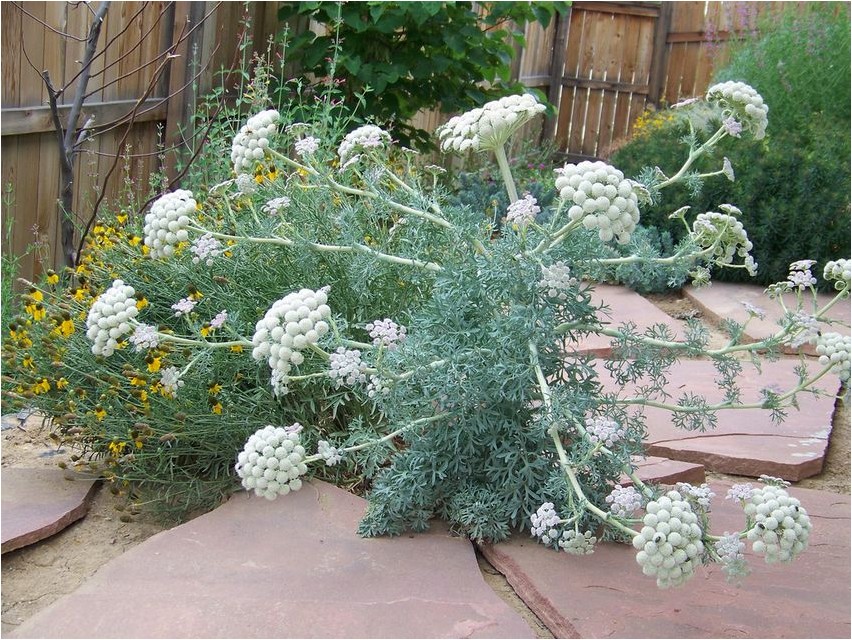
Gill (lat. Seseli) is a genus of biennial and perennial plants of the Apiaceae or Celery family. The genus includes 48 species, distributed mainly in Asia Minor and Central Asia, Europe and Western Siberia.
Typical habitats are meadows, forests, steppes, rocky slopes and sands. Only a few species are used in culture. Common names are suzik or crane grass.
Characteristics of culture
Gillweed is a herbaceous plant up to 100 cm high with a single grooved, sinuous or spindle-shaped root, often used for medicinal purposes. The lower leaves are green with a bluish bloom, vaginal, thrice pinnately dissected, linear pointed lobes. The upper leaves are smaller and pinnate. The flowers are small, white or with a reddish tint, with multi-leaved linear-lanceolate involucres, collected in umbellate inflorescences with numerous rays. The fruit is an ovoid two-seeded seed. The gillyweed blooms in July-August.
Common types
*Siberian toad (lat. Seseli sibiricum) – the species is represented by perennial plants up to 1. 5 m high with a powerful tap root. The leaves are hard, partially pubescent. The flowers are white or whitish-yellow, collected in lush umbels. The Siberian gill blooms in mid-summer.
*Gum-bearing gill (lat. Seseli gummiferum) – the species is represented by perennial plants, common in the Crimea and Asia Minor. The leaves are bluish-gray, finely dissected, evergreen, collected in compact rosettes. The gum gilly blooms in late summer – early autumn, often before the onset of stable frosts.
*Forked Gill (lat. Seseli dichotomum) – the species is represented by perennial plants up to 60 cm high with velvety bluish-green leaves. Blooms in mid-summer. Often used for landscaping gardens.

*Mountain Gill (lat. Seseli montanum) – the species is represented by perennial plants with dark green feathery leaves arranged oppositely. The flowers are pinkish, collected in umbels, blooming in July-September. The species is distinguished by increased cold-resistant properties; it can withstand frosts down t o-28C. Most often, representatives of the species are found in Italy, Switzerland, France, as well as on the Balkan Peninsula and the Caucasus.
Subtleties of cultivation and reproduction
The frog reproduces by seeds. Seeds of some species are not stored for long and quickly lose their viability. Seeds must be sown immediately after collection. The culture is drought-resistant, but looks most impressive when systematically moistened. The gill is not picky about soils and develops normally in any soil. It only does not accept saline, swampy and waterlogged soils. The location is sunny or semi-shaded. When growing plants from seeds, the first flowering occurs in 3-5 years.
Application
Gill is used in garden landscaping. It fits harmoniously into village flower beds, alpine hills and other rocky gardens. It is a frequent visitor to shady flower beds. Suitable for decorating borders. The bluish leaves of the plants look great in combination with white prickly pear, sage and red-leaved sedum.
The gill is used in folk medicine. The roots, stems and leaves of plants are used in the treatment of tumors of various types. Tinctures of the aerial parts of the culture help cope with toothache, cramps, fever, suffocation and diseases of the gastrointestinal tract. Gill plant boasts diaphoretic, antibacterial and diuretic properties.





