Lantana vaulted
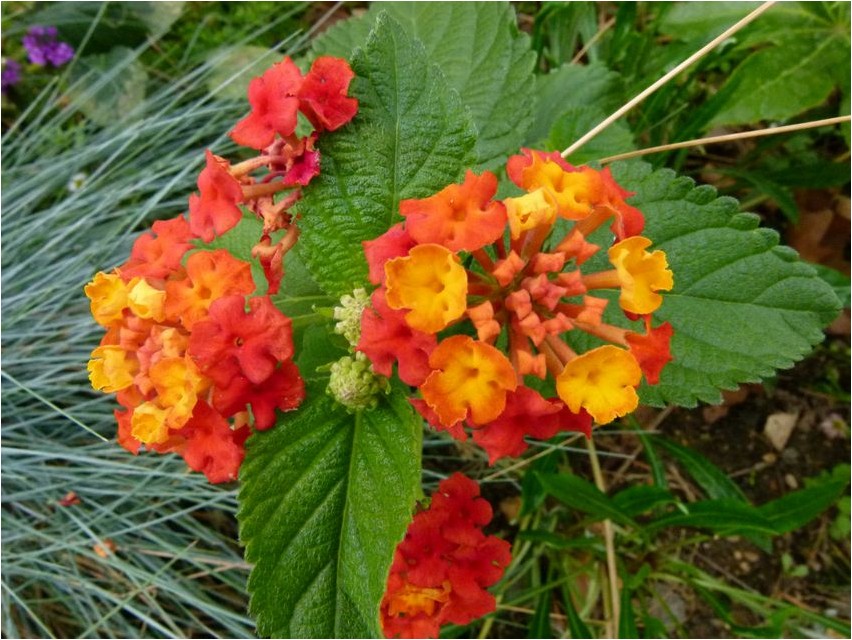
Lantana vaulted (lat. Lantana camara) is a herbaceous plant, subshrub or shrub from the Verbena family. The combination of unpretentiousness to living conditions and the beautiful appearance of Lantana have made it a popular resort plant in countries with warm climates.
The peculiar tart aroma of Lantana has a beneficial effect on the human nervous system and promotes a healthy appetite. The leaves of the plant cause poisoning in many human-raised animals, and the green fruits are also toxic to humans. Lantana”s aggressive nature requires the gardener”s attention to avoid overgrowth and displacing other plants from the area it occupies.
Description
Plant stems
The rapidly growing stems of the bush, which can be either smooth or thorny, require space or are intricately intertwined with each other, creating an impassable barrier for pedestrians. Therefore, a minimum of 50-70 cm should be left between planted bushes.
If the bushes are not trimmed, the plant will rise to a height of more than two meters. In hotels, gardeners do not allow Lantana to grow too much, limiting the bush both in height and width. Therefore, the bushes stand in the form of neat borders, marking footpaths, refreshing the air and decorating the area with their leaves and inflorescences.
The stems of Lantana vault, resistant to the destructive forces of sun, moisture and termite ants, are widely used by the local population to make wicker furniture, which is valued on par or even higher than furniture made from cane and bamboo.

Plant leaves
The graceful dark green leaves of Lantana vaulted are decorated along the edge with pretty teeth. There are plant species with smooth edges of leaves. The surface of the leaf appears rough and wrinkled, like a hummocky field over which smooth streams of veins flow.
Beneath the external beauty and minty aroma of the leaves, the plant’s toxic abilities are hidden. In countries where Lantana grows in the wild, it is an enemy of people who have domestic herbivores, for whom the leaves are life-threatening. Only the marsupial swamp wallaby, living on the Australian prairies, can eat the toxic leaves of Lantana vault without harm to its health.
Extracts are prepared from the leaves of Lantana vault that help protect cabbage grown in the garden from voracious aphids.
Plant flowers
Small, simple flowers of Lantana vault form miniature inflorescences, amazingly painted by a natural artist. They can be plain or multi-colored. Their aroma attracts elegant butterflies and hardworking bees.
Fruits of the plant
The pollinated inflorescences turn into green fruits, which gradually turn black, becoming similar to juicy blackberries. Only they are not at all juicy, but rather dry, and are not suitable for human nutrition.
Reproduction and care
Lanthanus vault can be propagated by sowing seeds (it easily propagates by self-sowing, turning into a weed), or by cuttings.
Maintenance is simple. Requires watering during prolonged drought. Removing excess or damaged branches, as well as cutting to give the desired shape.
Usage
The shrub serves as an excellent material for creating impenetrable green walls and borders of pedestrian paths.
Single planting of bushes is also in demand by designers when they need to break the monotony of a green lawn.