Prickly pine
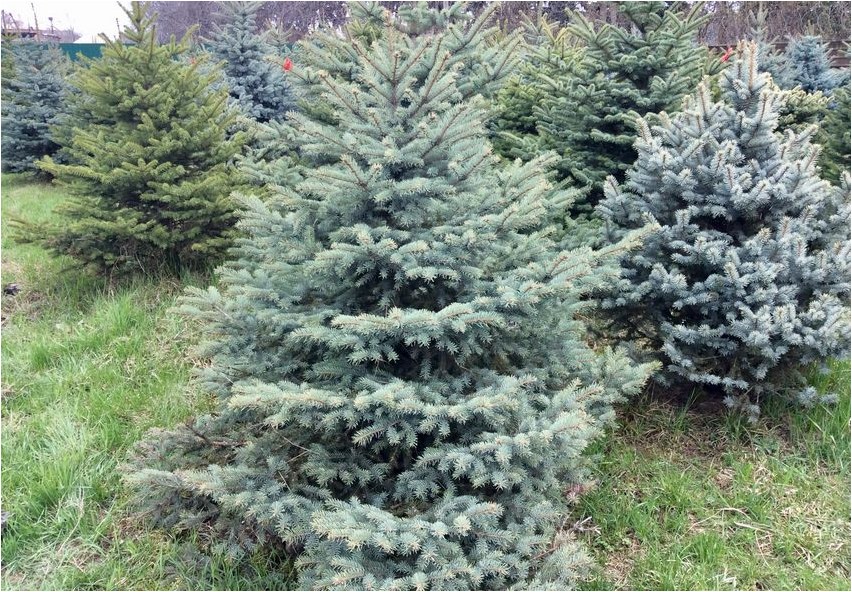
Prickly pine (lat. Pinus pungens) is a coniferous tree of modest size, one of the species of the genus Pine (lat. Pinus) of the Pine family (lat. Pinaceae).
It usually grows on the steep slopes of the mountain range in North America called the Appalachians, familiar to us from books and films about Indians. The tree has a prickly trunk with branches, sharp needle-like needles, and even female cones, armed with wide protective thorns on their scales. Just a real vegetable hedgehog.
What”s in your name
You can read about the meaning of the generic word “Pinus” in the article “Pine” in our Encyclopedia, which gives two versions of the origin of such a name.
The specific epithet “pungens” is translated from Latin as “tingling”, hence the Russian name of the plant “Prickly Pine”.
This type of Pine has many different names. There is also one that is literally translated into Russian as “Prickly pine” — this is the English word “Prickly pine”. There is a lot of prickly things in the tree: this is the scaly-furrowed bark of trunks and branches, and sharp-nosed needles with jagged edges, and wide thorns curved upward on the hard scales of female cones.
Because of Pine’s love for steep mountain slopes and the flat crown of mature trees, the tree is often called “Table Mountain pine”, or simply “Mountain pine”.

Description
Prickly pine is a slow-growing coniferous tree. Young seedlings anchor themselves on rocks by inserting a tap root into a rock crevice. The tree then grows lateral roots that penetrate the soil and plant litter to provide the plant with food and moisture.
Often the tree is very small in stature, but with numerous branches. Prickly pine rarely grows to 20 meters in height, although there is a case of finding a 29-meter tree growing in nature.
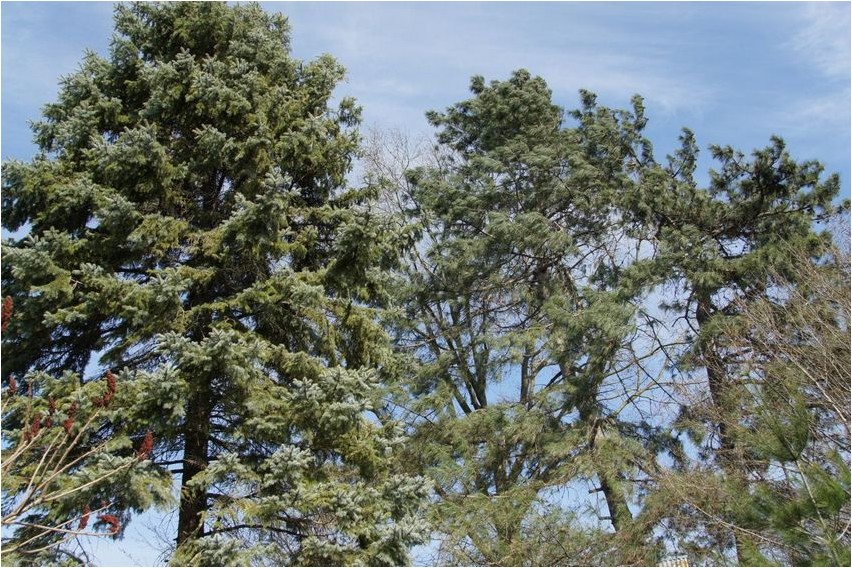
The trunk of the Pine Pine is rarely straight and its cross section is regular. While young trees can be large bushes when grown in an open area, or slender with relatively small branches when grown in more cramped conditions, older trees tend to have a wide and flat crown.
The prickly needles of the Mountain Pine grow in bunches with 2 needles, less often 3 needles on the same tree. The tree owes its evergreen appearance to the fact that the needles in bunches last from two to three years.
The mountain pine is a monoecious tree, meaning male and female cones grow on the same tree, relying on the wind for pollination. The sessile female cones, 4 to 10 cm long, have wide, upward-curving spines on their stiff scales, resembling miniature pineapples.
The seeds of the mountain pine are triangular in shape and equipped with wings, which they will need after maturing to find a home on steep slopes. The higher up the tree the female cone is located, the smaller it is and the smaller the seeds.
The Role of the Mountain Pine in Nature
The mountain pine, choosing steep mountain slopes for its habitat, uses its roots to stabilize the soil and protect the slopes from scree.
The seeds of the mountain pine are a food source for wild animals. American red squirrels are especially fond of the fruits of the mountain pine. True, they don”t always behave in a “civilized” manner, limiting the growth and competitiveness of the mountain pine among other trees. Squirrels, when collecting cones, chew off entire branches, then, descending from the tree to the ground, remove the cones. In this way, they limit the seed harvest stored in the green branches.
Due to the poor shape of the trunk and branches and its small stature, the mountain pine is rarely used for building materials, but for firewood or paper production, it sometimes has to sacrifice its life.