Foxglove grandiflora
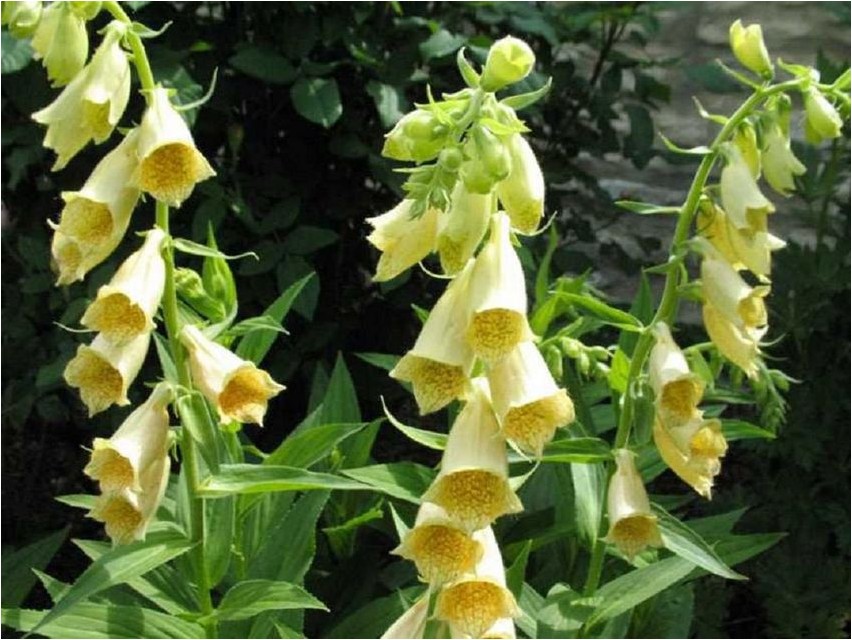
Digitalis grandiflora is part of the family called Noricaceae; in Latin the name of this plant will be as follows: Digitalis grandiflora Mill. (D. ambiqua Murr.).
As for the digitalis grandiflora family itself, in Latin it will be like this: Scrophulariaceae Juss.
Description of foxglove grandiflora
Foxglove grandiflora is also known by the following popular names: foxglove, ringer, stringer, sbanochki, creeping flower and glass cups. Foxglove grandiflora is a perennial herbaceous plant whose height can reach one hundred and twenty centimeters. Такое растение будет наделено мочковатой корневой системой, которые будут образовывать в первый год розетку, состоящую из крупных прикорневых листьев. After some time, a stem will appear, which will bear at its top a brush of rather beautiful, large flowers of irregular shape, painted in yellow tones. The leaves, calyx, upper part of the stem, pedicels and corolla of this plant will be covered with glandular hairs. The leaves of Foxglove grandiflora are elongated, lanceolate and pointed, they are endowed with short, wide petioles. The flowers of this plant will be drooping in a small sparse cluster. The length of the calyx of foxglove grandiflora will be about four to seven millimeters, they will be endowed with acute and lanceolate lobes. The corolla of this plant will be tubular-bell-shaped and large, its length will be about three to four centimeters, it is colored in yellowish tones and is endowed with brownish veins on the inside. The fruit of the foxglove grandiflora is a two-locular ovoid capsule, the length of which will be about eight to fourteen millimeters. The seeds of this plant are tetrahedral and prismatic, and their length will be about one millimeter.
Foxglove grandiflora will bloom in the month of July, while the seeds will ripen in August. Under natural conditions, this plant is found in Western Siberia, the European part of Russia, as well as the northern and western foothills of Altai. It is noteworthy that this entire plant will be poisonous.
Description of the medicinal properties of foxglove grandiflora
Digitalis grandiflora is endowed with very healing properties, and the leaves of this plant are used for medicinal purposes.
The presence of such valuable healing properties can be attributed to the flavonoids, anthraquinones, mineral salts, iridoids, traces of alkaloids, tannins, and the following cardiac glycosides: hypoxin, hypotonia digitoxin, and purpureoglycosides A, B, and C, found in the leaves of this plant.

Preparations based on foxglove will help normalize biochemical processes and improve the function of the heart’s neuromuscular apparatus. This will result in an increase in the volume of blood flowing from the venous to the arterial system over a certain period of time. This, in turn, will create conditions for rest for the heart muscle.
Preparations based on this plant are indicated for use in acute and chronic heart failure, and they will have a particularly beneficial effect on the body in cases of heart rhythm disturbances. However, it should be remembered that foxglove is a poisonous plant, so prolonged use of such preparations can lead to poisoning. It is recommended to exercise extreme caution when handling this plant.
FOXGLOVE GRANDFLOWER 600 Medicinal Plants





