Laminaria saccharina
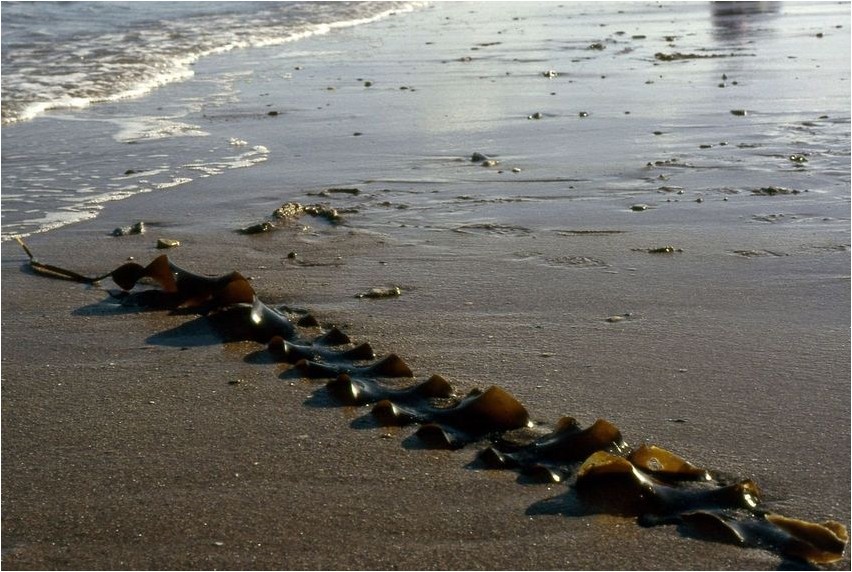
Laminaria saccharina is a member of the Laminariaceae family. Its Latin name is Laminaria saccharina L.
The family name of Laminaria saccharina is Laminariaceae.
Description of Laminaria saccharina
Laminaria saccharina is a brown algae, a perennial plant with a ribbon-like thallus, ranging in length from one to twelve meters. The thallus of this plant develops into a column, which can vary in length. The thallus and algae attach to rocky soil via well-developed root structures called rhizoids. Sporangia containing zoospores form on the surface of the thallus. There are several different species of Laminaria. Laminaria saccharina thickets are found in the Black and North Seas, as well as in the Far Eastern seas.
Description of the medicinal properties of Laminaria saccharina
Laminaria saccharina possesses highly valuable medicinal properties. For medicinal purposes, it is recommended to use the leaf-like parts or blades, called thallomes. This raw material should be harvested during the summer and fall.
The presence of such valuable medicinal properties can be attributed to the plant’s iodine content in the form of organoiodine compounds and iodine, as well as the following carbohydrates: fructose, mannitol, the high-molecular polysaccharide laminarin, alginic acid, the gelatinous substance algin. Traces of fatty oil, vitamin C, vitamins B, B1, B12, and B2, proteins, and the brown pigment phytoxanthin have also been found. In addition, kelp also contains a significant amount of various minerals, including zinc, bromine, sodium, potassium, iodine, magnesium, iron, copper, cobalt, aluminum, arsenic, and manganese.
In cooking, kelp is used as a garnish with boiled meat and fish. A powder made from this plant can be added to rice, sauces, and soups. Interestingly, in Indonesia, this seaweed is eaten raw after being rinsed with fresh water.

For medicinal purposes, it is not recommended to use kelp sugar for nephritis, nephrosis, rashes, furunculosis, hemorrhagic diathesis, pregnancy, urticaria and iodism. In the event that there is increased sensitivity, then long-term consumption of seaweed is extremely undesirable, which should be associated with the risk of the occurrence of iodism phenomena.
Laminaria saccharide is used as a general tonic and as a prophylaxis for the treatment of mild forms of hyperthyroidism, Graves’ disease, atherosclerosis, endemic goiter, proctitis, chronic and acute enterocolitis. In addition, such a plant will also reduce cholesterol levels in the blood, help restore normal vascular permeability, reduce blood clotting and the risk of vascular blood clots. Seaweed powder is recommended for use in the treatment of chronic inflammatory diseases of both the uterus itself and its appendages. It is worth noting that such treatment is characterized by a high degree of effectiveness. On the basis of laminaria saccharide, so-called bougies are made, which are used in some cases to widen fistulous passages in the treatment of various gynecological diseases. Such a remedy is also characterized by obtaining an effective result.
Laminaria sugar or seaweed
https://www. youtube. com/watch? v=3-nx3SzYyL8
Laminaria sugary kelp





