Industrial safety certification: what is it and how to pass it?
t?

Industrial enterprises are places of increased danger for workers and others. In this regard, in Russia there are requirements for ensuring occupational safety at work, including a mandatory certification procedure. What kind of procedure this is, how it is done and what its significance is will be discussed below.
Contents of the article:
- Industrial safety certification: what is it?
- Purpose and objectives of industrial safety certification
- Who can conduct industrial safety certification?
- Industrial safety certification procedure
- Preparation for industrial safety certification
- What documents are needed to pass certification in industrial
- Consequences of violating industrial safety requirements
- Benefits of being industrial safety certified
industrial safety certification is a verification of compliance with the set requirements of technical equipment, buildings and structures, as well as the organization of safe working conditions. This procedure is carried out with the aim of determining the degree of risks to the life and health of people working in production and taking measures to eliminate identified violations.
Industrial safety certification is carried out on the basis of regulations that establish special requirements for the organization of labor safety at industrial facilities. It is mandatory for all enterprises engaged in hazardous production industries and performing certain types of work, as well as for facilities where hazardous substances are stored.
Industrial safety certification: what is it?
Industrial safety certification is a mandatory process carried out to verify the compliance of enterprises with the requirements of industrial safety legislation.
The main purpose of certification is to ensure the safe operation of enterprises and protect personnel from injuries and hazards during the production process. It is carried out not only to prevent accidents and industrial disasters, but also in the event of their occurrence to minimize the consequences and reduce risks.
Certification is carried out in accordance with the federal laws “On Industrial Safety of Hazardous Production Facilities”, “On Technical Regulation”, “On State Supervision and Control in the Field of Industrial Safety”, “On Civil Defense” and others.

During the certification process, a comprehensive check of documents, equipment, utilities and other elements of enterprises performing hazardous production activities is carried out. Experts also monitor the work of personnel, assess their level of training and knowledge of safety rules.
Industrial safety certification is mandatory for all enterprises engaged in hazardous activities and is a necessary measure to protect personnel and the environment.
Purpose and objectives of industrial safety certification

Goal:
Industrial safety certification is the process of assessing an organization’s compliance with regulatory requirements in the field of industrial safety. The purpose of certification is to determine how safe the production facility is and how well the industrial safety management system is organized.
Tasks:
- Determine the degree of compliance of the organization with the requirements of legislation and regulatory documents in the field of industrial safety.
- Identify violations of industrial safety management rules in the organization.
- Generate proposals for improving the industrial safety management system in the organization.
- Assess the effectiveness of measures taken to ensure industrial safety.
- Generate recommendations for improving industrial safety in the organization.
Industrial safety certification is an important element in ensuring safety at work and represents an important component of the production process. As a result of certification, an increase in production safety and a decrease in the likelihood of emergency situations is achieved, which leads to an increase in labor productivity and economic growth of enterprises.
Who can conduct industrial safety certification?
Industrial safety certification is a mandatory stage in the activities of any manufacturing enterprise. This is a procedure that allows you to assess working conditions, identify violations and take measures to eliminate them. However, certification can only be carried out by a person who has the appropriate qualifications and experience in this field.
In accordance with current legislation, industrial safety certification can be carried out both within the company by the specialists themselves (who have the appropriate knowledge and experience) and by an independent organization-certification commission. In any case, certification must be carried out in accordance with the requirements of the law.
However, we should not forget that industrial safety certification is a responsible and important procedure. In order to get the maximum benefit from the event, it is recommended to contact only qualified specialists in this field.
Industrial safety certification procedure
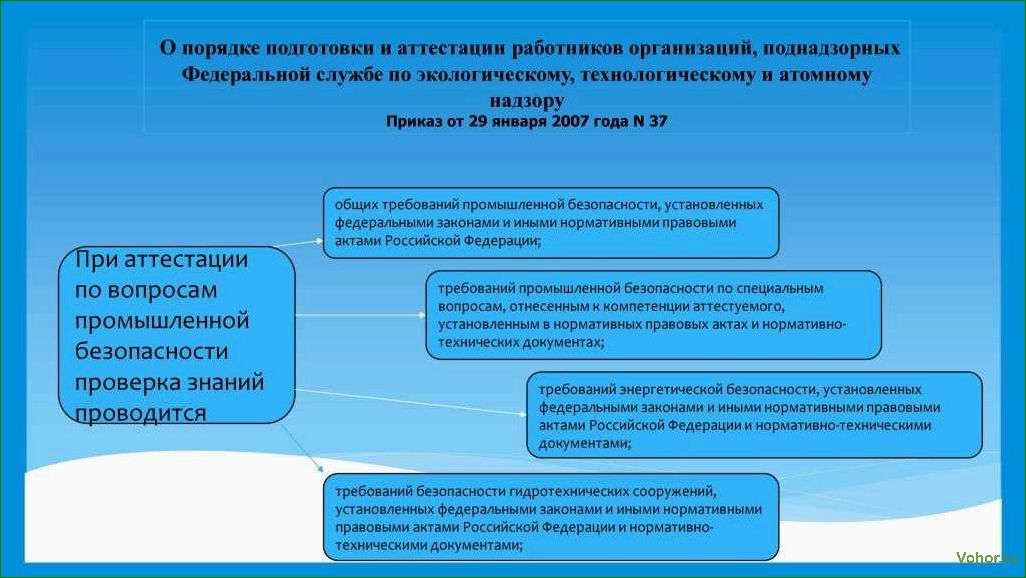
Step 1: Determining the hazard category of the object
The first step in the industrial safety certification process is to determine the hazard category of the facility. To do this, an analysis of factors that may affect the safety of the facility and its personnel is carried out.
Depending on the results of the analysis, an object can be classified into one of three hazard categories: high, medium or low.
Step 2: Prepare documentation
After determining the hazard category of an object, it is necessary to prepare the appropriate documentation that will be used during certification.
All necessary documentation can be divided into three groups: technical, organizational and legal.
Step 3: Carrying out certification
The main stage of the industrial safety certification procedure is the certification itself. It is carried out on site, at the facility, and consists of checking the organization’s compliance with safety requirements in accordance with the hazard category of the facility.
At this stage, specialists check the technical condition of the equipment, the availability and serviceability of protective equipment, the knowledge and skills of personnel in the field of occupational safety, etc.
Step 4: Conclusion
After conducting an inspection at the facility, a conclusion is drawn up on the organization’s compliance with industrial safety requirements. The conclusion may include recommendations to improve the safety of the facility and its personnel.
In addition, if violations of safety requirements are detected, the certification commission may decide to refuse to issue a certificate.

Preparation for industrial safety certification
Risk assessment
Preparation for industrial safety certification begins with assessing the risks in the organization. It is necessary to conduct a hazard analysis, identify possible problems and assess the likelihood of their occurrence. Only after this can you move on to planning measures to improve security.
Staff training
Workplace safety cannot be ensured without competent and trained personnel. Preparation for certification includes training personnel in safety precautions, instruction in fire safety rules, the use of personal protective equipment, as well as preparation for emergency situations.
Checking operating equipment
Working equipment is one of the main factors determining the level of safety in the production process. Before certification begins, it is necessary to carry out maintenance and performance testing of equipment, as well as ensure that changes and technical improvements are made in a timely manner.
Systematic monitoring
Equally important is systematic monitoring of the condition of equipment, industrial processes and personnel behavior. Based on this data, it is necessary to analyze and take measures to eliminate the identified problems.
Documentation availability
As part of the industrial safety certification, it is necessary to provide the certification commission with complete documentation about the condition of the equipment, measures taken to improve safety, risks in the organization and risk management measures. Documentation must be written in clear language and be accessible to all employees.
What documents are needed to pass industrial safety certification?
Industrial safety certification is a mandatory procedure that is performed to verify the enterprise’s compliance with safety requirements. To pass it, you must provide a number of documents confirming compliance with the requirements of the Federal Law “On Industrial Safety” and other regulations.
The main documents required for certification are permits for activities that describe the nature of the work at the enterprise and the equipment used, as well as design documents for the equipment being put into operation.
In addition, it is necessary to provide documents confirming the qualifications of employees who work at the enterprise, as well as documents developed to ensure safe working conditions and safe operation of equipment.
It is also important to consider that some requirements may be established at the level of regional laws and other regulations, so additional documents may be required depending on the location and type of activity of the enterprise.
In general, it is necessary to collect all the necessary documents in advance and conduct a detailed check for possible inconsistencies in order to successfully pass the industrial safety certification.
Consequences of violating industrial safety requirements
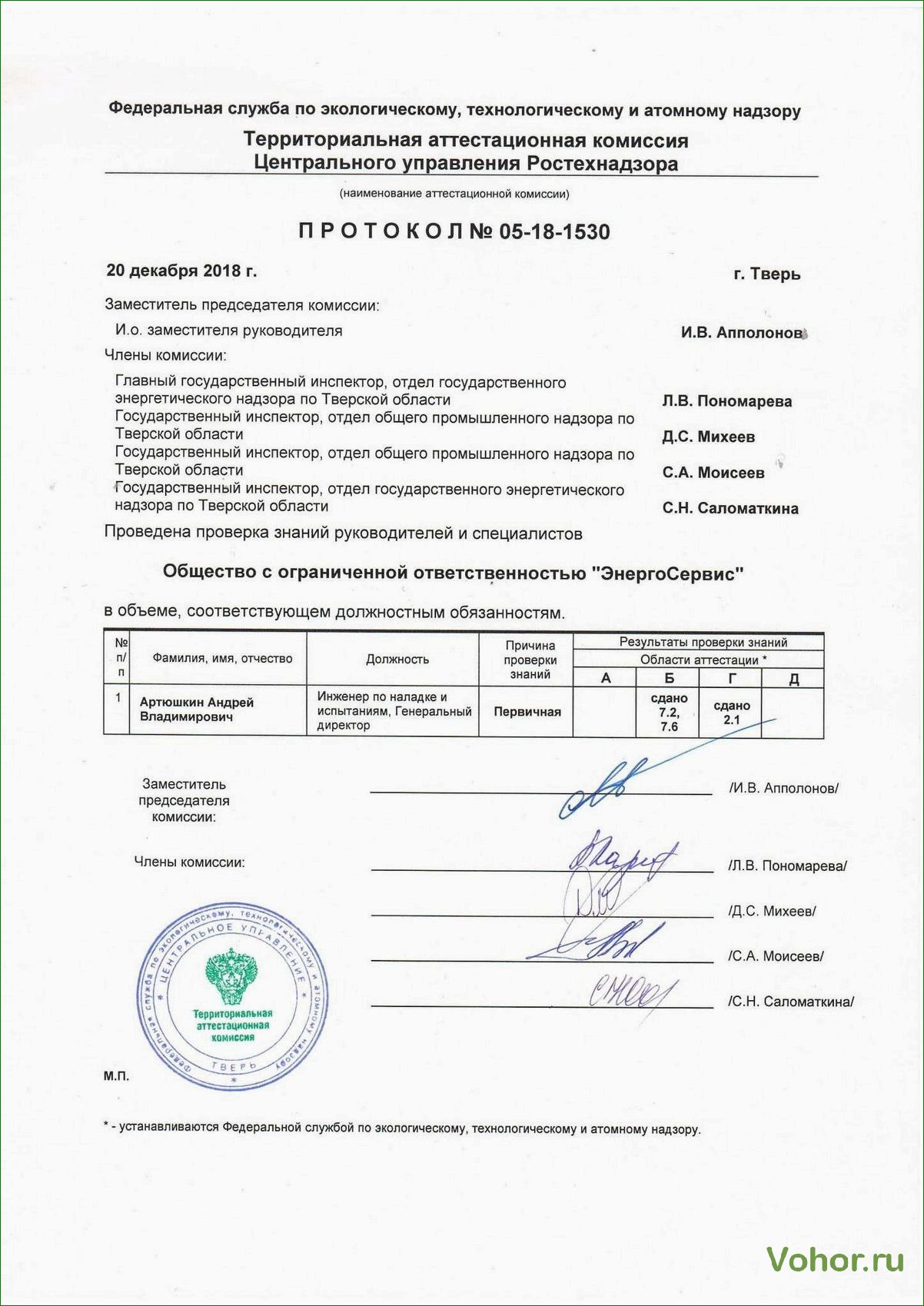
Failure to comply with industrial safety requirements can have serious consequences. One of the most dangerous effects is the possibility of industrial accidents and accidents.
Failure to follow the rules can result in worker injury, death, or serious injury. In addition, an accident can lead to significant material losses, losses from a long interruption in production and high costs for equipment repairs.
Failure to comply with industrial safety requirements will also result in penalties and possible disqualification of the production facility. Companies may lose their licenses and lose their reputation in the market.
In addition, violation of safety standards may entail legal consequences, such as criminal prosecution for causing harm to the health and life of workers.
Compliance with industrial safety requirements is not just an obligation, but also a responsibility for the health and safety of all production workers, as well as for the safety of the property and business interests of the company as a whole.
Benefits of being industrial safety certified
1. Reduce risks and increase safety
Passing industrial safety certification helps an organization improve the level of safety in the workplace and reduce the risk of accidents.
As a result, the organization will be able to ensure that all employees are properly equipped with personal protective equipment and that equipment operation and safety regulations are followed.
2. Increased competitiveness
Passing industrial safety certification is an additional indicator of the qualifications and professionalism of the organization.
This can provide an advantage when negotiating contracts and purchasing equipment, as customers and suppliers prefer to work with reliable and secure partners.
3. Compliance with laws
Industrial safety certification is mandatory for a number of industries and organizations, and can help comply with occupational safety legislation.
If an organization does not pass certification, it may face unpleasant fines and various pitfalls in relations with regulatory authorities.
4. Cost reduction
The reduction in the number of accidents and accidents, which is ensured by industrial safety certification, allows you to reduce the costs of maintenance and repair of equipment, compensation for damage and compensation for damage to the health of workers.
Thus, industrial safety certification can bring significant benefits to an organization, improve professionalism and safety in the workplace, as well as ensure compliance with legislation and reduce costs.


