Freezea
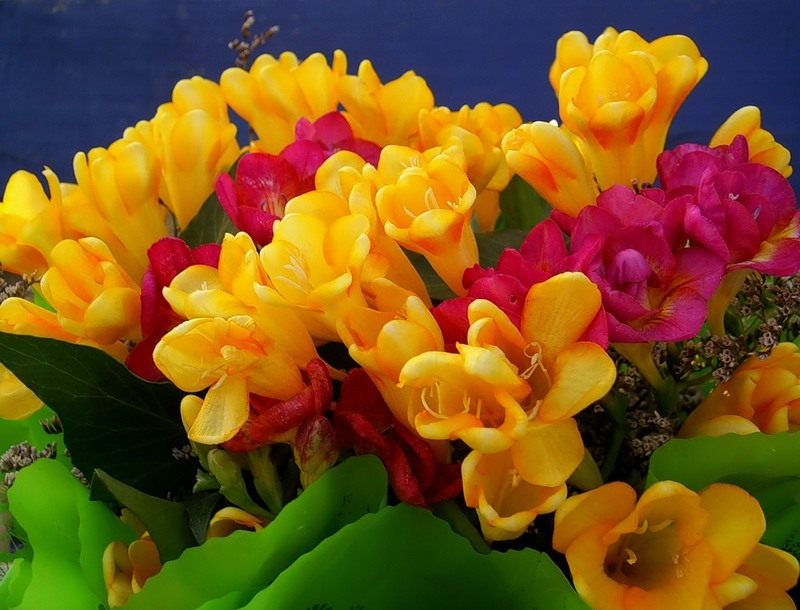
Frisea or vrizia can be found in nature in the humid subtropics of South America. This is a beautiful flowering plant, although it is an epiphyte by nature and grows on any support, but is not parasitic, and uses photosynthesis to obtain nutrients, and they only need moisture in the form of precipitation or humid air. The growing conditions for frisea are determined by its natural origin, so it is demanding on temperature and can hardly tolerate a decrease to 14 degrees; it grows best at 18-20 degrees. Since this is an epiphytic plant, it can be planted in a substrate, the main component of which is crushed bark, you can use just a piece of bark, or special soil mixtures for orchids and bromeliads. In normal soil, frisea will die.
Freesia growing and care at home
Water the plant moderately, you can spray it, and in winter watering is reduced. Instead of watering, frisea, which grows on the bark, during the period of active growth, can be dipped in water to saturate it with the necessary moisture, and then returned to its place. Once every ten days is enough. And during flowering, it is better not to spray the plant at all, but only to humidify the air around it.
Friesea reproduces by offspring; the best time for transplantation is March.
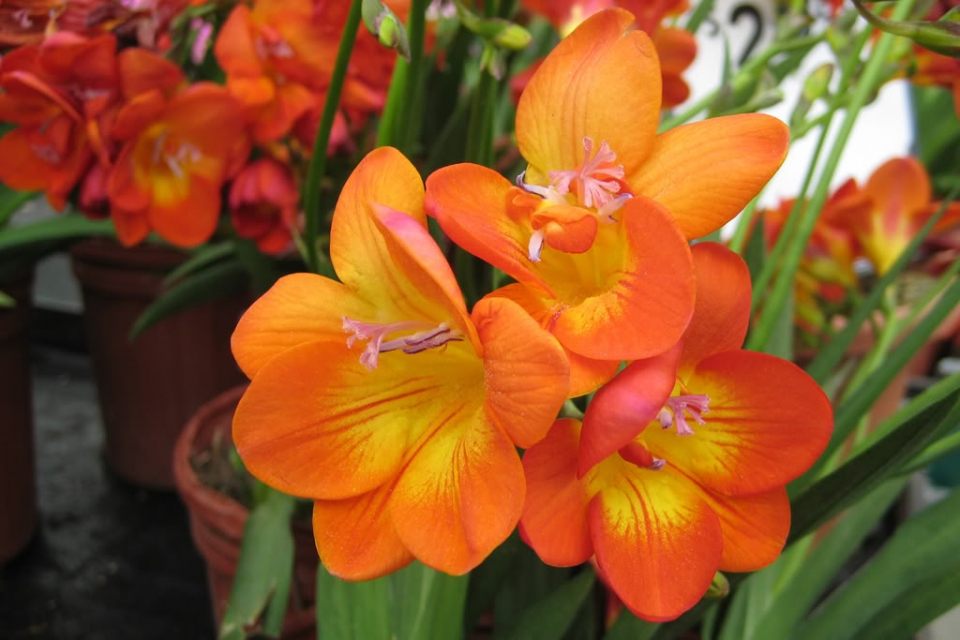
You can feed it only in the summer with mineral fertilizers, and at all other times of the year it is not necessary. The frisea flower is very beautiful and looks like a tongue of flame, long, red or red-yellow. After flowering stops rosettes that have not died off must be cut off to prevent rotting; if there is a substrate, rotten rosettes must not be allowed to get into it.
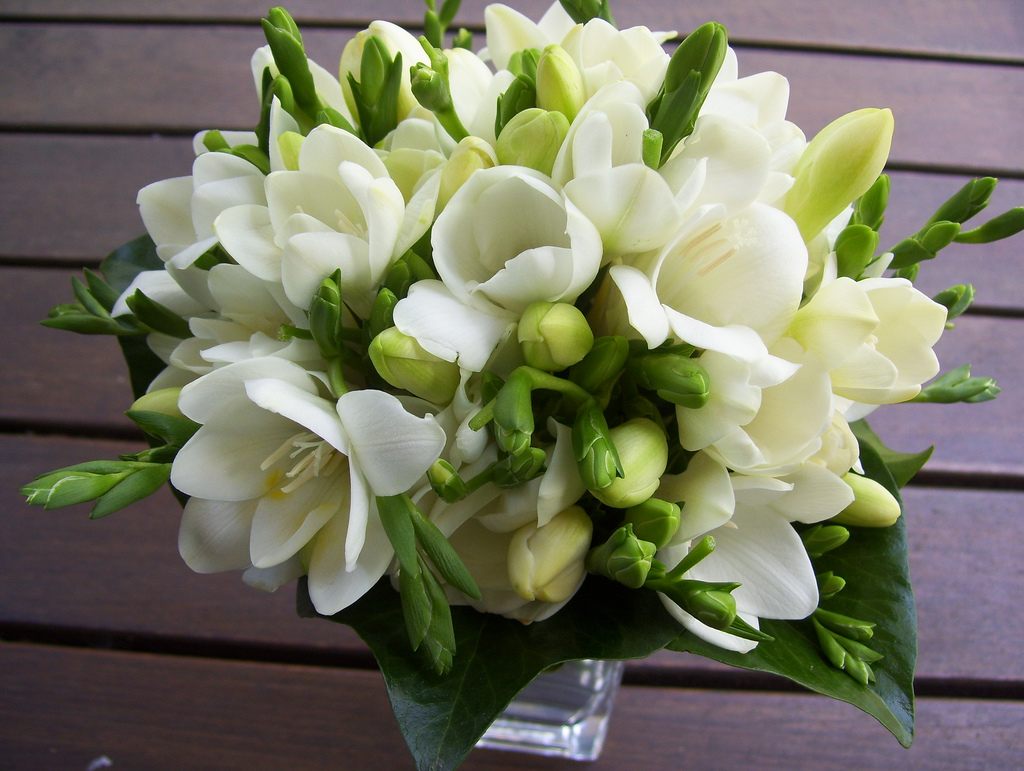
Since frisea naturally grows on trees in the forests of America, which are much higher than it, on the granite cliffs of Brazil, it tolerates shading well and is not too demanding on lighting. Therefore, it will feel best on the eastern and western windows of the room. Although in drafts the plant stops blooming and weakens.

Like many other indoor plants, Friesea can be affected by scale insects. If yellow spots appear on the tips of the leaves, then this is a sign of lack of moisture, and if such spots are located along the entire length of the leaf, then this is from sunburn. If the leaves begin to wither and turn pale, then this is a sign of excessive watering. In this case, the plant must be moved to a new dry substrate so that it does not die from excess moisture.
Frisea looks very beautiful in large compositions: on old trees, in specially made hollows or on stumps.