Cardoon
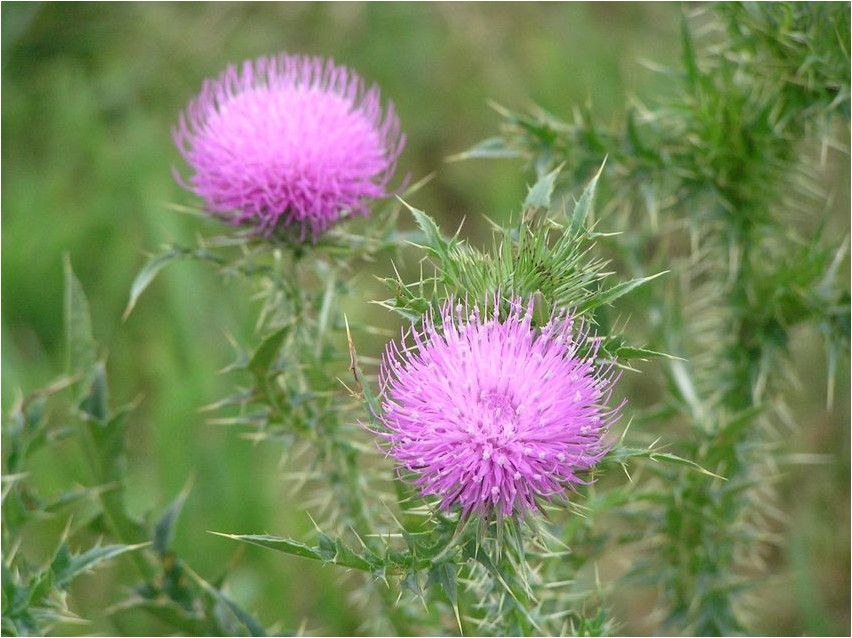
Cardoon, or Spanish artichoke (Latin: Cynara cardunculus), is a perennial plant in the Asteraceae family. It is currently widely cultivated in Europe and Asia.
In Russia, it is grown in private gardens. In the wild, the plant is found in Southern Europe and North Africa. Cardoon is similar in appearance to artichokes, differing only in its more developed leaf petioles and height. It is grown as a vegetable, and the fleshy leaf petioles are eaten, but only after they have blanched.
Crop Characteristics
Cardoon is a herbaceous plant up to 1 m tall. The leaves are green or grayish-green, dissected, bipinnate, with serrated lobed segments, pubescent beneath, and rarely spiny. The inflorescence is a head, up to 12 cm in diameter, usually forming in the second year. The corolla is five-partite, tubular, blue or bluish-violet in color. The fruit is a large achene, smooth, quadrangular, or flattened. Seeds retain their similarity for up to 7 years.
Growing Conditions
Fertile, moderately moist, well-cultivated soils with a neutral pH are preferred for growing this crop. Waterlogged, heavy clay soils, as well as areas with a shallow water table, are unsuitable. Cardoon loves the sun and tolerates shade poorly. Failure to observe these growing conditions will result in a poor-quality harvest.

Propagation and Sowing
Cardoon is propagated only by seed. It is preferable to grow the crop from seedlings; this allows the plants to develop fleshy stems and good foliage before the onset of sustained frost.
Sow cardoon in the second half of April in seedling trays filled with fertile, well-moistened soil. The crop should not be sown before this time, as this risks premature flower formation and, consequently, seed production. In this case, the petioles do not have time to fully develop, becoming coarse and unsuitable for consumption.
For winter consumption, cardoon is sown directly into open ground in the third ten days of May. The seeding depth is 2. 5-3 cm. Three seeds are placed per hole, and weak plants are subsequently removed, leaving only one per hole. The distance between plants should be 60-80 cm, and between rows, 1 m.
Care and harvesting
Cardoon care is generally simple. It involves regular and moderate watering, as well as fertilizing with complex mineral fertilizers and slurry. Fertilize at least once every two weeks. Watering is essential for the formation of fleshy stems; the soil should never be allowed to dry out.
Harvest in the fall before frost. Remove dry lower leaves from the plants, cut off small leaves with medium-thick petioles, tie them into a bundle, and wrap them in any light-proof material, such as paper. Wet leaves collected after rain or early in the morning with drops of dew should not be tied, as they will rot. Store the petioles and leaves in this condition for a month. For winter storage, place the petioles in a cool, dark, well-ventilated area, where they will bleach naturally. With the onset of the first frost, the plants are dug up with the root ball, placed in a container with sand, without pressing against each other, and stored in a regularly ventilated area. Plants with thick petioles and healthy leaves are selected for seed and kept in a cellar or basement at a temperature of 0-2°C. In the spring, they are sorted, overgrown shoots are removed, and they are planted in the ground under plastic or in pots, followed by repotting.
Grant Cardone — These Words Will Make You Work (Motivation)