Kalanchoe pinnate
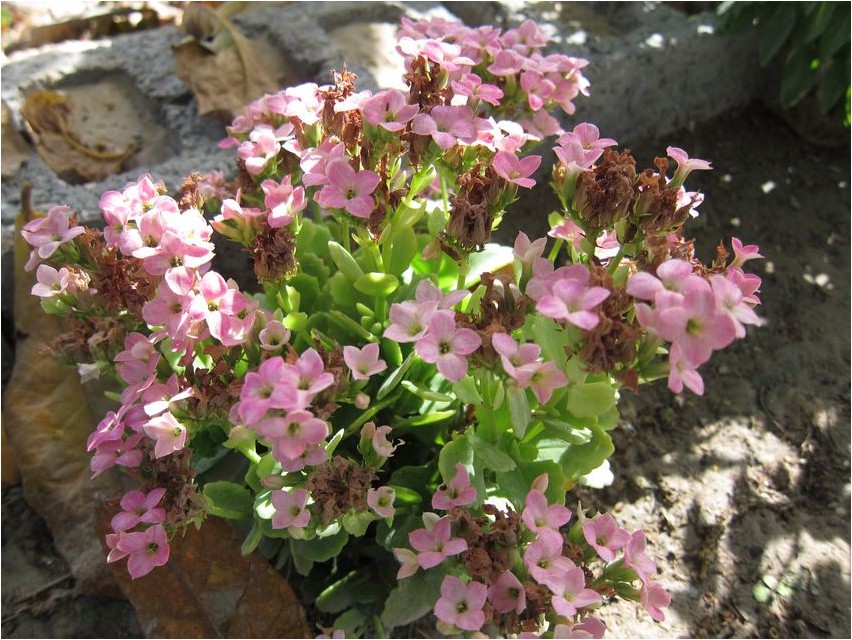
Kalanchoe pinnata is one of the plants of the family called Crassulaceae; in Latin the name of this plant will be as follows: Kalanchoe pinnata (Lam.) Persson.
As for the name of the Kalanchoe pinnate family itself, in Latin it will be: Crassulaceae DC.
Description of Kalanchoe pinnate
Kalanchoe pinnate is a succulent evergreen plant endowed with a short, branched root. The stem of this plant is fleshy and erect, and the leaves are also fleshy and will contain a lot of sap. The lower leaves of Kalanchoe pinnate are simple, they can be either ovoid or elliptical in shape, such leaves will be quite large. The upper leaves of this plant along the edges will be crenate-toothed and folded, these leaves are trifoliate or pinnate, the leaves are ovate-shaped. The inflorescences of Kalanchoe pinnate are apical and paniculate. The fruits of this plant are leaves.
It should be noted that under natural conditions, in the wild, this plant will grow in the tropics of both the New and Old Worlds: Central America, Africa, Australia and Asia. In indoor culture, this plant is grown in Ukraine, Russia and Belarus.
Description of the medicinal properties of Kalanchoe pinnate
Kalanchoe pinnate is endowed with very valuable healing properties. It has been proven that the plant has wound-healing, hemostatic, anti-inflammatory, bacteriostatic and bactericidal effects.
It is recommended to use the juice of this plant for medicinal purposes. This juice is obtained in this way: the freshly collected green mass of the plant, namely the stems and leaves, is taken. such a mass is washed and then kept at a temperature of no more than ten degrees in a dark place for seven days. After this, the mass should be crushed until a homogeneous semi-liquid mass is obtained, the mass is squeezed out, filtered and sterilized. After this, the resulting juice should be preserved with twenty percent alcohol: such juice can be stored for one year.

Kalanchoe pinnate juice contains tannins, flavonoids, enzymes, vitamin C, polysaccharides, magnesium, iron, copper, potassium, manganese, silicon, and the following organic acids: acetic, citric, and malic. This juice is used as a highly valuable external remedy for purulent-necrotic processes, bedsores, fistulas, and tropical ulcers, as well as for preparing wounds for secondary suturing. In terms of combination therapy, the juice of this plant is used for purulent wounds such as felons, after opening abscesses, and boils: tampons and dressings soaked in this juice are used for this purpose.
The healing properties of this plant are utilized in the combination treatment of patients with erysipelas, and the juice helps stop bleeding from wounds. In ophthalmology, Kalanchoe pinnate juice is also widely used. This juice is used to treat corneal erosions, keratitis, burns, injuries, pigmented retinal degeneration, degenerative lesions of the eye elements, and herpetic keratitis. In all these cases, the juice should be instilled into the conjunctival sac. The juice can be either undiluted or diluted in equal proportions with either a 0. 5% solution of novocaine or isotonic sodium chloride solution.
For tuberculosis, Kalanchoe pinnate juice should be taken orally, half a teaspoon twice daily after meals, diluted three times with water.
KALANCHOE DEGREMONI | MEDICINAL KALANCHOE | Care and cultivation at home





