Plum
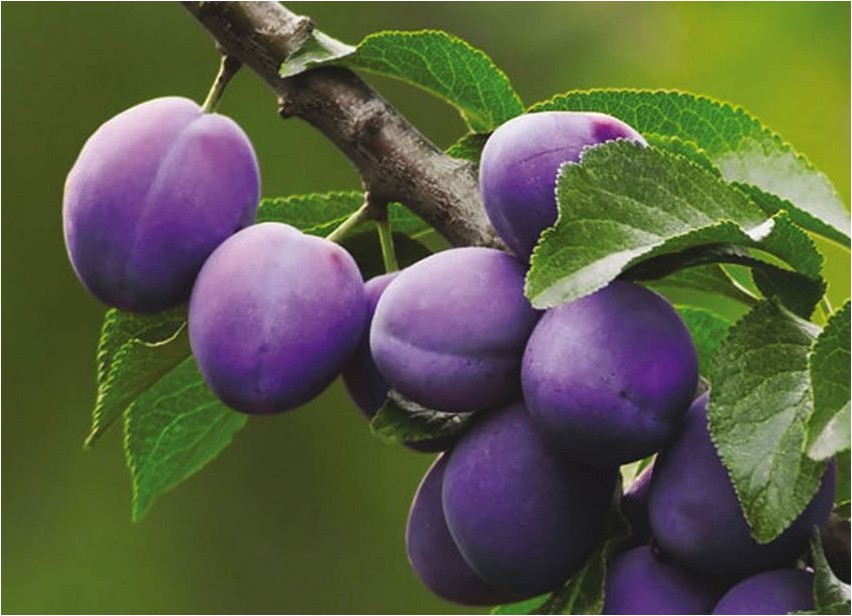
Plum (lat. Prunus) is a popular fruit crop; shrubs or trees of the Rosaceae family.
Characteristics of culture
Plum is a stone fruit crop that, with proper care, produces large and high-quality fruit yields. The crown of the plant is spreading, usually spherical or ovoid, some varieties have spines on the branches. The root system is taprooted, with a large number of lateral roots located at a depth of 20-40 cm.
The leaves are simple, lanceolate or elliptical in shape, with jagged edges, pubescent on the outside, arranged alternately. The flowers are pink or white, solitary or collected in umbellate inflorescences. The fruit is a drupe, depending on the variety it can be red, blue, yellow, green, purple or burgundy. The stone is brown, flattened, pointed at both ends.
Currently, the plum genus has about 35 species, distributed mainly in the temperate zone of the Northern Hemisphere. In Russia, the most popular types are: home plum, Chinese plum, Ussuri plum, prickly plum (or sloe) and spreading plum (or cherry plum).
The crop begins to bear fruit approximately 3-5 years after planting, usually the first harvests are quite large — 15-30 kg per tree or shrub. Plum trees are productive for 15-20 years, sometimes longer, but the yield drops every year.

Growing conditions
Plum prefers loose, cultivated, sod-podzolic, chernozem or gray forest soils with a rich mineral composition and neutral pH. Acidic soils need liming at least once every four years. The culture has a negative attitude towards cold and floating soils.
Plum is a moisture-loving plant, although it cannot tolerate excess moisture. It is recommended to grow the crop in well-lit areas, in shaded areas, especially behind buildings, high fences and trees; the plum stretches upward and practically does not bear fruit.
Landing
Plum seedlings are planted in early autumn or early spring. The planting pits are prepared in advance, its dimensions should be 50*50 cm. The distance between plantings should be at least 2. 5-3 m. The soil removed from the pit is mixed with rotted manure, granulated phosphate, wood ash and potassium sulfate.
A portion of the resulting soil mixture is poured into the bottom of the hole, forming a mound. The seedling is then lowered so that the root collar is 5-6 cm above the soil level. Compact the remaining soil, water, and mulch with peat or fallen leaves. When planting in the fall, remove the leaves from the seedling, as they absorb a lot of moisture from the still-developing roots.
Care
In early spring, thoroughly loosen the soil around the plum tree trunks and add urea. Repeat loosening and fertilizing with organic fertilizers, potassium chloride, and superphosphate are carried out once the plum tree begins to bear fruit. Sanitary and formative pruning is performed 2-3 weeks before the start of the growing season, when the average daily temperature is 6-8°C. Perennial branches of older trees and shrubs are pruned back to the 4-5-year-old portion, counting years from the periphery. Plum trees that have reached 18-20 years of age are uprooted or rejuvenated by cutting down the main trunk, leaving 4-5 shoots.
Disease Control
One of the most common plum viruses is the plum pox virus. Symptoms of the disease appear 20-30 days after flowering. Yellowish-green spots form on the leaves, and sunken stripes or rings appear on the fruit. Affected parts of the tree turn brownish, and the fruit ripens quickly and falls off. Plum pox causes 50% yield loss, while also reducing the quality of any fruit remaining on the branches. Unfortunately, there are no effective methods for controlling the sharki pathogen; affected trees and shrubs are uprooted and burned.
Plum trees are often affected by rhinoceros blight, moniliosis, or coccomycosis. These diseases are caused by adverse conditions, such as extreme cold and scorching sun, as well as mechanical injury. To combat these diseases, regular sanitary pruning and disinfection of damaged areas of the plant with copper sulfate or garden pitch are recommended.
9 SWEETEST AND LARGEST PLUM VARIETIES FOR MIDDLE LATE