Kalmia parvifolia
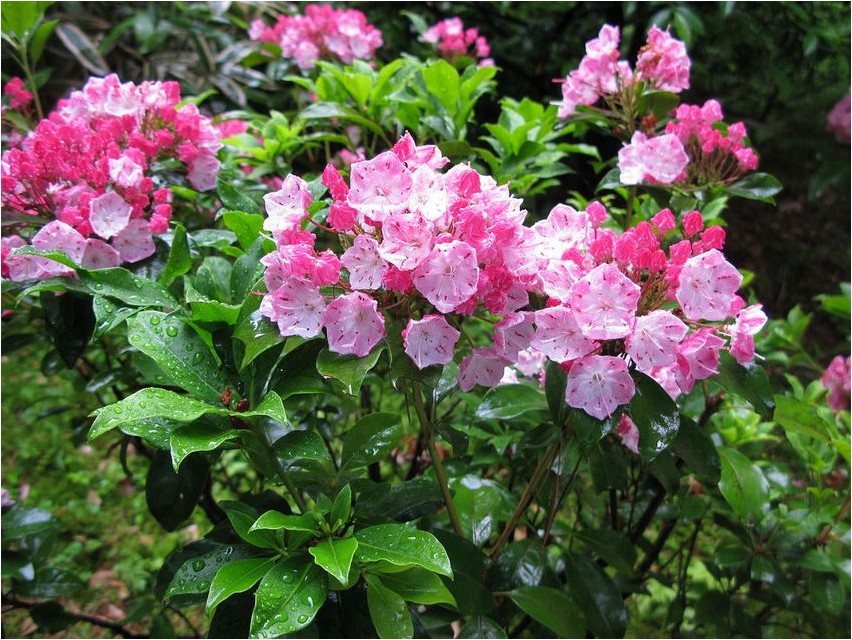
Small-leaved Kalmia (lat. Kalmia microphylla) is a low-growing shrub with small leaves from the genus Kalmia (lat. Kalmia), which represents the heather family (lat. Ericaceae) on Earth.
The noble appearance of the plant is very deceptive and hides behind a pleasant façade a poisonous plant, which should be dealt with very carefully. But, as has been known since ancient times, any poison, with the correct dosage, becomes a person’s assistant in the fight against pathogenic microbes and viruses.
What’s in your name
Such a beautiful genus name as Kalmia preserves in human memory the name of a botanist who devoted his career to growing exotic plants of the American continent. This name is Per Kalm. Being a colleague of Carl Linnaeus, the main person in the classification of the plant world of our amazingly rich planet, he was awarded this honor by Linnaeus.
Since the plant is not large in size, and its leaves are also small, the species name became the Latin word “microphylla”, the origins of which lie in the ancient Greek language, which sounds in Russian as “small-leaved”.
The plant, which is native to the western territories of North America, has many popular names. Among them there are the following names: “Western Swamp Laurel”, “Swamp Laurel”, “High Mountain Laurel”, in which the place of their growth is immediately guessed. True, the last two names are also used by people for other species of plants of the genus growing in the eastern lands of North America, creating confusion. Unless such plants are separated by large distances from each other, and therefore never intersect, forced to live for many years in one place.
Description
Although Kalmia small-leaved is an evergreen plant, it is only active in spring and summer, increasing the height of the stems and green mass, and therefore does not succeed in the size of the bush and leaves. The traditional height of the plant is indicated by 60 cm. But, under very favorable living conditions, Kalmia small-leaved can surpass itself and rise to 180 cm.

Young green shoots are covered with pubescence, but gradually they become bald, turning into grayish or reddish-brown smooth stems of a low shrub.
Lanceolate, oppositely sessile, leathery leaves tend to roll their edges into a tube, just as a person rolls papyrus scrolls, making them even narrower than they are created by nature. The dark green surface of the hard leaves becomes much lighter on the reverse side facing the ground.
Pink or purple cup-shaped flowers of five delicate petals fused together are attractive to insects, which, when touching the flower, touch the stamens with their paws, transferring pollen from one flower to another so that the flowers can degenerate into fruits.
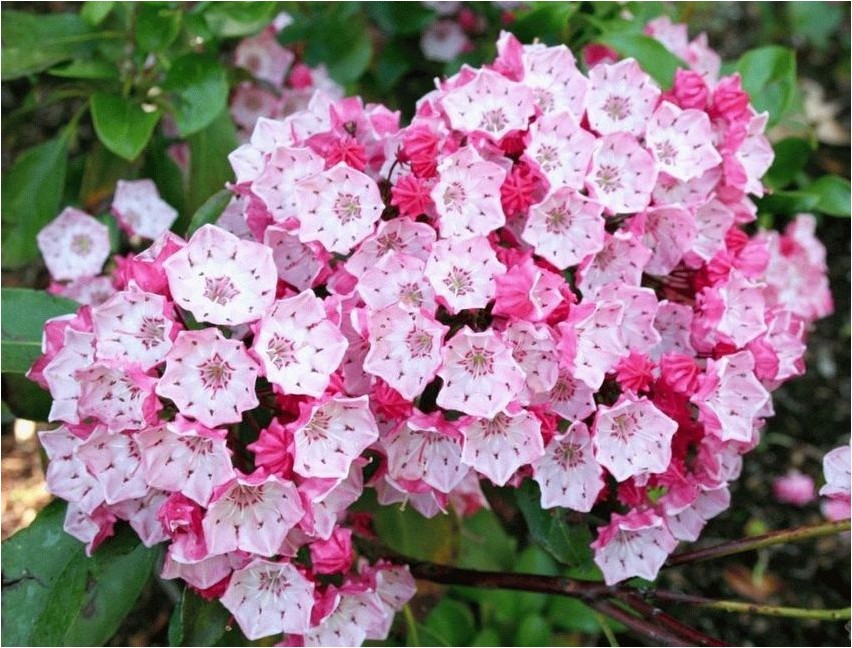
The fruit is a five-capsule, slightly open capsule with seeds.
Small-leaved Kalmia grows not only in swamps. It can be found in alpine wet meadows and other places with moist soil.
Healing abilities
Like many plant species included by botanists in the Kalmia genus, Kalmia parvifolia absorbed toxic substances from the soil into its leaves, flowers, and fruits, which help it fight for survival in this not always friendly world.
A person who understands poisons and knows how to dose them uses natural evil for the benefit of himself and other people. The poisons of the plant in small quantities help to neutralize pathogenic microbes that love to occupy wounds on the human body. This effect accelerates the process of tightening the wounded skin of a newborn, restoring its integrity and returning vitality to the person.





