Clusia large
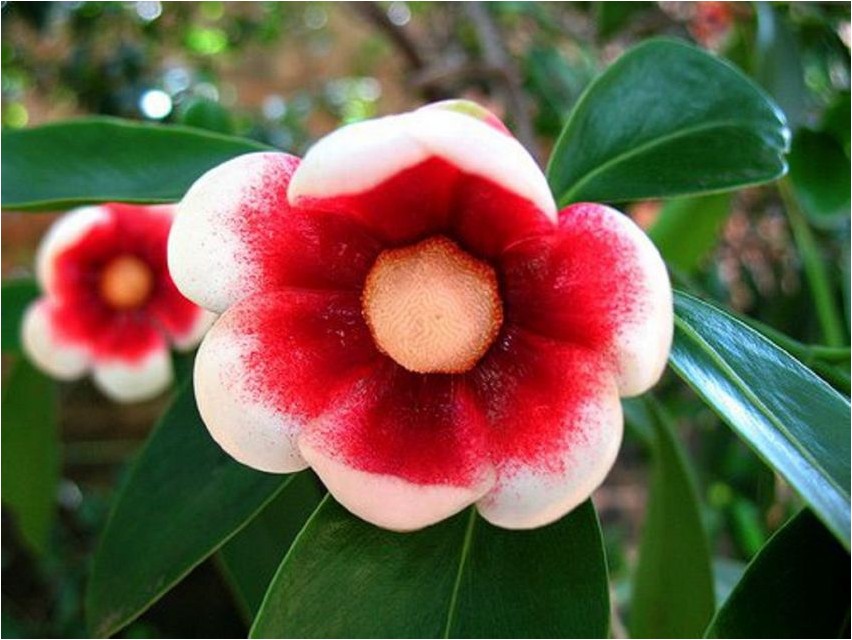
Clusia major is sometimes also known as rosea clusia; in Latin the name of this plant will be as follows: Clusia major or Clusia rosea.
Clusia major is one of the plants of the family called Clusiaceae, in Latin the name of this family will be: Clusiaceae.
Description of clusia large
It should be noted that large clusia is a rather unpretentious plant to care for, but it is still necessary to strictly observe some of the features of growing this plant. As for the light mode, preference should be given to the sunny light mode. At the same time, throughout the entire summer period, watering the plant should be provided in a moderate mode, and air humidity should remain high. The life form of this plant is an epiphyte.
Large clusia can be found quite often in winter gardens, and also as a bonsai crop. It should be noted that in indoor conditions, growing large clusus seems to be quite problematic, which is associated with the requirements of high air humidity and temperature conditions. As for the maximum size in culture, the height of a large clusus can be about fifty centimeters – one and a half meters.
Description of the features of care and cultivation of large clusia
As already mentioned, this plant is not very demanding to care for, but regular replanting of the large clusia will be required. It should be noted that young plants are replanted every year, but adult plants will need replanting once every few years. For replanting, it is recommended to select either pots of standard proportions or bonsai pots. As for the composition of the soil mixture, it is recommended to mix two parts of leaf soil and turf soil, as well as another part of sand. The acidity of such soil should be either neutral or slightly acidic.
It should be noted that in the case when rather sharp fluctuations in temperature occur, the leaves of this plant will drop. The lifespan of the leaves of this plant is approximately two to three years, for this reason, after this period of time, the leaves will naturally fall off and be replaced with new ones.

It is important to remember that large clusus will require fairly frequent spraying of the leaves: this is especially true on those days when the temperature is above twenty-five degrees Celsius. In some cases, damage to the plant may occur with the help of mealybugs and scale insects.
Throughout the entire dormant period of the large clusus, the optimal temperature regime should be maintained between thirteen and eighteen degrees Celsius. At the same time, this plant requires moderate watering, and air humidity can remain standard. The dormant period of this plant begins in October and continues until February. The rest period is forced, and the reasons for its occurrence are insufficient levels of illumination and air humidity.
Reproduction of large clusia will occur through rooting of apical cuttings, while the soil temperature should reach twenty-five to thirty degrees Celsius. It should be noted that this process is quite slow and will take about three to four weeks.
It is important to remember that direct exposure to sunlight has an extremely negative effect on this plant, so this should be avoided in every possible way, because otherwise burns will occur on the leaves of the large clusus. Air humidity should always be kept at around seventy-five to eighty degrees Celsius.