Gooseberry
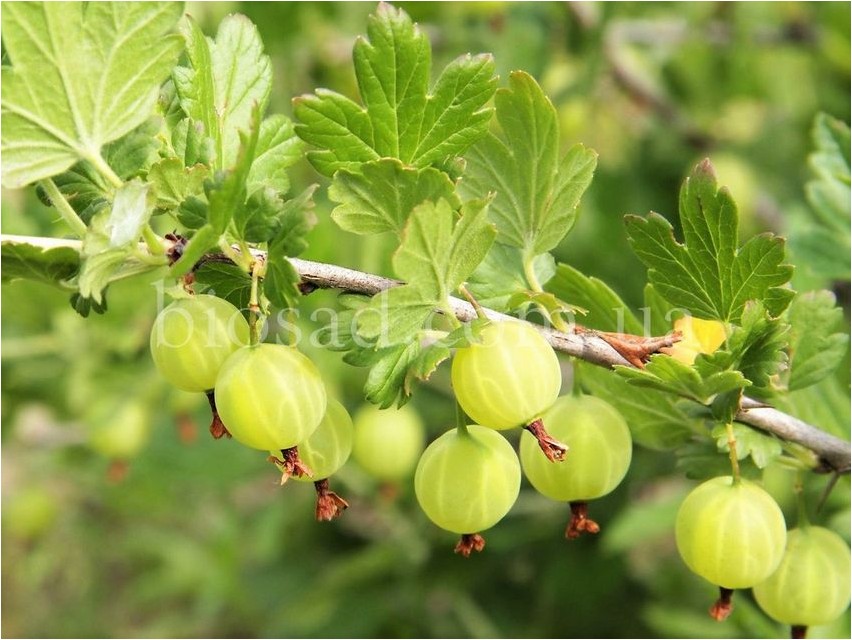
Gooseberry (lat. Ribes uva-crispa) is a popular berry crop; perennial shrub.
Characteristics of culture
Gooseberry is a multi-stemmed bush or shrub, the height of which varies from 0. 5 to 2 m. Gooseberries can be of several types: creeping, erect and spreading. A distinctive feature of this crop is the thorns located on the branches of the plant. New shoots are formed from buds located on the stems at the base of the bush. The roots of the culture do not produce shoots. The root system is powerful, the roots reach a depth of 30-40 cm, in some varieties this value increases to 1 m.
Most gooseberry varieties are self-fertile; as a rule, the berries ripen 2 months after flowering; they can be red, green, yellow and even black in color. With regular and proper care, the shrub can bear fruit for 25-30 years. The crop produces its highest yield 14-15 years after planting, after which the number of berries collected noticeably decreases. One bush can produce up to 20 kg of berries, but this depends only on weather conditions and care.
The flower buds of the plant are mixed; they are formed on the growth of the previous year, on biennial and old branches. All varieties of gooseberries bloom almost simultaneously, flowering lasts from 5 to 10 days, but the difference in the ripening of the berries is significant.
Growing conditions

Gooseberries are a light-loving crop; they develop poorly in shaded areas, the berries become smaller, and their number decreases every year. The plant has a negative attitude towards excess moisture; there is a high probability of rotting of the root collar of the bush, which ultimately leads to its death. That is why it is not recommended to grow gooseberries in areas with high groundwater.
The plant does not tolerate heavy clay soils. The best option for growing crops is loose, calcium-enriched soil. Strong winds and long-term drought have a detrimental effect on the growth and development of shrubs.
Landing
Plants can be planted in a permanent place both in spring and autumn. When planting in spring, you should focus on the short period between the complete melting of snow and thawing of the soil, and the swelling of the buds. Late planting will affect the survival rate of the seedling. Therefore, most gardeners plant the crop in the fall, 4-6 weeks before the onset of stable frosts. During this period, the seedling will acquire young roots and take root in a new place.
Before planting, it is recommended to remove dried roots from the seedling and trim the tops of the branches; 5 buds should be left on each shoot. The preparation of the pit should be started two weeks before planting. A hole is dug with dimensions of 50 * 50 cm, depth — 40 cm. Organic fertilizers (at least 10 kg), wood ash (100 g), double superphosphate (50 g) and potassium sulfide (40 g) are layered at the bottom of the hole, without mixing, after which part of the excavated soil is added.
The seedling is lowered at an angle, buried 5-7 cm below the root collar, compacted with the remaining soil, watered abundantly and mulched with peat. When planting in groups, the distance between seedlings should be taken into account; it should be at least 1. 5 m between plants and 2. 5 m between rows.
Care
Regular care is the key to gooseberry health and a good harvest. It is necessary to loosen the soil around the perimeter of the plant crown as necessary; the procedure does not take much time and benefits the plant. It is necessary to remove weeds in a timely manner, since they can provoke an increased level of humidity in the lower part of the bush, and therefore the development of various viral diseases. Gooseberries need annual fertilizing with mineral and organic fertilizers; superphosphate, ammonium nitrate, potassium chloride and rotted manure are ideal for this purpose. Fertilizing is carried out twice a year, the first is carried out immediately after flowering, the second — after harvesting.
Formative and sanitary pruning is important for gooseberries. Sanitary pruning is carried out in early spring; old, frostbitten and broken branches are removed from the bush. The formation of gooseberries is carried out 2-3 years after planting. In the first years, skeletal branches and part of the root shoots are shortened. In the fourth year, thickening is eliminated, weak, dried out and crooked shoots are cut out. The formation of the bush is carried out immediately after the leaves fall in the fall or in early spring before the buds swell.
The plant requires timely preventive treatment aimed at preventing the development of diseases and pests. Gooseberries quite often become victims of invasion by aphids, sawflies and moths. In order to get rid of them, it is recommended to use a solution of karbofos, ash infusion or biological products. Spraying is carried out in early spring, after flowering the procedure is repeated.
Powdery mildew is the worst enemy of gooseberries; this disease is signaled by gray spots appearing on the shoots and leaves. The most effective method of combating powdery mildew is to treat the plant with a solution of baking soda and iron sulfate.