Noble laurel
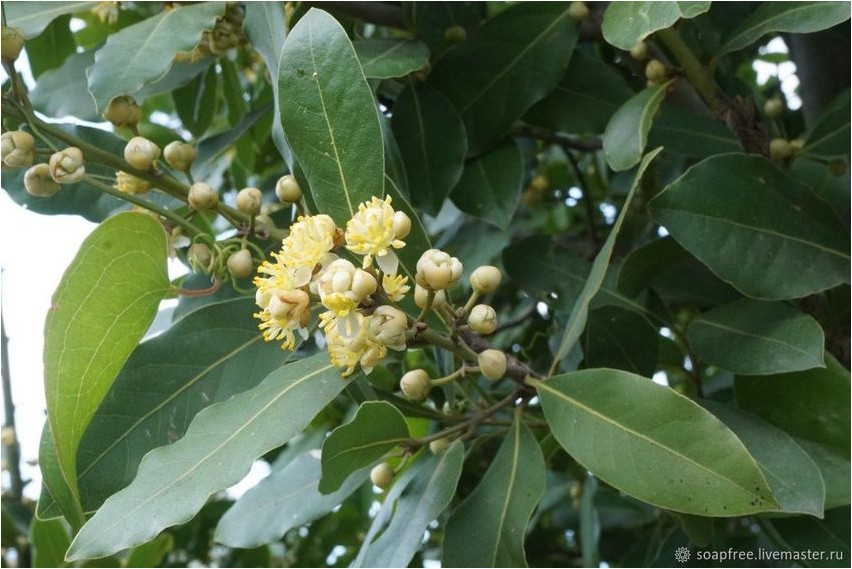
Laurus nobilis is one of the plants of the family called Laurelaceae; in Latin the name of this plant will be as follows: Laurus nobilis L.
As for the name of the Laurel family itself, in Latin it will be: Lauraceae Juss.
Description of the noble laurel
Laurel laurel is an evergreen tree-like shrub or tree, the height of which will fluctuate between six and ten meters. The trunk of this plant will be colored in dark gray tones, and the crown will be densely branched, while the buds will be sessile. The leaves of the noble laurel will be simple, entire, alternate and leathery, they are dark green on top and paler below. The shape of the leaf can be either lanceolate or oblong, the length will be about eight to ten centimeters, and the width will be one and a half to four centimeters. The flowers are quite small in shape, they are found in four to six inflorescences, are unisexual and dioecious, and are located on short pedicels. There is only one pistil of Laurel laurel; the ovary is upper and free. The fruit of this plant is a drupe up to twenty millimeters long and about ten millimeters in diameter, which will be colored black and blue.
Noble laurel blooms from March to April, while the fruits ripen in October-November.
Description of the medicinal properties of laurel
Laurel laurel is endowed with very valuable healing properties. It is noteworthy that bay leaf has the ability to improve appetite and will promote digestion. The fruits of this plant are used in medicine.
The leaves of this plant are used for the reason that they contain essential oil, which is rich in alcohols, organic acids and terpenes. A water decoction prepared from the leaves of laurel laurel is very effective for scaly lichen.

The fruits of this plant contain tannins, essential oil, sugar, fatty oil consisting of triolein, laurin, laurostearin, trimyristin, tripalmitin and levorotatory camphor. Fatty oil is obtained by pressing the crushed fruits of this plant. This oil is colored green, is bitter and will melt at a temperature of about forty degrees along with bitter balsamic vinegar.
Fatty oil and crushed fruits of bay laurel are present in ointments, which are recommended for use against rheumatic pain, tumors, cramps, against scabies mites, numerous skin diseases, and also as a nerve strengthener. In addition, bay leaf has also found use in diabetes mellitus, which should be associated with the fact that this plant will have a direct normalizing effect on carbohydrate metabolism.
As for traditional medicine, fatty essential oils obtained from the fruits of laurel nobilis are quite widespread. In addition, oil is also used, which was prepared by infusing the leaves of this plant with linseed oil.
For scaly lichen, ten leaves of this plant are taken, then they are poured with half a liter of boiling water in a thermos, after which they are left to infuse for one to two hours. The resulting healing mixture is taken before meals three times a day, one third of a glass. When used correctly, such a remedy based on bay laurel is characterized by a high degree of effectiveness.