Mallow neglected
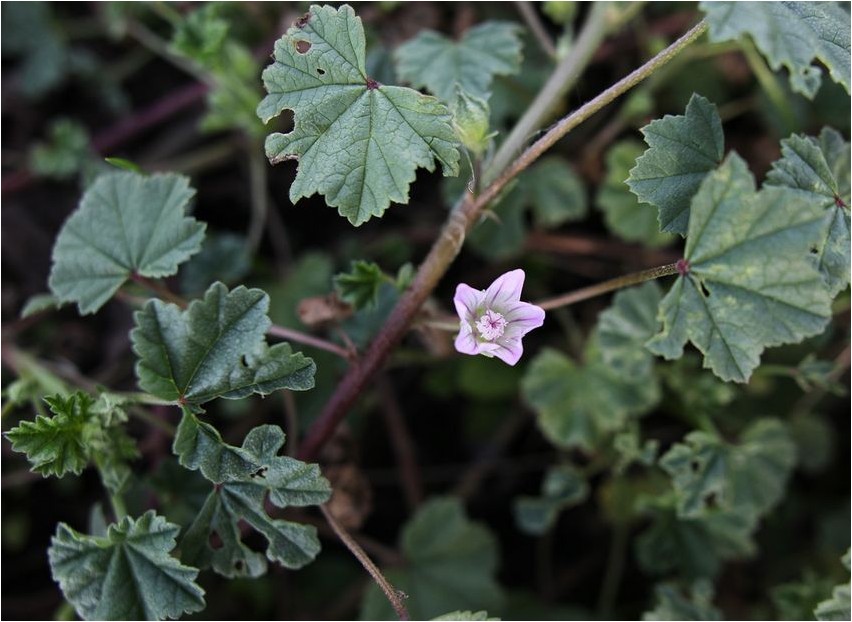
The neglected mallow is one of the plants of the family called malvaceae; in Latin the name of this plant would be as follows: Malva neglecta Wall.
As for the name of the neglected mallow family itself, in Latin it will be like this: Malvaceae Juss.
Description of the neglected mallow
Mallow neglected is an annual herbaceous plant, the height of which will fluctuate between eight and forty centimeters. The stems of this plant are numerous, branched, pubescent with stellate hairs; they can be either recumbent, straight, or erect. The leaves of the neglected mallow will be alternate, long-petioled, round in outline, but sometimes they can be kidney-shaped, finely toothed or crenate; such leaves will be pubescent with stellate hairs, especially from below. The flowers of this plant are painted in pinkish tones; they will be on unequal, long and stellate-pubescent pedicels, which emerge three or four at a time from the very axils of the leaves. The calyx with the undercup of this plant will be pubescent, while up to half of it is cut into triangular-ovate lobes. The underside of neglected mallow consists of three free oval or linear leaves. In this case, the undercup can be either half as long or slightly longer than the cup itself. The length of the petals of this plant reaches fourteen millimeters, they are two to three times longer than the calyx and are deeply notched. The stamens of the thread-neglected mallow grow together into a tube, which is pubescent with long simple hairs. The fruit of this plant is a fractional capsule, which, after ripening, will disintegrate into approximately twelve to sixteen fluffy, finely wrinkled fruits, the edges of which will be either somewhat pointed or rounded in shape.
The flowering of the neglected mallow occurs throughout the summer period. Under natural conditions, this plant is found in Western Siberia, the European part of Russia, Belarus, Central Asia and Ukraine.
Description of the medicinal properties of neglected mallow
Mallow has valuable medicinal properties, and it is recommended to use the leaves and entire above-ground portion of this plant for medicinal purposes. This medicinal raw material should be harvested throughout the plant’s flowering period. Initially, the raw material should be dried in the sun, after which it is important to air-dry it under cover.
These valuable medicinal properties are explained by the mucilaginous and tannins found in mallow, while the leaves contain carotene, tocopherol, and vitamin C. The seeds of this plant contain fatty oil.

Mallow has very effective analgesic, anti-inflammatory, emollient, expectorant, and sedative properties.
Infusions and decoctions prepared from the above-ground portions of this plant have found widespread use in folk medicine. Here, such remedies are used for diarrhea, dry cough, bronchitis, enterocolitis, and colitis. A strong decoction made from this plant’s herb is recommended for gargling with stomatitis, laryngopharyngitis, and tonsillitis. It should be noted that a decoction made from the roots of the neglected mallow is used as an abortive remedy. In addition, a decoction of the leaves of this plant is used externally for scrofula and erysipelas.


